DeKalb commissioners debate charter language that would let board specify budget presentation
February 17, 2026 | DeKalb County, Georgia
This article was created by AI summarizing key points discussed. AI makes mistakes, so for full details and context, please refer to the video of the full meeting. Please report any errors so we can fix them. Report an error »
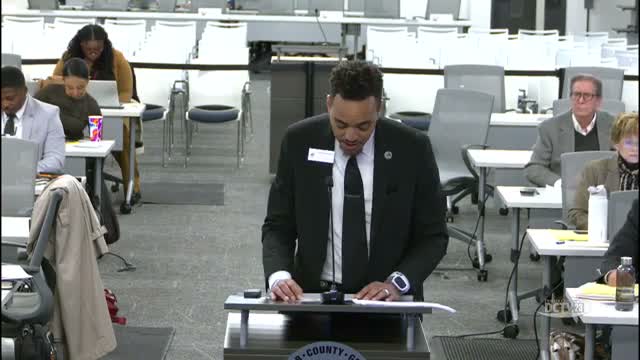
DeKalb County commissioners spent the meeting debating proposed Charter Review Commission language that would change when and how the county budget is presented and whether the Board of Commissioners may 'specify the manner' of the presentation.
The staff reading of Section 19 described an October 1 proposed budget presentation and a December 31 approval deadline, with new public-notice requirements that cite OCGA 36-81-1. Staff warned the committee that permitting the board to direct the CEO in the preparation or presentation of the budget "would change the powers and will require state action." Commissioners discussed sliding those dates later to give staff more time and avoid holiday scheduling: the compromise discussed was a November 1 presentation and a January 31 approval date.
Why it matters: commissioners must balance public transparency and the practical needs of the county administration. Several members pressed for a uniform, digestible presentation format across departments so they can review proposals efficiently without directing operational decisions reserved to the CEO.
Commissioners and staff differed over whether the charter text should explicitly let the board dictate presentation form. One commissioner argued for more detailed material at the time of presentation, citing past practice in which the CEO presented a "shell" budget late in the cycle; staff said commissioners already have tools—department presentations and public hearings—to obtain additional detail without changing the charter. The budget office described the county’s current tools, including an OpenGov portal intended to improve transparency and permit drill-down to line items.
A staff member cautioned about election-year implications: "If you're asking a new administration to pass a budget on January 31, that could be a real challenge." County legal staff also noted that "any changes to the powers of the CEO and the commission require a referendum," meaning some proposals could not be implemented by majority vote alone and would instead need voter approval.
What was decided: commissioners agreed in principle to shift the key dates by roughly one month (discussion favored November 1 presentation and January 31 approval) and to pursue clearer, consistent presentation formats. They postponed final language edits and asked staff to return with revisions and any clarifying drafting changes that would preserve the CEO's operational authority while giving commissioners usable information.
Next steps: staff will refine the proposed wording to avoid inadvertently changing the legal allocation of powers, confirm public-hearing timing required under OCGA 36-81-1, and return to commissioners for further review. The committee flagged the Charter Review Commission's member in the audience as a resource for clarifying intent but did not take an on-the-record vote to adopt the wording.
Quotes from the meeting reflect the tension between oversight and operational control: staff told the committee that "the CEO does not support this change as it blurs the line between the legislative and executive powers," and legal counsel reminded commissioners that changes altering powers would trigger a referendum. Commissioners asked staff to identify a single, consistent presentation form so department materials are "easily digested" and comparable across departments.
The discussion concluded without a final charter amendment vote; commissioners moved on to other agenda items and directed staff to return with revised wording and scheduling details.
The staff reading of Section 19 described an October 1 proposed budget presentation and a December 31 approval deadline, with new public-notice requirements that cite OCGA 36-81-1. Staff warned the committee that permitting the board to direct the CEO in the preparation or presentation of the budget "would change the powers and will require state action." Commissioners discussed sliding those dates later to give staff more time and avoid holiday scheduling: the compromise discussed was a November 1 presentation and a January 31 approval date.
Why it matters: commissioners must balance public transparency and the practical needs of the county administration. Several members pressed for a uniform, digestible presentation format across departments so they can review proposals efficiently without directing operational decisions reserved to the CEO.
Commissioners and staff differed over whether the charter text should explicitly let the board dictate presentation form. One commissioner argued for more detailed material at the time of presentation, citing past practice in which the CEO presented a "shell" budget late in the cycle; staff said commissioners already have tools—department presentations and public hearings—to obtain additional detail without changing the charter. The budget office described the county’s current tools, including an OpenGov portal intended to improve transparency and permit drill-down to line items.
A staff member cautioned about election-year implications: "If you're asking a new administration to pass a budget on January 31, that could be a real challenge." County legal staff also noted that "any changes to the powers of the CEO and the commission require a referendum," meaning some proposals could not be implemented by majority vote alone and would instead need voter approval.
What was decided: commissioners agreed in principle to shift the key dates by roughly one month (discussion favored November 1 presentation and January 31 approval) and to pursue clearer, consistent presentation formats. They postponed final language edits and asked staff to return with revisions and any clarifying drafting changes that would preserve the CEO's operational authority while giving commissioners usable information.
Next steps: staff will refine the proposed wording to avoid inadvertently changing the legal allocation of powers, confirm public-hearing timing required under OCGA 36-81-1, and return to commissioners for further review. The committee flagged the Charter Review Commission's member in the audience as a resource for clarifying intent but did not take an on-the-record vote to adopt the wording.
Quotes from the meeting reflect the tension between oversight and operational control: staff told the committee that "the CEO does not support this change as it blurs the line between the legislative and executive powers," and legal counsel reminded commissioners that changes altering powers would trigger a referendum. Commissioners asked staff to identify a single, consistent presentation form so department materials are "easily digested" and comparable across departments.
The discussion concluded without a final charter amendment vote; commissioners moved on to other agenda items and directed staff to return with revised wording and scheduling details.
Don't Miss a Word: See the Full Meeting!
Go beyond summaries. Unlock every video, transcript, and key insight with a Founder Membership.
✓
Get instant access to full meeting videos
✓
Search and clip any phrase from complete transcripts
✓
Receive AI-powered summaries & custom alerts
✓
Enjoy lifetime, unrestricted access to government data
30-day money-back guarantee
