Committee hears testimony supporting H 573 to allow physician assistants to perform emergency mental‑health evaluations
February 18, 2026 | Health Care, HOUSE OF REPRESENTATIVES, Committees, Legislative , Vermont
This article was created by AI summarizing key points discussed. AI makes mistakes, so for full details and context, please refer to the video of the full meeting. Please report any errors so we can fix them. Report an error »
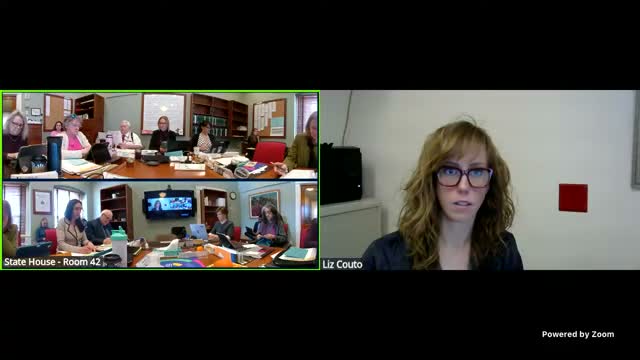
At a committee meeting, legislators heard testimony supporting H 573, a proposal to allow physician assistants (PAs) to complete emergency evaluations (EEs) for mental‑health admissions in hospital emergency departments. Liz Fudo, director of emergency services at Copley Hospital and a director for the Emergency Nurse Association, said the measure would reduce delays at facilities that rely on PAs for overnight coverage.
Fudo said the EE process can begin either when a patient presents voluntarily or when a qualified mental‑health professional seeks a warrant for transport; currently, physicians or nurse practitioners usually complete the first certification required by statute. "H 573 is... having a physician assistant as one of the people who is primarily in emergency departments completing these EEs... is really gonna help improve the access to care, because right now it's delaying it," Fudo said.
The bill, witnesses said, aligns practice with Title 18, chapter 179 (the statute on warrants and certificates for emergency examination) by recognizing trained PAs as eligible to perform first certifications. Fudo and a Department of Mental Health representative told the committee that PAs would complete the same DMH‑prescribed training that physicians and APRNs now take: an online instructional module, a quiz, and submission of a mock first certification for DMH review.
"The process takes probably approximately one week to complete," said Leigh, who identified themself as commissioner at the Department of Mental Health. Leigh said DMH typically provides rapid turnaround — "around 48 hours" — on submitted mock certifications unless edits are required.
Committee members raised scope‑of‑practice and supervisory questions. One member asked whether adding PAs would require OPR (Office of Professional Regulation) changes; the commissioner said licensure and scope filings are handled by OPR and are separate from DMH training requirements. Devon Green of the Vermont Association of Hospitals and Health Systems cautioned the committee that federal rules require an admitting physician and that the bill’s language appears to add a second supervisory layer: "federal law requires a physician to admit, and that section includes the added layer of protection of the head of the hospital or whoever's designated, including supervisory personnel to also admit the person." Green said the provision is intended as an added safeguard for admissions to facilities with inpatient psychiatric units.
No formal vote was taken. Committee members agreed staff should revise language to clarify supervisory and admission authority and to ensure the bill reflects DMH training protocols and statutory requirements. Witnesses said some larger hospital networks already allow PAs to perform these assessments under local supervisory agreements, and standardizing DMH qualifications would make expectations consistent across facilities.
The committee left the item for revision and said it would return with a new draft for further consideration.
Fudo said the EE process can begin either when a patient presents voluntarily or when a qualified mental‑health professional seeks a warrant for transport; currently, physicians or nurse practitioners usually complete the first certification required by statute. "H 573 is... having a physician assistant as one of the people who is primarily in emergency departments completing these EEs... is really gonna help improve the access to care, because right now it's delaying it," Fudo said.
The bill, witnesses said, aligns practice with Title 18, chapter 179 (the statute on warrants and certificates for emergency examination) by recognizing trained PAs as eligible to perform first certifications. Fudo and a Department of Mental Health representative told the committee that PAs would complete the same DMH‑prescribed training that physicians and APRNs now take: an online instructional module, a quiz, and submission of a mock first certification for DMH review.
"The process takes probably approximately one week to complete," said Leigh, who identified themself as commissioner at the Department of Mental Health. Leigh said DMH typically provides rapid turnaround — "around 48 hours" — on submitted mock certifications unless edits are required.
Committee members raised scope‑of‑practice and supervisory questions. One member asked whether adding PAs would require OPR (Office of Professional Regulation) changes; the commissioner said licensure and scope filings are handled by OPR and are separate from DMH training requirements. Devon Green of the Vermont Association of Hospitals and Health Systems cautioned the committee that federal rules require an admitting physician and that the bill’s language appears to add a second supervisory layer: "federal law requires a physician to admit, and that section includes the added layer of protection of the head of the hospital or whoever's designated, including supervisory personnel to also admit the person." Green said the provision is intended as an added safeguard for admissions to facilities with inpatient psychiatric units.
No formal vote was taken. Committee members agreed staff should revise language to clarify supervisory and admission authority and to ensure the bill reflects DMH training protocols and statutory requirements. Witnesses said some larger hospital networks already allow PAs to perform these assessments under local supervisory agreements, and standardizing DMH qualifications would make expectations consistent across facilities.
The committee left the item for revision and said it would return with a new draft for further consideration.
Don't Miss a Word: See the Full Meeting!
Go beyond summaries. Unlock every video, transcript, and key insight with a Founder Membership.
✓
Get instant access to full meeting videos
✓
Search and clip any phrase from complete transcripts
✓
Receive AI-powered summaries & custom alerts
✓
Enjoy lifetime, unrestricted access to government data
30-day money-back guarantee
