Hampshire County commissioners continue plans to reconstitute emergency‑services advisory boards
February 18, 2026 | Hampshire County, West Virginia
This article was created by AI summarizing key points discussed. AI makes mistakes, so for full details and context, please refer to the video of the full meeting. Please report any errors so we can fix them. Report an error »
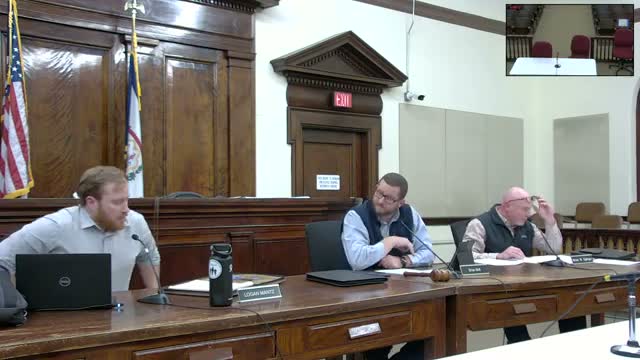
Commissioners in Hampshire County met in a special session on Feb. 17 to continue work on restructuring three emergency‑services advisory bodies — the HCESA advisory board, a proposed HSEM (Homeland Security and Emergency Management) board and the county’s 9‑1‑1 advisory board.
Commissioner Mansa, who led a statutory review and drafted proposed orders, said the aim is to improve communication and ensure EMS providers and HCESA employees have a clearer voice in advisory processes. "I pulled out business school best practices for cross board member management," he said, and proposed adding three voting seats to the HCESA advisory board to represent remaining EMS companies and a nonvoting seat so employees can have a voice without assuming policy‑making authority.
Commissioner Eglanger presented a parallel plan that would create a separate HSEM board under the Emergency Services Council code and reorganize 9‑1‑1 membership consistent with West Virginia code. "I'm still suggesting that we go ahead and create a HSEM board under the Emergency Services Council code," he said, then listed suggested seats including law enforcement, EMS, volunteer EMS and the health department director; he said the 9‑1‑1 board is governed by West Virginia Code section 24‑6‑5.
The two proposals share goals — greater participation and improved cross‑agency communication — but differ on structure and the degree to which directors or agency staff should sit as voting members on multiple boards. Mansa warned that making directors voting members across boards risks "circular or reciprocal voting" and argued boards should be independent so they can function after the current dispute subsides. Eglanger countered that elected commissioners must retain fiscal oversight and cautioned against creating so much insulation that elected officials lose budgetary control.
Both commissioners and the chair emphasized taking public input and avoiding rushed action. Mansa urged a slow rollout and public hearings "because this will be driving the system," and Eglanger said his changes were intended to keep the solution straightforward while meeting statutory requirements.
To advance the work, commissioners agreed to hold a public work session at 5 p.m. immediately before their next regular 6 p.m. meeting to invite stakeholders — including municipalities, volunteer EMS agencies, fire chiefs, sheriff’s office/state police liaisons and HCESA representatives — to help refine nominations, quorum rules and membership lists. "So we'll start the work session at 5, regular meeting at 6," S1 said, and staff agreed to post notices and send invites.
No public comments were recorded during the special session. The meeting concluded after a motion to adjourn was made and approved by unanimous voice vote.
Next steps: commissioners will collect nominees and legal language during the work session and return with refined orders or resolutions for consideration at the subsequent regular meeting.
Commissioner Mansa, who led a statutory review and drafted proposed orders, said the aim is to improve communication and ensure EMS providers and HCESA employees have a clearer voice in advisory processes. "I pulled out business school best practices for cross board member management," he said, and proposed adding three voting seats to the HCESA advisory board to represent remaining EMS companies and a nonvoting seat so employees can have a voice without assuming policy‑making authority.
Commissioner Eglanger presented a parallel plan that would create a separate HSEM board under the Emergency Services Council code and reorganize 9‑1‑1 membership consistent with West Virginia code. "I'm still suggesting that we go ahead and create a HSEM board under the Emergency Services Council code," he said, then listed suggested seats including law enforcement, EMS, volunteer EMS and the health department director; he said the 9‑1‑1 board is governed by West Virginia Code section 24‑6‑5.
The two proposals share goals — greater participation and improved cross‑agency communication — but differ on structure and the degree to which directors or agency staff should sit as voting members on multiple boards. Mansa warned that making directors voting members across boards risks "circular or reciprocal voting" and argued boards should be independent so they can function after the current dispute subsides. Eglanger countered that elected commissioners must retain fiscal oversight and cautioned against creating so much insulation that elected officials lose budgetary control.
Both commissioners and the chair emphasized taking public input and avoiding rushed action. Mansa urged a slow rollout and public hearings "because this will be driving the system," and Eglanger said his changes were intended to keep the solution straightforward while meeting statutory requirements.
To advance the work, commissioners agreed to hold a public work session at 5 p.m. immediately before their next regular 6 p.m. meeting to invite stakeholders — including municipalities, volunteer EMS agencies, fire chiefs, sheriff’s office/state police liaisons and HCESA representatives — to help refine nominations, quorum rules and membership lists. "So we'll start the work session at 5, regular meeting at 6," S1 said, and staff agreed to post notices and send invites.
No public comments were recorded during the special session. The meeting concluded after a motion to adjourn was made and approved by unanimous voice vote.
Next steps: commissioners will collect nominees and legal language during the work session and return with refined orders or resolutions for consideration at the subsequent regular meeting.
View the Full Meeting & All Its Details
This article offers just a summary. Unlock complete video, transcripts, and insights as a Founder Member.
✓
Watch full, unedited meeting videos
✓
Search every word spoken in unlimited transcripts
✓
AI summaries & real-time alerts (all government levels)
✓
Permanent access to expanding government content
30-day money-back guarantee
