Brainerd board asks for more study before deciding on withdrawal from Paul Bunyan Education Cooperative
February 17, 2026 | BRAINERD PUBLIC SCHOOL DISTRICT, School Boards, Minnesota
This article was created by AI summarizing key points discussed. AI makes mistakes, so for full details and context, please refer to the video of the full meeting. Please report any errors so we can fix them. Report an error »
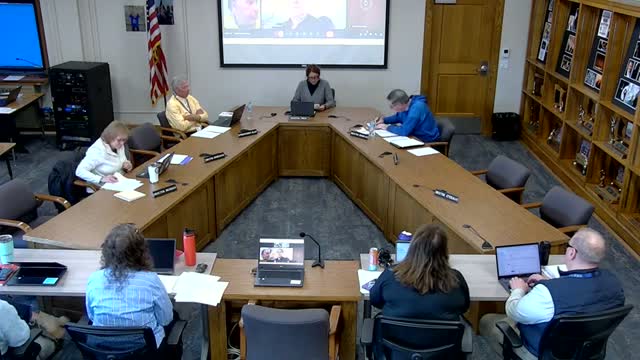
At a Feb. 19 workshop, the Brainerd Public School District board reviewed a staff proposal to examine whether the district could manage federal special-education funds and services more efficiently if it reduced or ended participation in the Paul Bunyan Education Cooperative.
District leaders said the review is a fiscal and operational question, not a judgment on the coop's services. Superintendent Grant and other staff argued that, by managing some federal dollars directly, Brainerd could tailor services and use funding more efficiently for local students. Staff warned, however, that withdrawing would be complex: it could require hiring a special-education director and low-incidence specialists, carefully managing the federal maintenance-of-effort (MOE) requirement, and ensuring continuity of services so students' Individualized Education Program (IEP) needs are met.
Jen, identified in the meeting as the Paul Bunyan executive director, described the cooperative's current fiscal picture: Brainerd received about $1.5 million in federal allocations last fiscal year, and the district's fiscal-host fee was roughly $181,000; Paul Bunyan's overall revenues and expenses are about $3.2 million. Jen said some billing methods can be changed without altering the joint-powers agreement and estimated that alternative billing formulas might have yielded about $75,000 of savings for Brainerd in FY24.
Board members expressed concern about the time frame and possible operational disruption. Director Ward and others said districts that left co-ops in other cases sometimes struggled to hire qualified staff and sometimes incurred higher costs; a number of trustees asked for a slower, more methodical review. Several trustees (including Michelle and Stephanie) said they lacked sufficient information to support withdrawal and requested an audit or deeper review. The board asked Jen and district staff to return with specific reform options, financial details and options for billing reform, and to present those options at upcoming meetings (Jen identified a March 12 meeting for further discussion). No motion was made to withdraw from the cooperative during the workshop.
Next steps are a deeper financial review, possible work sessions focused on the coop's services and funding structure, and quarterly or biannual updates from the cooperative so the board can decide with full information.
District leaders said the review is a fiscal and operational question, not a judgment on the coop's services. Superintendent Grant and other staff argued that, by managing some federal dollars directly, Brainerd could tailor services and use funding more efficiently for local students. Staff warned, however, that withdrawing would be complex: it could require hiring a special-education director and low-incidence specialists, carefully managing the federal maintenance-of-effort (MOE) requirement, and ensuring continuity of services so students' Individualized Education Program (IEP) needs are met.
Jen, identified in the meeting as the Paul Bunyan executive director, described the cooperative's current fiscal picture: Brainerd received about $1.5 million in federal allocations last fiscal year, and the district's fiscal-host fee was roughly $181,000; Paul Bunyan's overall revenues and expenses are about $3.2 million. Jen said some billing methods can be changed without altering the joint-powers agreement and estimated that alternative billing formulas might have yielded about $75,000 of savings for Brainerd in FY24.
Board members expressed concern about the time frame and possible operational disruption. Director Ward and others said districts that left co-ops in other cases sometimes struggled to hire qualified staff and sometimes incurred higher costs; a number of trustees asked for a slower, more methodical review. Several trustees (including Michelle and Stephanie) said they lacked sufficient information to support withdrawal and requested an audit or deeper review. The board asked Jen and district staff to return with specific reform options, financial details and options for billing reform, and to present those options at upcoming meetings (Jen identified a March 12 meeting for further discussion). No motion was made to withdraw from the cooperative during the workshop.
Next steps are a deeper financial review, possible work sessions focused on the coop's services and funding structure, and quarterly or biannual updates from the cooperative so the board can decide with full information.
View the Full Meeting & All Its Details
This article offers just a summary. Unlock complete video, transcripts, and insights as a Founder Member.
✓
Watch full, unedited meeting videos
✓
Search every word spoken in unlimited transcripts
✓
AI summaries & real-time alerts (all government levels)
✓
Permanent access to expanding government content
30-day money-back guarantee
