Senate committee advances bill to expand speech and debate programs in Florida schools
February 18, 2026 | 2026 Legislature FL, Florida
This article was created by AI summarizing key points discussed. AI makes mistakes, so for full details and context, please refer to the video of the full meeting. Please report any errors so we can fix them. Report an error »
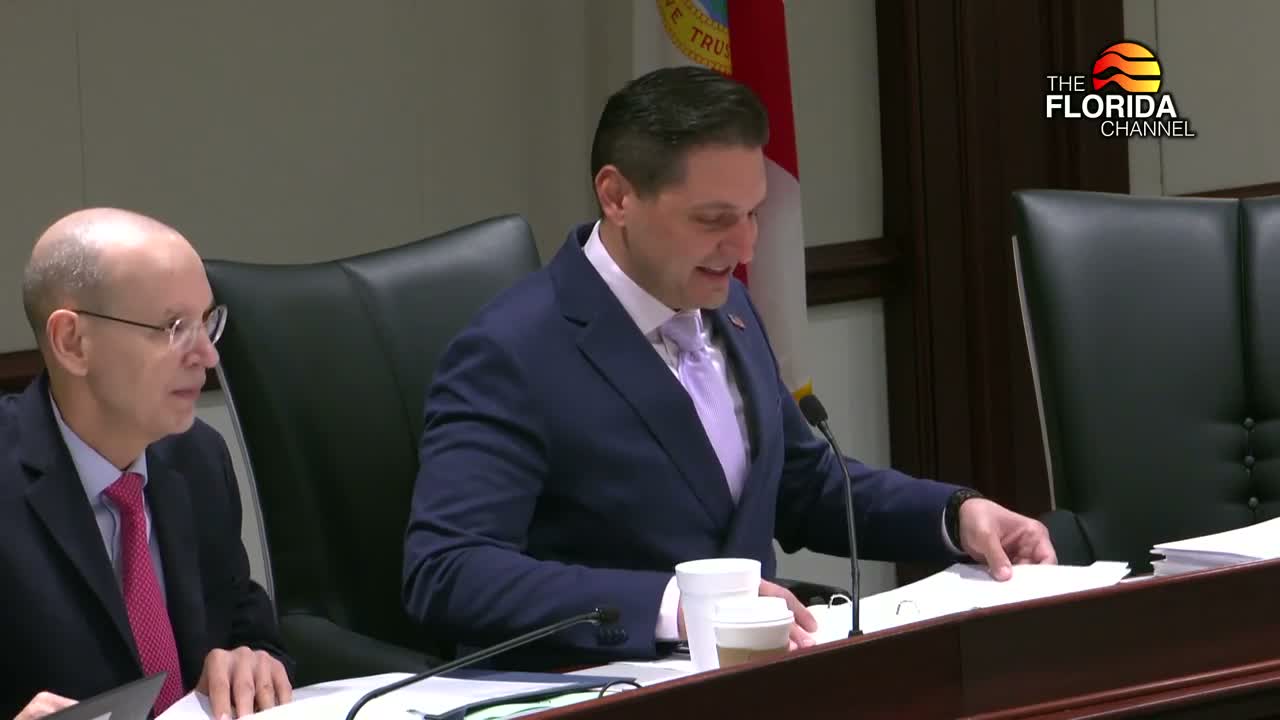
TALLAHASSEE — The Senate Appropriations Committee on PreK–12 Education on Tuesday advanced CS/4 SB 10‑62, legislation that would formalize state support for high‑school speech and debate programs and require public reporting on any state funds used to support the effort.
Senator Broder, the bill sponsor, told the committee the measure memorializes an existing partnership between the Department of Education and nonprofit programs such as the Florida Debate Initiative and the Florida Civics and Debate Initiative. Broder said the revised bill designates February as a period for speech‑and‑debate activities and requires annual public reporting on how appropriated funds are spent.
“When students learn how to use their words, they don’t need to use their fists,” Broder said, arguing the programs improve civics knowledge and civil discourse. The sponsor offered a strike‑all amendment that removed other provisions and narrowed the measure; the committee adopted that deletion by voice vote.
Nut graf: Supporters told senators the bill would expand access to debate programming, especially for Title I and rural schools, and asked the Legislature to pair new requirements with transparent funding and implementation guidelines. The committee’s favorable report moves the bill to the full appropriations process.
Students and program leaders delivered most of the public testimony. Mackenzie Fulton, a junior at Rickards High School in Tallahassee, said the Florida Civics and Debate Initiative gave her a civic‑immersion experience and concrete opportunities to participate in government. “The capital that used to be in my background is now something I see in my future, all thanks to the FDI’s leadership,” she said.
Abe Lopez, president of the Florida Debate Initiative, described the organization’s work as a nonprofit partner to the Department of Education and gave examples of student outcomes. Lopez characterized program impacts in percentage terms while urging committee support: “SB 10‑62 ensures today's students won't have to wonder,” he said, and added that the initiative has helped students succeed in national competitions.
Multiple student speakers and local advocates—representing groups such as Sea Alliance and student organizers—urged the committee to ensure the law includes funding, accountability and prioritization for schools that historically lacked access. Luis Feliciano of Sea Alliance said a half‑credit graduation requirement in the bill would require districts to have time and training in place to implement the coursework.
Committee members praised the bill’s focus on civic skills. After concluding debate and public testimony, Chair Burgess announced the panel had reported CS/4 SB 10‑62 favorably as amended. The committee’s action sends the measure to the next steps of the legislative process.
Senator Broder, the bill sponsor, told the committee the measure memorializes an existing partnership between the Department of Education and nonprofit programs such as the Florida Debate Initiative and the Florida Civics and Debate Initiative. Broder said the revised bill designates February as a period for speech‑and‑debate activities and requires annual public reporting on how appropriated funds are spent.
“When students learn how to use their words, they don’t need to use their fists,” Broder said, arguing the programs improve civics knowledge and civil discourse. The sponsor offered a strike‑all amendment that removed other provisions and narrowed the measure; the committee adopted that deletion by voice vote.
Nut graf: Supporters told senators the bill would expand access to debate programming, especially for Title I and rural schools, and asked the Legislature to pair new requirements with transparent funding and implementation guidelines. The committee’s favorable report moves the bill to the full appropriations process.
Students and program leaders delivered most of the public testimony. Mackenzie Fulton, a junior at Rickards High School in Tallahassee, said the Florida Civics and Debate Initiative gave her a civic‑immersion experience and concrete opportunities to participate in government. “The capital that used to be in my background is now something I see in my future, all thanks to the FDI’s leadership,” she said.
Abe Lopez, president of the Florida Debate Initiative, described the organization’s work as a nonprofit partner to the Department of Education and gave examples of student outcomes. Lopez characterized program impacts in percentage terms while urging committee support: “SB 10‑62 ensures today's students won't have to wonder,” he said, and added that the initiative has helped students succeed in national competitions.
Multiple student speakers and local advocates—representing groups such as Sea Alliance and student organizers—urged the committee to ensure the law includes funding, accountability and prioritization for schools that historically lacked access. Luis Feliciano of Sea Alliance said a half‑credit graduation requirement in the bill would require districts to have time and training in place to implement the coursework.
Committee members praised the bill’s focus on civic skills. After concluding debate and public testimony, Chair Burgess announced the panel had reported CS/4 SB 10‑62 favorably as amended. The committee’s action sends the measure to the next steps of the legislative process.
View the Full Meeting & All Its Details
This article offers just a summary. Unlock complete video, transcripts, and insights as a Founder Member.
✓
Watch full, unedited meeting videos
✓
Search every word spoken in unlimited transcripts
✓
AI summaries & real-time alerts (all government levels)
✓
Permanent access to expanding government content
30-day money-back guarantee
