Senate HHS Committee hears urgent ADAP testimony as budget includes $118 million for AIDS drug assistance
February 18, 2026 | 2026 Legislature FL, Florida
This article was created by AI summarizing key points discussed. AI makes mistakes, so for full details and context, please refer to the video of the full meeting. Please report any errors so we can fix them. Report an error »
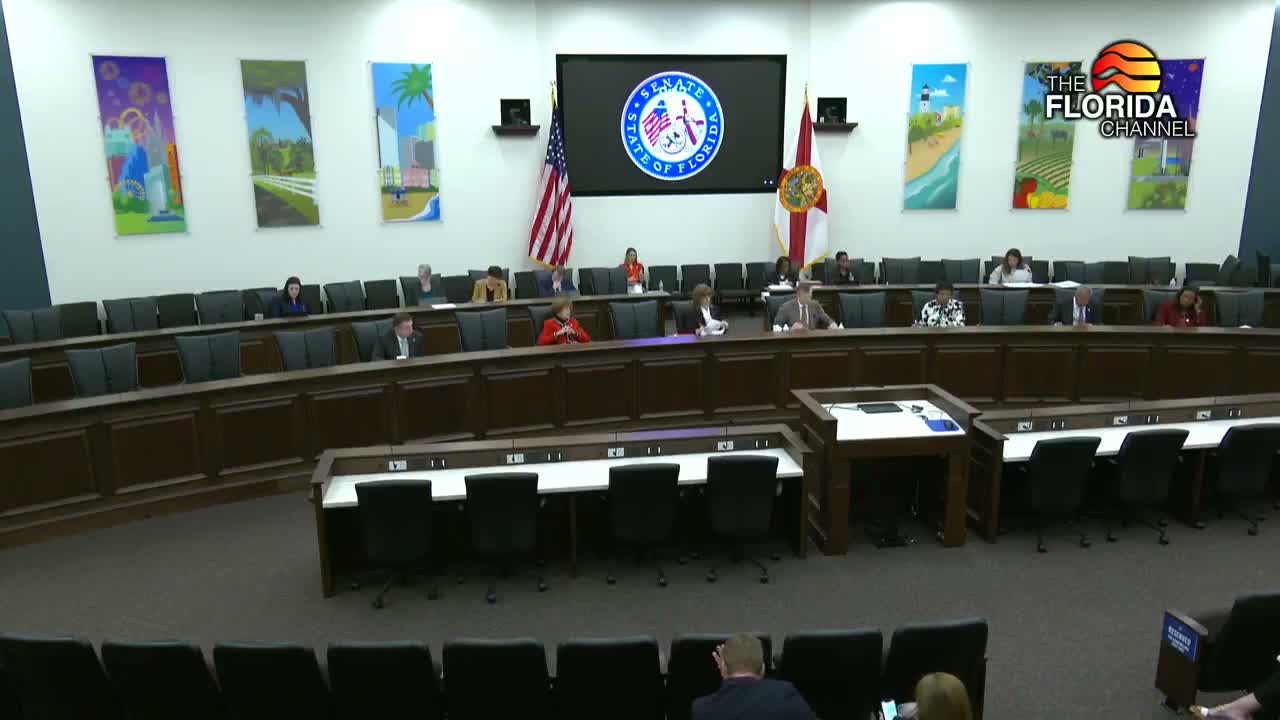
Members of the Florida Senate Appropriations Committee on Health and Human Services on Thursday heard emotional testimony from people who rely on the AIDS Drug Assistance Program (ADAP), urging the Department of Health to pause administrative changes they say will immediately jeopardize clients’ medication access.
Chair Trumbull opened the committee's budget presentation by describing HHS budget highlights, including an overall increase of roughly $2.1 billion (about 4.6%) over the current base and line items such as Medicaid funding, rural health transformation funds, provider rate increases, and $118,000,000 identified to address gaps in the AIDS Drug Assistance Program.
David Poole, a budget consultant, told the committee the ADAP allocation gives “great relief and peace of mind to thousands of people” threatened with losing access to medications. Michael Emmanuel Rayner, who identified himself as a person living with HIV/AIDS and an ADAP client, said the Department of Health has already taken administrative steps he said are undermining legislative fixes and leaving clients “in panic.” He said about 32,000 clients are affected and that some have received termination notices; he added that unpaid premiums could leave clients liable for “anywhere from 1,000 to $4,000” in charges.
Rayner urged the Legislature to demand the department “stand down” and halt administrative changes that he said will go into effect within days. He also told senators his outreach to the Department of Health had not produced the contingency planning his community needs and described examples of privacy harms when termination letters outed recipients’ HIV status to household members.
The committee did not take a formal vote on any ADAP-specific motion but heard the budget presentation and public testimony as part of the HHS package. Several senators signaled they would continue the discussion in a full appropriations committee later the same day.
Why it matters: ADAP provides medications and assistance to Floridians with HIV/AIDS; abrupt administrative changes, if uncoordinated with legislative decisions and funding, could disrupt treatment continuity for people whose viral suppression depends on uninterrupted medication.
What’s next: Committee members asked Department of Health staff to review concerns raised in testimony and indicated they would continue discussions in the full appropriations committee and through direct follow-up with DOH staff.
Chair Trumbull opened the committee's budget presentation by describing HHS budget highlights, including an overall increase of roughly $2.1 billion (about 4.6%) over the current base and line items such as Medicaid funding, rural health transformation funds, provider rate increases, and $118,000,000 identified to address gaps in the AIDS Drug Assistance Program.
David Poole, a budget consultant, told the committee the ADAP allocation gives “great relief and peace of mind to thousands of people” threatened with losing access to medications. Michael Emmanuel Rayner, who identified himself as a person living with HIV/AIDS and an ADAP client, said the Department of Health has already taken administrative steps he said are undermining legislative fixes and leaving clients “in panic.” He said about 32,000 clients are affected and that some have received termination notices; he added that unpaid premiums could leave clients liable for “anywhere from 1,000 to $4,000” in charges.
Rayner urged the Legislature to demand the department “stand down” and halt administrative changes that he said will go into effect within days. He also told senators his outreach to the Department of Health had not produced the contingency planning his community needs and described examples of privacy harms when termination letters outed recipients’ HIV status to household members.
The committee did not take a formal vote on any ADAP-specific motion but heard the budget presentation and public testimony as part of the HHS package. Several senators signaled they would continue the discussion in a full appropriations committee later the same day.
Why it matters: ADAP provides medications and assistance to Floridians with HIV/AIDS; abrupt administrative changes, if uncoordinated with legislative decisions and funding, could disrupt treatment continuity for people whose viral suppression depends on uninterrupted medication.
What’s next: Committee members asked Department of Health staff to review concerns raised in testimony and indicated they would continue discussions in the full appropriations committee and through direct follow-up with DOH staff.
View the Full Meeting & All Its Details
This article offers just a summary. Unlock complete video, transcripts, and insights as a Founder Member.
✓
Watch full, unedited meeting videos
✓
Search every word spoken in unlimited transcripts
✓
AI summaries & real-time alerts (all government levels)
✓
Permanent access to expanding government content
30-day money-back guarantee
