Subcommittee backs changes to attract protected-cell captive insurers to Florida (CS for HB883)
February 18, 2026 | 2026 Legislature FL, Florida
This article was created by AI summarizing key points discussed. AI makes mistakes, so for full details and context, please refer to the video of the full meeting. Please report any errors so we can fix them. Report an error »
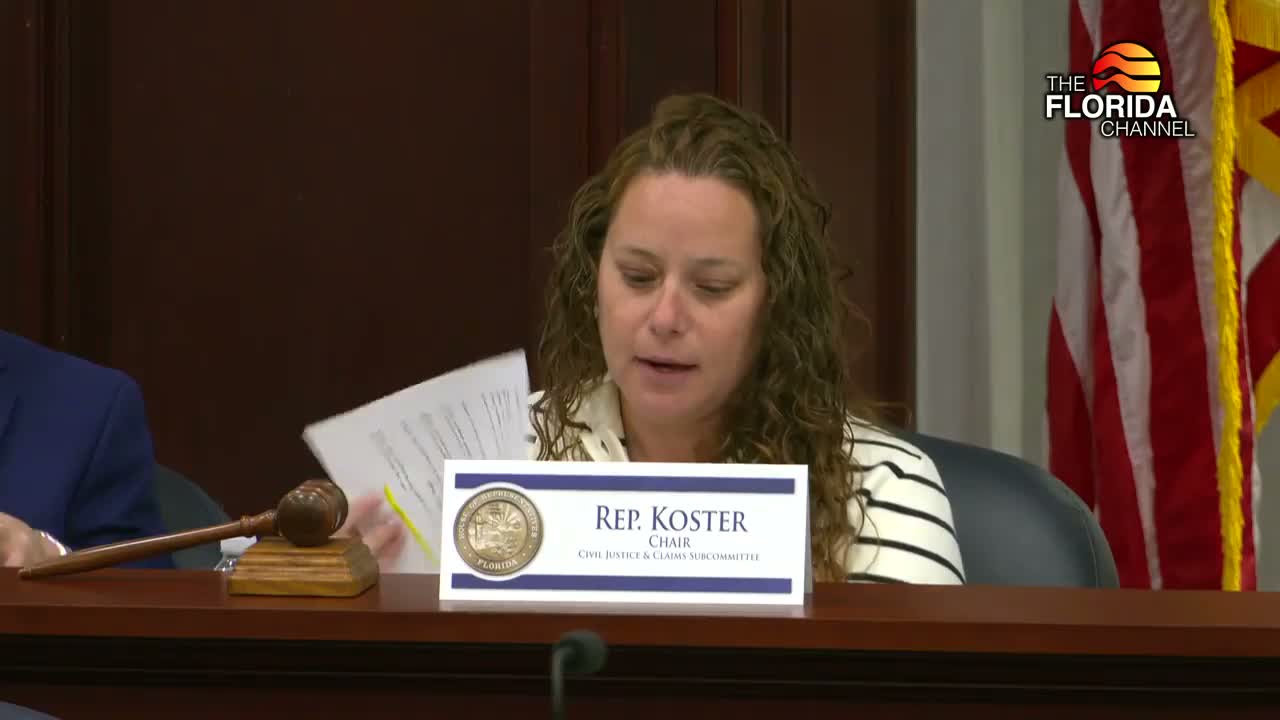
Representative Fabricio presented CS for HB883 to modernize Florida's protected-cell captive insurance framework and encourage companies that self-insure to operate in the state. Fabricio described the measure as intended to provide a better version of captive-cell law than the current Florida framework and to attract reinsurance and captive activity.
The sponsor summarized the concept: "Basically, this is for companies that want to self insure, and they wanna be able to treat the money that they use in reserves, etcetera, like if they were an insurance company." Committee members asked clarifying questions about the mechanics and consumer protections. Ex officio Escamani quipped in questioning, "What is a captive cell, and why does this sound like prison?" and Fabricio explained that the Office of Insurance Regulation would oversee captive cells similarly to regular insurance companies, that there are reserve requirements, and that policyholders in this model would be the companies creating the cells (which could be private firms, government entities, or other organizations).
Members probed minimum capital and reserve protections in the event a protected cell becomes insolvent; Fabricio pointed to reserve requirements and additional layers of insurance that companies typically carry. The committee heard industry support: Benjamin Stearns of the Florida Captive Insurance Association waived in support, and Barney Bishop of the Florida Risk Institute urged the committee to "encourage protected cells to plant a flag in Florida," arguing that retaining more insurance activity in-state could increase competition and potentially lower prices. Bishop said Florida is a large insurance market and noted, "We produce $280,000,000,000 worth of insurance." He cited examples of companies already using captive approaches.
After brief debate and sponsor closing, the clerk called the roll: 14 ayes, 0 nays. CS for HB883 was reported favorably and will proceed in the legislative process.
The sponsor summarized the concept: "Basically, this is for companies that want to self insure, and they wanna be able to treat the money that they use in reserves, etcetera, like if they were an insurance company." Committee members asked clarifying questions about the mechanics and consumer protections. Ex officio Escamani quipped in questioning, "What is a captive cell, and why does this sound like prison?" and Fabricio explained that the Office of Insurance Regulation would oversee captive cells similarly to regular insurance companies, that there are reserve requirements, and that policyholders in this model would be the companies creating the cells (which could be private firms, government entities, or other organizations).
Members probed minimum capital and reserve protections in the event a protected cell becomes insolvent; Fabricio pointed to reserve requirements and additional layers of insurance that companies typically carry. The committee heard industry support: Benjamin Stearns of the Florida Captive Insurance Association waived in support, and Barney Bishop of the Florida Risk Institute urged the committee to "encourage protected cells to plant a flag in Florida," arguing that retaining more insurance activity in-state could increase competition and potentially lower prices. Bishop said Florida is a large insurance market and noted, "We produce $280,000,000,000 worth of insurance." He cited examples of companies already using captive approaches.
After brief debate and sponsor closing, the clerk called the roll: 14 ayes, 0 nays. CS for HB883 was reported favorably and will proceed in the legislative process.
View the Full Meeting & All Its Details
This article offers just a summary. Unlock complete video, transcripts, and insights as a Founder Member.
✓
Watch full, unedited meeting videos
✓
Search every word spoken in unlimited transcripts
✓
AI summaries & real-time alerts (all government levels)
✓
Permanent access to expanding government content
30-day money-back guarantee
