Residents urge Raleigh to halt stream‑side Greenway Option 1B, citing takings, environmental and safety concerns
February 17, 2026 | Raleigh, Wake County, North Carolina
This article was created by AI summarizing key points discussed. AI makes mistakes, so for full details and context, please refer to the video of the full meeting. Please report any errors so we can fix them. Report an error »
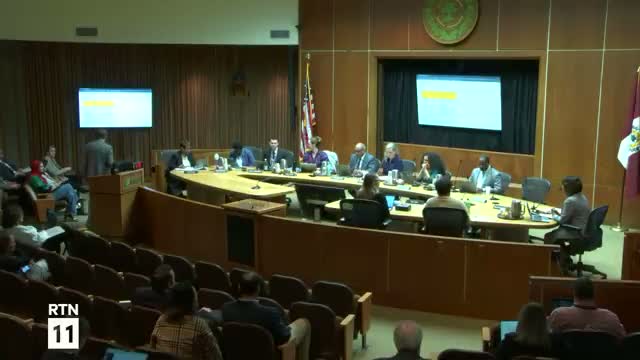
Carrie Bennington and several neighbors told the Raleigh City Council the proposed Big Branch Greenway stream‑side route known as Option 1B would take private property, require condemnation of a long‑standing conservation easement and conflict with state and city riparian buffer protections. "This project takes private property," Bennington said, adding that Parks and Rec took 11 months to acknowledge an easement does not exist.
Taylor Stewart and other speakers said the city’s public outreach misrepresented the trail as a scenic, wooded experience and that project imagery was altered to make the route appear less intrusive. Stewart warned the trail would run within the zone‑1 riparian buffer, remove vegetation that stabilizes the bank and require safety railings and privacy fencing that would degrade the greenway experience for users and homeowners alike. She also cited a city traffic department comparison that placed a crossing on Six Forks Road 35% higher in accident rate than comparable five‑lane roads, raising pedestrian safety concerns for trail users accessing the corridor.
Residents also raised budget and process concerns. Bennington said acquisition costs, legal proceedings and potential eminent‑domain expenses have not been fully accounted for and criticized staff communications as misleading. Several speakers noted that the parks board voted 9–5 not to recommend the stream‑side option.
Other public commenters called for a broader, watershed‑wide approach to creek corridors, arguing that creeks and buffers are shared infrastructure that require upstream and downstream coordination. Athena Wallen urged council to consider connected maintenance and larger buffer corridors rather than parcel‑level fixes.
Council did not take formal action on the greenway at this meeting. Several council members acknowledged residents’ concerns and earlier votes by advisory boards; council members and staff indicated continued engagement would follow through the planning and public input process.
Taylor Stewart and other speakers said the city’s public outreach misrepresented the trail as a scenic, wooded experience and that project imagery was altered to make the route appear less intrusive. Stewart warned the trail would run within the zone‑1 riparian buffer, remove vegetation that stabilizes the bank and require safety railings and privacy fencing that would degrade the greenway experience for users and homeowners alike. She also cited a city traffic department comparison that placed a crossing on Six Forks Road 35% higher in accident rate than comparable five‑lane roads, raising pedestrian safety concerns for trail users accessing the corridor.
Residents also raised budget and process concerns. Bennington said acquisition costs, legal proceedings and potential eminent‑domain expenses have not been fully accounted for and criticized staff communications as misleading. Several speakers noted that the parks board voted 9–5 not to recommend the stream‑side option.
Other public commenters called for a broader, watershed‑wide approach to creek corridors, arguing that creeks and buffers are shared infrastructure that require upstream and downstream coordination. Athena Wallen urged council to consider connected maintenance and larger buffer corridors rather than parcel‑level fixes.
Council did not take formal action on the greenway at this meeting. Several council members acknowledged residents’ concerns and earlier votes by advisory boards; council members and staff indicated continued engagement would follow through the planning and public input process.
View the Full Meeting & All Its Details
This article offers just a summary. Unlock complete video, transcripts, and insights as a Founder Member.
✓
Watch full, unedited meeting videos
✓
Search every word spoken in unlimited transcripts
✓
AI summaries & real-time alerts (all government levels)
✓
Permanent access to expanding government content
30-day money-back guarantee
