Joint committee hears extensive testimony on S.278 as growers, retailers and health officials clash over potency, access and equity
February 19, 2026 | Economic Development, Housing & General Affairs, SENATE, Committees, Legislative , Vermont
This article was created by AI summarizing key points discussed. AI makes mistakes, so for full details and context, please refer to the video of the full meeting. Please report any errors so we can fix them. Report an error »
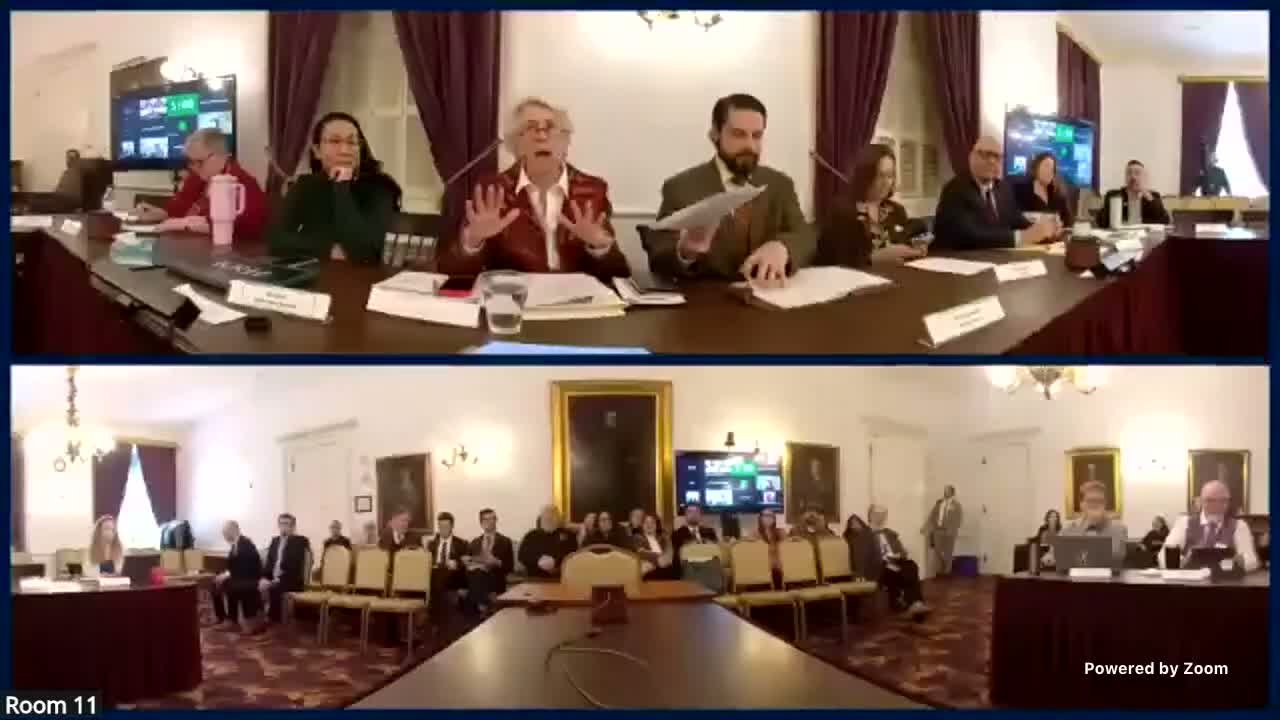
A joint session of the Senate Committee on Economic Development, Housing & General Affairs and the House Government Operations & Military Affairs spent a half day taking testimony on S.278, a broad bill that would change THC and package limits, add direct‑sales and delivery options, alter advertising rules, adjust the cannabis excise tax and direct funding to equity programs.
Supporters of the bill, including small producers and retailers, argued the changes are needed to stabilize Vermont’s nascent market and protect local growers from cross‑border competition. "The early rules determine who can remain viable long term in these markets," policy director Damien Fagan told the committee, urging limited direct sales and regulated events so small producers can build customer recognition before wholesale price competition concentrates supply. Retail owners said higher package and purchase limits would reduce cross‑border shopping and illicit purchases.
Nathan Davidson of the Vermont Department of Economic Development reported on the Cannabis Business Development Fund, saying, "year to date, we've received, 1,500,000.0 in funding for the cannabis business development fund," and that about $1.1 million has been distributed so far. He said roughly 25% of distributed funds (~$450,000) went to business support and technical assistance and that the agency has issued beneficiary payments of $5,000 to qualifying social equity licensees; he also suggested renaming the fund if its statutory purpose changes.
Retailers and cultivators described concrete changes in S.278 they support: raising single‑package THC or single‑package size (many witnesses supported moving from 100 mg to 200 mg for edibles), allowing two‑ounce daily purchase limits, two‑year employee cards and longer product registrations to reduce administrative burden. Miriam Montgomery, owner of the Tea House Dispensary, said increasing single‑package and purchase limits and lowering the excise tax from 14% to 10% would help keep customers and revenue in state.
Growers and industry groups urged statutory tools to preserve local ownership and market stability. Sarah Barnsworth (Full Circle Farm) asked for ownership‑transfer disclosure, authorization for cooperative and non‑voting investment structures, and a legislatively directed annual market stability review by the Cannabis Control Board. Small cultivators described steep wholesale price declines and said direct‑to‑consumer sales and delivery would allow them to survive without competing only on price.
Advocates for equity testified in favor of directing excise revenue to community programs and land access. The Land Access and Opportunity Board’s co‑directors described S.278’s $5,600,000 appropriation for FY27 to fund developer training, community resilience awards, culturally responsive housing navigation and capacity building.
Public‑health witnesses cautioned against loosening potency and purchase limits. Rick Hildebrand, commissioner of the Vermont Department of Health, summarized evidence linking adolescent exposure and high‑potency cannabis to worse mental‑health outcomes and increased dependence: "Higher potency is associated with increased dependence, increased daily use, and greater withdrawal symptoms," he told the committee. Hospital planners and prevention coordinators described local incidents of youth exposure and emergency visits; one hospital planner warned the committee the bill, as drafted, could increase cannabis‑related emergency care and associated Medicaid costs.
Medical‑patient testimony asked the legislature to preserve medical‑program voices and to consider patient access: Jesse Lynn Dolan, a registered nurse and medical patient, urged reestablishing a Symptom Relief Oversight Committee and said patients should not be relegated behind commercial priorities.
The hearing included contested factual claims on market size, health metrics and extrapolated ED totals. Committee members asked witnesses to submit written testimony and citations; in several instances witnesses offered slides or written materials for follow‑up. No formal votes were taken; the session adjourned with the committee to reconvene later the same morning.
The committee will review submitted written materials and data before further action on S.278.
Supporters of the bill, including small producers and retailers, argued the changes are needed to stabilize Vermont’s nascent market and protect local growers from cross‑border competition. "The early rules determine who can remain viable long term in these markets," policy director Damien Fagan told the committee, urging limited direct sales and regulated events so small producers can build customer recognition before wholesale price competition concentrates supply. Retail owners said higher package and purchase limits would reduce cross‑border shopping and illicit purchases.
Nathan Davidson of the Vermont Department of Economic Development reported on the Cannabis Business Development Fund, saying, "year to date, we've received, 1,500,000.0 in funding for the cannabis business development fund," and that about $1.1 million has been distributed so far. He said roughly 25% of distributed funds (~$450,000) went to business support and technical assistance and that the agency has issued beneficiary payments of $5,000 to qualifying social equity licensees; he also suggested renaming the fund if its statutory purpose changes.
Retailers and cultivators described concrete changes in S.278 they support: raising single‑package THC or single‑package size (many witnesses supported moving from 100 mg to 200 mg for edibles), allowing two‑ounce daily purchase limits, two‑year employee cards and longer product registrations to reduce administrative burden. Miriam Montgomery, owner of the Tea House Dispensary, said increasing single‑package and purchase limits and lowering the excise tax from 14% to 10% would help keep customers and revenue in state.
Growers and industry groups urged statutory tools to preserve local ownership and market stability. Sarah Barnsworth (Full Circle Farm) asked for ownership‑transfer disclosure, authorization for cooperative and non‑voting investment structures, and a legislatively directed annual market stability review by the Cannabis Control Board. Small cultivators described steep wholesale price declines and said direct‑to‑consumer sales and delivery would allow them to survive without competing only on price.
Advocates for equity testified in favor of directing excise revenue to community programs and land access. The Land Access and Opportunity Board’s co‑directors described S.278’s $5,600,000 appropriation for FY27 to fund developer training, community resilience awards, culturally responsive housing navigation and capacity building.
Public‑health witnesses cautioned against loosening potency and purchase limits. Rick Hildebrand, commissioner of the Vermont Department of Health, summarized evidence linking adolescent exposure and high‑potency cannabis to worse mental‑health outcomes and increased dependence: "Higher potency is associated with increased dependence, increased daily use, and greater withdrawal symptoms," he told the committee. Hospital planners and prevention coordinators described local incidents of youth exposure and emergency visits; one hospital planner warned the committee the bill, as drafted, could increase cannabis‑related emergency care and associated Medicaid costs.
Medical‑patient testimony asked the legislature to preserve medical‑program voices and to consider patient access: Jesse Lynn Dolan, a registered nurse and medical patient, urged reestablishing a Symptom Relief Oversight Committee and said patients should not be relegated behind commercial priorities.
The hearing included contested factual claims on market size, health metrics and extrapolated ED totals. Committee members asked witnesses to submit written testimony and citations; in several instances witnesses offered slides or written materials for follow‑up. No formal votes were taken; the session adjourned with the committee to reconvene later the same morning.
The committee will review submitted written materials and data before further action on S.278.
Don't Miss a Word: See the Full Meeting!
Go beyond summaries. Unlock every video, transcript, and key insight with a Founder Membership.
✓
Get instant access to full meeting videos
✓
Search and clip any phrase from complete transcripts
✓
Receive AI-powered summaries & custom alerts
✓
Enjoy lifetime, unrestricted access to government data
30-day money-back guarantee
