Senate passes hotels bill after amendment; advocates warn ‘offensive’ language remains too vague
May 07, 2024 | Legislative, Rhode Island
This article was created by AI summarizing key points discussed. AI makes mistakes, so for full details and context, please refer to the video of the full meeting. Please report any errors so we can fix them. Report an error »
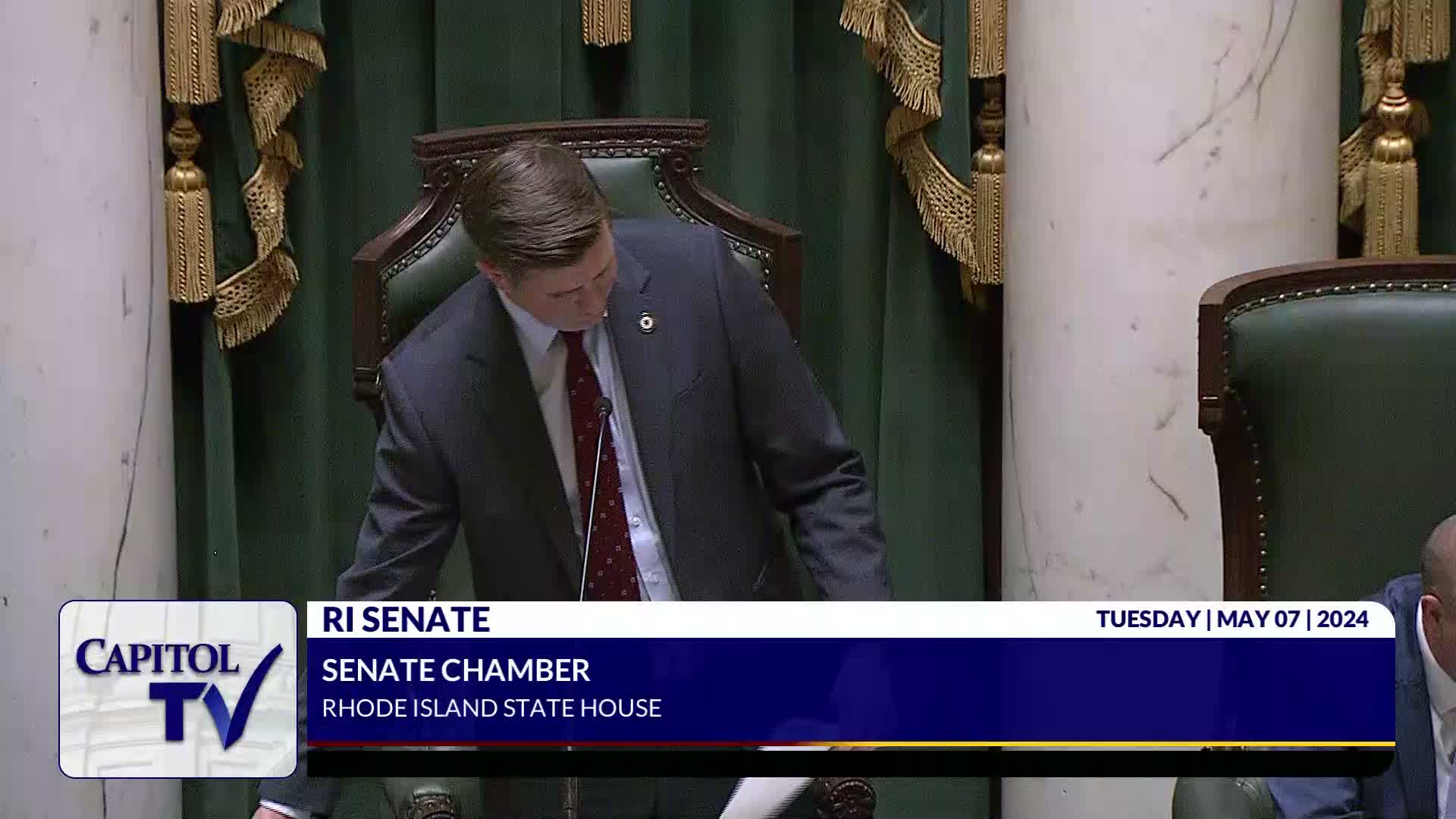
The Rhode Island Senate on May 2 passed SB 22-71, a businesses-and-professions bill affecting hotel operators, after adopting a floor amendment that removes the word "demeaning" from a provision about grounds for ejection. Sponsor Senator Chacon moved the bill and explained it "removes the sunset on the provision" enacted last year and offered a narrow amendment changing punctuation and deleting a word on page 3, line 3.
The bill drew floor opposition from Senator Bell, who said she "rise[s] in opposition to this legislation," acknowledging that the amendment "makes it better" but arguing concerns remained. Bell cited a coalition of advocacy groups opposing the bill and warned that the remaining term "offensive" is vague and could be exploited to discriminate against people the senator described as vulnerable. "Particular, they highlight the vagueness of being able to eject someone for language that is demeaning or offensive and argue that this vagueness could be used and exploited for discriminatory kicking out of hotels," Bell said.
Senator Chacon explained the amendment on the floor, saying the change removes the specific word and punctuation noted on page 3, and then moved the bill as amended. The chamber voted: the amendment passed (34 in the affirmative, none in the negative on the amendment vote as recorded on the floor), and the final passage was recorded as 35 in the affirmative and 2 in the negative; the act was reported as passed.
Supporters framed the bill as a technical cleanup and continuation of an existing standard; opponents and civil-rights and housing advocates who submitted letters—identified on the floor as the ACLU, House of Hope CDC, Latino Policy Institute, Ocean State Wellness and Recovery Centers, Office of the Mental Health Advocate, Black Lives Matter PAC, Center for Justice, Elder Mental Health and Addiction Coalition, and Homeless Advocacy Project—urged caution and requested clearer, narrower language to avoid unintended consequences for tenants and people accessing hotels as last-resort housing.
The next procedural step is transmittal of passed measures to the House and, if required, the governor. The Senate proceeded to other calendar business after the vote.
The bill drew floor opposition from Senator Bell, who said she "rise[s] in opposition to this legislation," acknowledging that the amendment "makes it better" but arguing concerns remained. Bell cited a coalition of advocacy groups opposing the bill and warned that the remaining term "offensive" is vague and could be exploited to discriminate against people the senator described as vulnerable. "Particular, they highlight the vagueness of being able to eject someone for language that is demeaning or offensive and argue that this vagueness could be used and exploited for discriminatory kicking out of hotels," Bell said.
Senator Chacon explained the amendment on the floor, saying the change removes the specific word and punctuation noted on page 3, and then moved the bill as amended. The chamber voted: the amendment passed (34 in the affirmative, none in the negative on the amendment vote as recorded on the floor), and the final passage was recorded as 35 in the affirmative and 2 in the negative; the act was reported as passed.
Supporters framed the bill as a technical cleanup and continuation of an existing standard; opponents and civil-rights and housing advocates who submitted letters—identified on the floor as the ACLU, House of Hope CDC, Latino Policy Institute, Ocean State Wellness and Recovery Centers, Office of the Mental Health Advocate, Black Lives Matter PAC, Center for Justice, Elder Mental Health and Addiction Coalition, and Homeless Advocacy Project—urged caution and requested clearer, narrower language to avoid unintended consequences for tenants and people accessing hotels as last-resort housing.
The next procedural step is transmittal of passed measures to the House and, if required, the governor. The Senate proceeded to other calendar business after the vote.
View the Full Meeting & All Its Details
This article offers just a summary. Unlock complete video, transcripts, and insights as a Founder Member.
✓
Watch full, unedited meeting videos
✓
Search every word spoken in unlimited transcripts
✓
AI summaries & real-time alerts (all government levels)
✓
Permanent access to expanding government content
30-day money-back guarantee
