Lawmakers hear competing testimony on establishing a Prescription Drug Affordability Board
February 18, 2026 | Senate, Legislative , Hawaii
This article was created by AI summarizing key points discussed. AI makes mistakes, so for full details and context, please refer to the video of the full meeting. Please report any errors so we can fix them. Report an error »
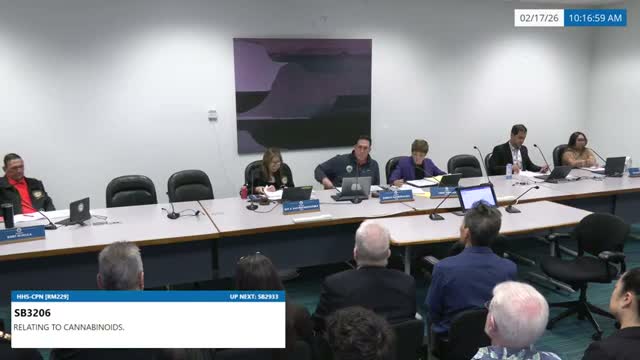
Senate Bill 2933, which would create a Prescription Drug Affordability Board (PDAB), drew a mix of supportive and critical testimony at the Feb. 17 joint committee session.
Courtney Whitlock, who works on prescription‑drug affordability policy and offered testimony in a personal capacity, described operational lessons from Oregon’s PDAB: success depends on implementation infrastructure, clear data methodology and rulemaking. She said upper‑payment‑limit authority can be complex to operationalize, but useful when grounded in Hawaii‑specific data.
Opposition testimony from pharmaceutical industry representatives and the Biotechnology Innovation Organization argued PDABs are an unproven experiment, costly to set up, and unlikely to directly lower patients’ out‑of‑pocket costs because such costs are driven by insurance design and pharmacy benefit managers. Industry witnesses said states that have created PDABs have not documented patient savings commensurate with the expense.
Department of Health testified in support of the bill but said the authority might be better placed outside DOH (naming CHIPDA as an alternative). Committee members questioned resource needs and asked proponents to return with staffing and implementation estimates before the measure proceeds.
The committee did not take a final vote on SB 2933 during the Feb. 17 session and requested follow‑up detail on capacity and resourcing.
Courtney Whitlock, who works on prescription‑drug affordability policy and offered testimony in a personal capacity, described operational lessons from Oregon’s PDAB: success depends on implementation infrastructure, clear data methodology and rulemaking. She said upper‑payment‑limit authority can be complex to operationalize, but useful when grounded in Hawaii‑specific data.
Opposition testimony from pharmaceutical industry representatives and the Biotechnology Innovation Organization argued PDABs are an unproven experiment, costly to set up, and unlikely to directly lower patients’ out‑of‑pocket costs because such costs are driven by insurance design and pharmacy benefit managers. Industry witnesses said states that have created PDABs have not documented patient savings commensurate with the expense.
Department of Health testified in support of the bill but said the authority might be better placed outside DOH (naming CHIPDA as an alternative). Committee members questioned resource needs and asked proponents to return with staffing and implementation estimates before the measure proceeds.
The committee did not take a final vote on SB 2933 during the Feb. 17 session and requested follow‑up detail on capacity and resourcing.
View the Full Meeting & All Its Details
This article offers just a summary. Unlock complete video, transcripts, and insights as a Founder Member.
✓
Watch full, unedited meeting videos
✓
Search every word spoken in unlimited transcripts
✓
AI summaries & real-time alerts (all government levels)
✓
Permanent access to expanding government content
30-day money-back guarantee
