Lawmakers hear strong support and practical concerns for fare‑free transit; HB2451 deferred for more work
February 17, 2026 | House Committee on Human Services, House of Representatives, Legislative , Hawaii
This article was created by AI summarizing key points discussed. AI makes mistakes, so for full details and context, please refer to the video of the full meeting. Please report any errors so we can fix them. Report an error »
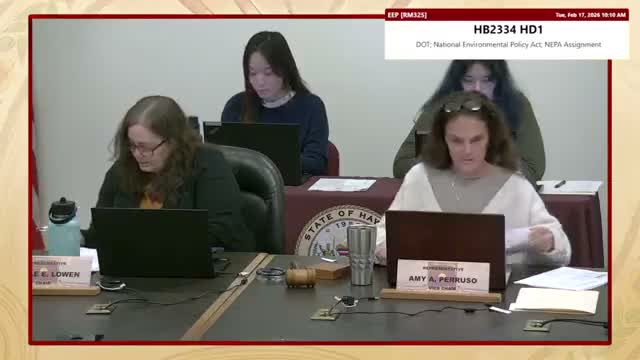
Advocates, public‑health organizations and environmental groups urged passage of House Bill 2451, a proposal to make county public transportation fare‑free beginning Jan. 1, 2027, while city transit officials urged a slower, phased implementation and more durable funding.
Hawaii Appleseed, the Hawaii Public Health Institute, Greenpeace and other groups testified the bill could widen access to jobs and services, cut household transportation costs and reduce greenhouse‑gas emissions. David Molineux of Greenpeace said free bus passes represent "an investment in our future," and Hawaii Appleseed highlighted data showing most Honolulu bus riders have household incomes under $60,000.
Roger Morton, director of transportation services for the city, filed late testimony and urged caution. He said the city operates a roughly $400 million transit enterprise and that the bill’s proposed revenue replacement of $45 million would not fully replace current revenue streams. Morton estimated fare‑free implementation could add 12 to 20 million riders and said it takes three years to acquire additional buses and more time to recruit operators. He recommended slowing the timetable, phasing implementation and considering access controls such as free‑pass cards to maintain safety and service quality.
Committee members pressed Morton on safety, operator staffing, and examples from other jurisdictions. Morton cited Kansas City and several smaller U.S. or European systems but urged incremental approaches such as the Keiki Ride Free program (House Bill 1879) and DOT pilot programs.
Given the logistical, staffing and funding concerns, the committee deferred HB2451 to continue the conversation and plan for more detailed implementation studies before any statutory deadline is set.
Hawaii Appleseed, the Hawaii Public Health Institute, Greenpeace and other groups testified the bill could widen access to jobs and services, cut household transportation costs and reduce greenhouse‑gas emissions. David Molineux of Greenpeace said free bus passes represent "an investment in our future," and Hawaii Appleseed highlighted data showing most Honolulu bus riders have household incomes under $60,000.
Roger Morton, director of transportation services for the city, filed late testimony and urged caution. He said the city operates a roughly $400 million transit enterprise and that the bill’s proposed revenue replacement of $45 million would not fully replace current revenue streams. Morton estimated fare‑free implementation could add 12 to 20 million riders and said it takes three years to acquire additional buses and more time to recruit operators. He recommended slowing the timetable, phasing implementation and considering access controls such as free‑pass cards to maintain safety and service quality.
Committee members pressed Morton on safety, operator staffing, and examples from other jurisdictions. Morton cited Kansas City and several smaller U.S. or European systems but urged incremental approaches such as the Keiki Ride Free program (House Bill 1879) and DOT pilot programs.
Given the logistical, staffing and funding concerns, the committee deferred HB2451 to continue the conversation and plan for more detailed implementation studies before any statutory deadline is set.
Don't Miss a Word: See the Full Meeting!
Go beyond summaries. Unlock every video, transcript, and key insight with a Founder Membership.
✓
Get instant access to full meeting videos
✓
Search and clip any phrase from complete transcripts
✓
Receive AI-powered summaries & custom alerts
✓
Enjoy lifetime, unrestricted access to government data
30-day money-back guarantee
