Waverly outlines capital projects, proposes SRF loans and remodel plan while prioritizing water and sewer
February 08, 2026 | City of Waverly, Eaton County, Michigan
This article was created by AI summarizing key points discussed. AI makes mistakes, so for full details and context, please refer to the video of the full meeting. Please report any errors so we can fix them. Report an error »
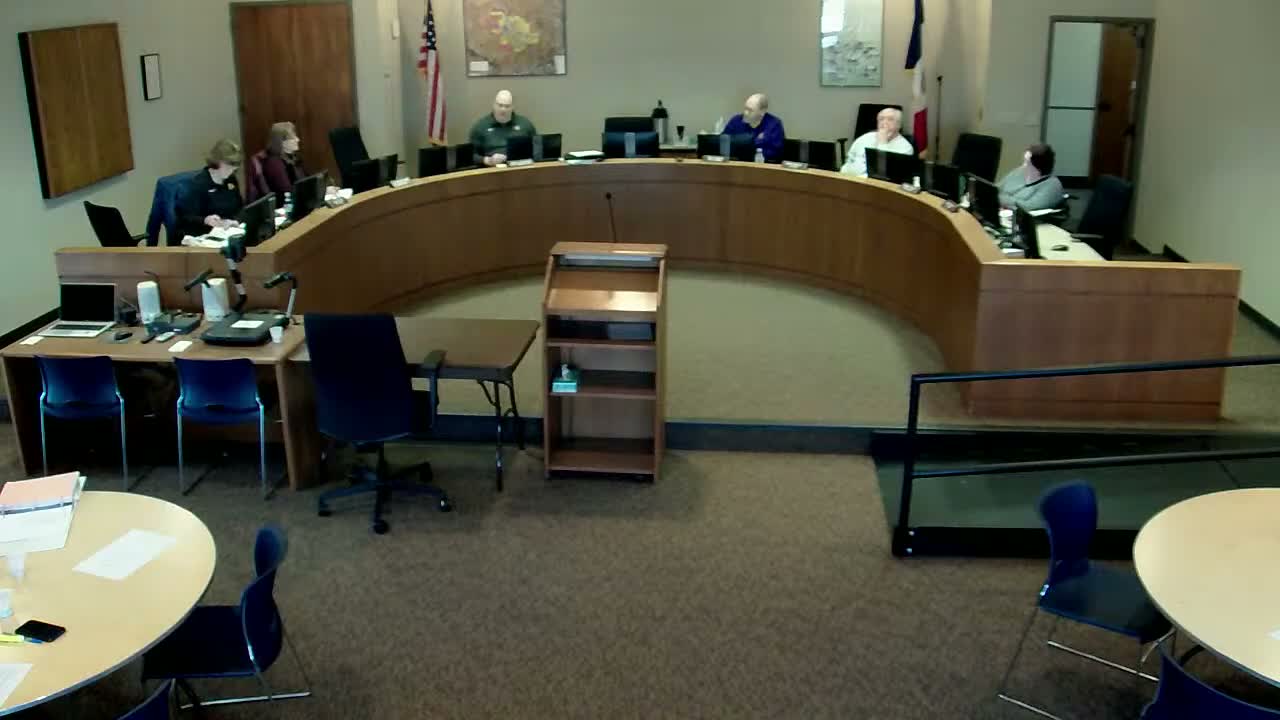
City staff presented a prioritized list of capital projects at the Feb. 7 budget study session, emphasizing water and sewer work eligible for State Revolving Fund (SRF) loans, a feasibility study for a bridge near City Hall, and a proposed remodel of the golf clubhouse.
Staff advised that several SRF-eligible projects are ready to move forward, including lift-station improvements and extensive sewer lining. Estimated costs for major SRF projects were described in the $2.5–3 million range per project; staff said the sewer-lining scope under consideration would cover roughly 24,000–25,000 feet (about five miles), which represents about 8–10% of the city’s system. "It's a lot of lining in sewer systems," James said, noting the work would significantly reduce infiltration and long-term maintenance costs.
Staff also proposed a roughly $48,000 feasibility study for the rail-trail/veil bridge adjacent to City Hall to establish grant eligibility and the best replacement path. On recreational facilities, staff recommended remodeling the 80-year-old golf clubhouse rather than a new referendum-level rebuild. The remodel estimate was about $2.56 million; staff suggested financing options that would use the statutory $960,000 general obligation (G.O.) borrowing limit for part of the cost and roughly $1.6 million from local option sales tax over 10 years to avoid a countywide property-tax referendum.
Other capital items discussed included targeted roadway repairs (10th Avenue Southwest, estimated at roughly $500,000), specific cemetery-road repairs ($100,000 for the worst stretch), and an equipment package trimmed to $750,000 funded across several city accounts. Staff noted a placeholder of $1,000,000 for a potential new well funded in part by PFAS-related resources, but said final costs and timing remain uncertain.
Council members pressed for clarification on levy impact and debt capacity; staff estimated the levy impact near current levels (a few cents change per $100,000 in value depending on scenarios) and noted the city remains within tax-exempt debt capacity limits but must account for SRF inclusion in calculations. No formal borrowing decisions were made; members generally favored prioritizing water/sewer projects and equipment replacement ahead of less-essential items.
Next steps: staff will refine cost estimates and funding scenarios, and council will consider specific borrowing or funding actions in upcoming budget hearings.
Staff advised that several SRF-eligible projects are ready to move forward, including lift-station improvements and extensive sewer lining. Estimated costs for major SRF projects were described in the $2.5–3 million range per project; staff said the sewer-lining scope under consideration would cover roughly 24,000–25,000 feet (about five miles), which represents about 8–10% of the city’s system. "It's a lot of lining in sewer systems," James said, noting the work would significantly reduce infiltration and long-term maintenance costs.
Staff also proposed a roughly $48,000 feasibility study for the rail-trail/veil bridge adjacent to City Hall to establish grant eligibility and the best replacement path. On recreational facilities, staff recommended remodeling the 80-year-old golf clubhouse rather than a new referendum-level rebuild. The remodel estimate was about $2.56 million; staff suggested financing options that would use the statutory $960,000 general obligation (G.O.) borrowing limit for part of the cost and roughly $1.6 million from local option sales tax over 10 years to avoid a countywide property-tax referendum.
Other capital items discussed included targeted roadway repairs (10th Avenue Southwest, estimated at roughly $500,000), specific cemetery-road repairs ($100,000 for the worst stretch), and an equipment package trimmed to $750,000 funded across several city accounts. Staff noted a placeholder of $1,000,000 for a potential new well funded in part by PFAS-related resources, but said final costs and timing remain uncertain.
Council members pressed for clarification on levy impact and debt capacity; staff estimated the levy impact near current levels (a few cents change per $100,000 in value depending on scenarios) and noted the city remains within tax-exempt debt capacity limits but must account for SRF inclusion in calculations. No formal borrowing decisions were made; members generally favored prioritizing water/sewer projects and equipment replacement ahead of less-essential items.
Next steps: staff will refine cost estimates and funding scenarios, and council will consider specific borrowing or funding actions in upcoming budget hearings.
Don't Miss a Word: See the Full Meeting!
Go beyond summaries. Unlock every video, transcript, and key insight with a Founder Membership.
✓
Get instant access to full meeting videos
✓
Search and clip any phrase from complete transcripts
✓
Receive AI-powered summaries & custom alerts
✓
Enjoy lifetime, unrestricted access to government data
30-day money-back guarantee
