Panel says Vermont Yankee decommissioning is on schedule and on budget; 68 dry casks remain on site
February 17, 2026 | Environment & Energy, HOUSE OF REPRESENTATIVES, Committees, Legislative , Vermont
This article was created by AI summarizing key points discussed. AI makes mistakes, so for full details and context, please refer to the video of the full meeting. Please report any errors so we can fix them. Report an error »
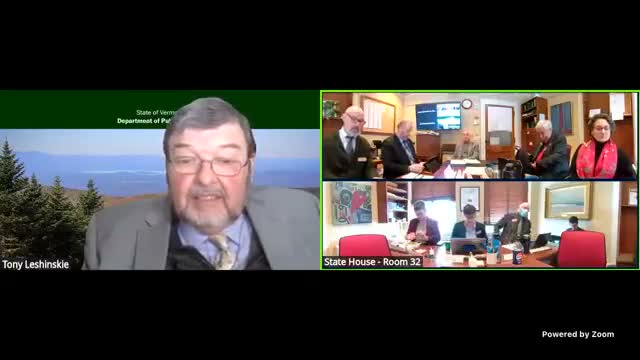
Representative Kathleen James convened the House Energy and Digital Infrastructure Committee on Feb. 17 to receive the annual report from the Nuclear Decommissioning Citizens Advisory Panel and hear technical updates on the Vermont Yankee site.
Carrick Johnson, commissioner of the Vermont Department of Public Service, said the department drafts the panel’s annual report and that the document reflects panel feedback. "This is largely a good news story," Johnson told the committee, saying NorthStar, the company overseeing decommissioning, "is undertaking the deep construction of the facility, and it's on time and on budget." Johnson said the report now includes photos and narrative to make progress clearer to the public.
Tony Lushinski, the state nuclear engineer and primary technical author of the report, reviewed the site timeline. He said Vermont Yankee shut down Dec. 29, 2014, fuel initially cooled in a spent‑fuel pool, and a campaign beginning in June 2017 moved used fuel into dry cask storage. "There are currently 68 spent fuel storage canisters holding all of that fuel," Lushinski said. He added that most above‑ground structures, including cooling towers and the turbine building, have been removed and that the above‑ground portion of the reactor building is now gone; remaining work is concentrated below grade and on river‑intake structures.
Lushinski said radioactively contaminated materials have been shipped to licensed disposal in Andrews County, Texas, and that non‑radioactive hazardous materials (asbestos and similar materials) were sent to appropriate hazardous‑waste facilities. He told the committee that clearing remaining contaminated scrap and below‑grade piping is expected to be completed this year but that safety—not speed—remains the priority.
Committee members pressed for financial context. Johnson said the panel had extensive discussion about the decommissioning fund and that, based on the work to date, the fund appears sufficient to complete the job; he said he would provide an updated financial summary to the committee. Jim Pinkerton, panel chair and a Vernon Select Board member, praised NorthStar’s responsiveness at public meetings and the company’s openness to answering technical questions raised by the panel.
The committee requested additional materials including a short slide deck with photos and a financial update. The panel offered to provide those items and to arrange a direct meeting with Power Transitions, the company holding a long‑term lease option for the property, to allow lawmakers to assess future redevelopment options.
The committee took a five‑minute break after the hearing and asked staff to post the presentation materials and report online.
The committee hearing continues to hold follow‑up items: the Department of Public Service will provide a financial update and the panel agreed to share a short presentation on site security and remaining technical work.
Carrick Johnson, commissioner of the Vermont Department of Public Service, said the department drafts the panel’s annual report and that the document reflects panel feedback. "This is largely a good news story," Johnson told the committee, saying NorthStar, the company overseeing decommissioning, "is undertaking the deep construction of the facility, and it's on time and on budget." Johnson said the report now includes photos and narrative to make progress clearer to the public.
Tony Lushinski, the state nuclear engineer and primary technical author of the report, reviewed the site timeline. He said Vermont Yankee shut down Dec. 29, 2014, fuel initially cooled in a spent‑fuel pool, and a campaign beginning in June 2017 moved used fuel into dry cask storage. "There are currently 68 spent fuel storage canisters holding all of that fuel," Lushinski said. He added that most above‑ground structures, including cooling towers and the turbine building, have been removed and that the above‑ground portion of the reactor building is now gone; remaining work is concentrated below grade and on river‑intake structures.
Lushinski said radioactively contaminated materials have been shipped to licensed disposal in Andrews County, Texas, and that non‑radioactive hazardous materials (asbestos and similar materials) were sent to appropriate hazardous‑waste facilities. He told the committee that clearing remaining contaminated scrap and below‑grade piping is expected to be completed this year but that safety—not speed—remains the priority.
Committee members pressed for financial context. Johnson said the panel had extensive discussion about the decommissioning fund and that, based on the work to date, the fund appears sufficient to complete the job; he said he would provide an updated financial summary to the committee. Jim Pinkerton, panel chair and a Vernon Select Board member, praised NorthStar’s responsiveness at public meetings and the company’s openness to answering technical questions raised by the panel.
The committee requested additional materials including a short slide deck with photos and a financial update. The panel offered to provide those items and to arrange a direct meeting with Power Transitions, the company holding a long‑term lease option for the property, to allow lawmakers to assess future redevelopment options.
The committee took a five‑minute break after the hearing and asked staff to post the presentation materials and report online.
The committee hearing continues to hold follow‑up items: the Department of Public Service will provide a financial update and the panel agreed to share a short presentation on site security and remaining technical work.
View the Full Meeting & All Its Details
This article offers just a summary. Unlock complete video, transcripts, and insights as a Founder Member.
✓
Watch full, unedited meeting videos
✓
Search every word spoken in unlimited transcripts
✓
AI summaries & real-time alerts (all government levels)
✓
Permanent access to expanding government content
30-day money-back guarantee
