Senate retirement committee advances a slate of pension and retirement bills, including municipal opt-outs and pay changes
February 17, 2026 | 2026 Legislature OK, Oklahoma
This article was created by AI summarizing key points discussed. AI makes mistakes, so for full details and context, please refer to the video of the full meeting. Please report any errors so we can fix them. Report an error »
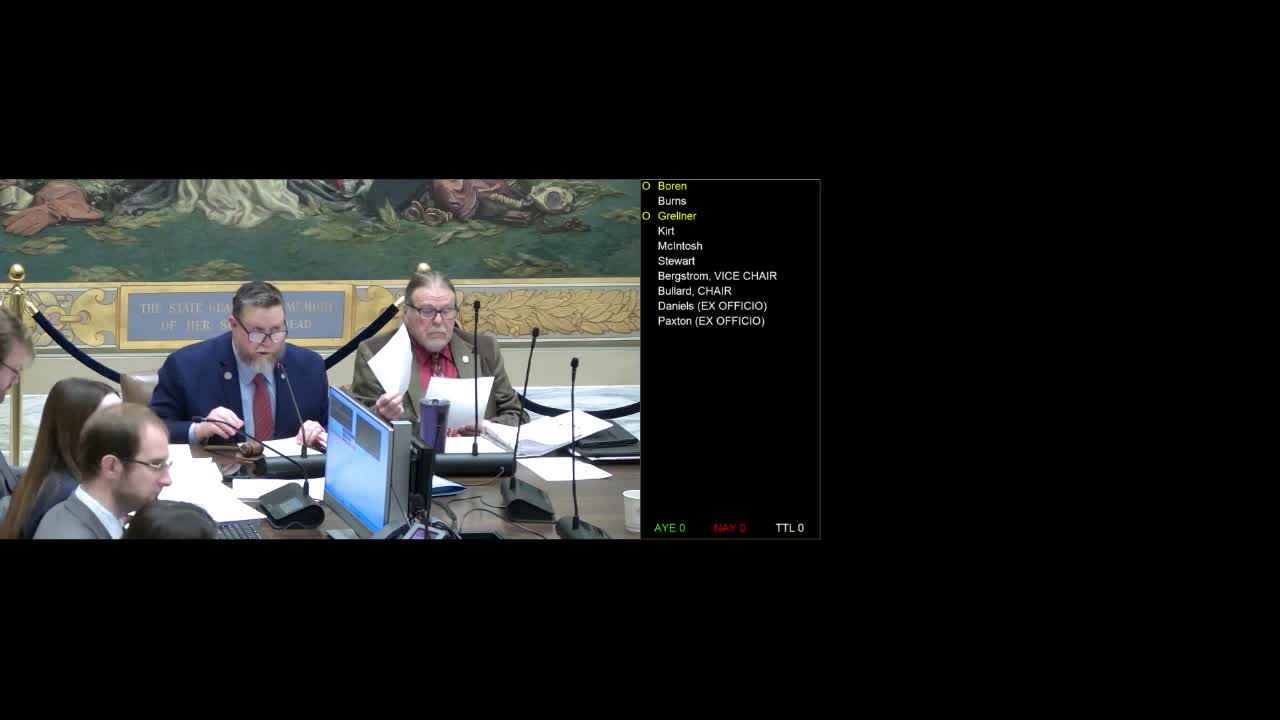
The Senate Committee on Retirement and Government Resources advanced a broad package of retirement and government-related bills on Feb. 18, moving measures that would let small municipalities shift new hires out of the state retirement plan, adjust municipal contributions to firefighter and police pensions, and change buyback and longevity-pay rules for certain public employees.
Senator Murdoch told the committee that Senate Bill 18 70 would let cities with populations under 2,000 "opt out of OPRA's and then into different retirement systems" for new employees only, citing a small, city-owned nursing home in Visei that he said is "just barely hanging on" and facing high turnover. "This bill is only gonna be for new employees, not who's already on it," Murdoch said, and he offered to amend the bill if language was unclear. The committee struck the title to allow for clearer actuarial analysis; the transcript records the bill advanced after a roll-call vote recorded as a unanimous or near-unanimous aye tally.
Other measures the committee advanced included:
- A procurement-focused bill (Senate Bill 17 22) from Senator Kern to require OMES-negotiated fees for construction managers and design consultants to be based on construction (hard) costs only, not interior design or furnishings. Kern said separating hard and soft costs on bids would better "compare apples to apples." Committee members asked for clearer definitions suitable for historic rehabilitation projects; the bill passed on a roll-call vote.
- Two related bills from Pro Tem Paxton (Senate Bills 7 15 and 7 16) proposing that municipalities increase their contributions to firefighter and police pension systems (Paxton described a 2 percentage-point increase for firefighters and said he was considering reducing the police increase to 1 percent). Paxton framed the measures as a way to fund likely future cost-of-living adjustments, saying the state already provides a substantial portion of pension funding via the insurance premium tax. He signaled openness to phasing in increases or delaying implementation to reduce municipal budget pressure; both bills advanced.
- Senate Bill 182, presented by Senator Gallaher, to allow CLEET-certified Office of Inspector General agents at the Department of Human Services and residential care specialists at the Office of Juvenile Affairs to join the hazardous-duty retirement plan and increase the retirement multiplier from 2% to 2.5%. The bill’s actuarial impact was uncertain (estimated roughly 23–26 employees possibly affected), and it passed 5–2.
- Recruitment-related legislation (Senate Bill 609) allowing out-of-state law-enforcement officers to buy up to five years of service into Oklahoma's police retirement system provided they bring the buy-in dollars; sponsors characterized it as a zero-cost recruitment tool because officers must supply the money.
- Senate Bill 169 to raise longevity pay for state employees by 50% (based on years of service). Senator Hall estimated a fiscal impact of about $15.2 million in 2027 and $16.4 million in 2028 if fully realized and said the change aimed to address a roughly 21% turnover rate among state employees. The committee debated whether longevity increases should supplement or replace full payroll raises; the bill advanced 5–2.
- A technical set of housekeeping and transparency bills: Senate Bill 1407 (Commission on the Status of Women) was amended to require OMES to provide the commission an itemized accounting of fund deposits and expenditures; SB 134 reduced the time before county employees may return to work; SB 432 raised volunteer firefighter pension credit from $7.53 to $10 per month per year of service; and SB 2039 (as amended) clarified how military service is credited for teachers buying back service at their military-era salary. Each of these bills advanced, often unanimously or near-unanimously.
- A broader reorganization measure (Senate Bill 13 56) that would move some functions out of OMES where sponsors said those functions did not fit. Senators raised concerns about moving programs such as the state-use purchasing program or pay-for-success funds without additional stakeholder analysis; sponsors agreed some components might need separate study, but the bill advanced.
The committee repeatedly struck bill titles or requested clearer language to ensure actuarial offices can produce accurate fiscal notes, and sponsors frequently volunteered to clarify definitions (for example, what counts as "interior design and furnishings" or how "salary" is defined for buybacks). Several senators urged caution about fiscal impacts and suggested phased implementation in some cases.
The committee concluded its agenda after advancing the listed measures; roll-call tallies were read into the record for each vote and appear in the committee record. Several sponsors asked to continue technical cleanups as bills move to the floor and to the relevant appropriations or policy committees for further fiscal review.
Votes at a glance (as recorded in the committee):
Senate Bill 18 70 — advanced (aye tally announced in hearing)
Senate Bill 17 22 — advanced (declared 9 ayes/0 nays)
Senate Bill 16 39 — amendment adopted; bill advanced (declared 9 ayes/0 nays)
Senate Bill 7 15 — advanced (declared 8 ayes/0 nays in transcript)
Senate Bill 7 16 — advanced (declared 8 ayes/0 nays)
Senate Bill 182 — advanced (declared 5 ayes/2 nays)
Senate Bill 609 — advanced (declared 7 ayes/0 nays)
Senate Bill 169 — advanced (declared 5 ayes/2 nays)
Senate Bill 134 — advanced (declared 7 ayes/0 nays)
Senate Bill 432 — advanced (declared 6 ayes/0 nays)
Senate Bill 1407 — advanced (declared 7 ayes/0 nays)
Senate Bill 2039 — advanced (declared 8 ayes/0 nays)
Senate Bill 1356 — advanced (declared 7 ayes/0 nays)
What’s next: Several sponsors pledged to refine language, seek actuarial analyses where fiscal notes read "non fiscal" or "unknown," or phase in implementation to reduce municipal budget impacts. Many bills will proceed to the Senate floor and, where applicable, to appropriations for funding review.
Senator Murdoch told the committee that Senate Bill 18 70 would let cities with populations under 2,000 "opt out of OPRA's and then into different retirement systems" for new employees only, citing a small, city-owned nursing home in Visei that he said is "just barely hanging on" and facing high turnover. "This bill is only gonna be for new employees, not who's already on it," Murdoch said, and he offered to amend the bill if language was unclear. The committee struck the title to allow for clearer actuarial analysis; the transcript records the bill advanced after a roll-call vote recorded as a unanimous or near-unanimous aye tally.
Other measures the committee advanced included:
- A procurement-focused bill (Senate Bill 17 22) from Senator Kern to require OMES-negotiated fees for construction managers and design consultants to be based on construction (hard) costs only, not interior design or furnishings. Kern said separating hard and soft costs on bids would better "compare apples to apples." Committee members asked for clearer definitions suitable for historic rehabilitation projects; the bill passed on a roll-call vote.
- Two related bills from Pro Tem Paxton (Senate Bills 7 15 and 7 16) proposing that municipalities increase their contributions to firefighter and police pension systems (Paxton described a 2 percentage-point increase for firefighters and said he was considering reducing the police increase to 1 percent). Paxton framed the measures as a way to fund likely future cost-of-living adjustments, saying the state already provides a substantial portion of pension funding via the insurance premium tax. He signaled openness to phasing in increases or delaying implementation to reduce municipal budget pressure; both bills advanced.
- Senate Bill 182, presented by Senator Gallaher, to allow CLEET-certified Office of Inspector General agents at the Department of Human Services and residential care specialists at the Office of Juvenile Affairs to join the hazardous-duty retirement plan and increase the retirement multiplier from 2% to 2.5%. The bill’s actuarial impact was uncertain (estimated roughly 23–26 employees possibly affected), and it passed 5–2.
- Recruitment-related legislation (Senate Bill 609) allowing out-of-state law-enforcement officers to buy up to five years of service into Oklahoma's police retirement system provided they bring the buy-in dollars; sponsors characterized it as a zero-cost recruitment tool because officers must supply the money.
- Senate Bill 169 to raise longevity pay for state employees by 50% (based on years of service). Senator Hall estimated a fiscal impact of about $15.2 million in 2027 and $16.4 million in 2028 if fully realized and said the change aimed to address a roughly 21% turnover rate among state employees. The committee debated whether longevity increases should supplement or replace full payroll raises; the bill advanced 5–2.
- A technical set of housekeeping and transparency bills: Senate Bill 1407 (Commission on the Status of Women) was amended to require OMES to provide the commission an itemized accounting of fund deposits and expenditures; SB 134 reduced the time before county employees may return to work; SB 432 raised volunteer firefighter pension credit from $7.53 to $10 per month per year of service; and SB 2039 (as amended) clarified how military service is credited for teachers buying back service at their military-era salary. Each of these bills advanced, often unanimously or near-unanimously.
- A broader reorganization measure (Senate Bill 13 56) that would move some functions out of OMES where sponsors said those functions did not fit. Senators raised concerns about moving programs such as the state-use purchasing program or pay-for-success funds without additional stakeholder analysis; sponsors agreed some components might need separate study, but the bill advanced.
The committee repeatedly struck bill titles or requested clearer language to ensure actuarial offices can produce accurate fiscal notes, and sponsors frequently volunteered to clarify definitions (for example, what counts as "interior design and furnishings" or how "salary" is defined for buybacks). Several senators urged caution about fiscal impacts and suggested phased implementation in some cases.
The committee concluded its agenda after advancing the listed measures; roll-call tallies were read into the record for each vote and appear in the committee record. Several sponsors asked to continue technical cleanups as bills move to the floor and to the relevant appropriations or policy committees for further fiscal review.
Votes at a glance (as recorded in the committee):
Senate Bill 18 70 — advanced (aye tally announced in hearing)
Senate Bill 17 22 — advanced (declared 9 ayes/0 nays)
Senate Bill 16 39 — amendment adopted; bill advanced (declared 9 ayes/0 nays)
Senate Bill 7 15 — advanced (declared 8 ayes/0 nays in transcript)
Senate Bill 7 16 — advanced (declared 8 ayes/0 nays)
Senate Bill 182 — advanced (declared 5 ayes/2 nays)
Senate Bill 609 — advanced (declared 7 ayes/0 nays)
Senate Bill 169 — advanced (declared 5 ayes/2 nays)
Senate Bill 134 — advanced (declared 7 ayes/0 nays)
Senate Bill 432 — advanced (declared 6 ayes/0 nays)
Senate Bill 1407 — advanced (declared 7 ayes/0 nays)
Senate Bill 2039 — advanced (declared 8 ayes/0 nays)
Senate Bill 1356 — advanced (declared 7 ayes/0 nays)
What’s next: Several sponsors pledged to refine language, seek actuarial analyses where fiscal notes read "non fiscal" or "unknown," or phase in implementation to reduce municipal budget impacts. Many bills will proceed to the Senate floor and, where applicable, to appropriations for funding review.
View the Full Meeting & All Its Details
This article offers just a summary. Unlock complete video, transcripts, and insights as a Founder Member.
✓
Watch full, unedited meeting videos
✓
Search every word spoken in unlimited transcripts
✓
AI summaries & real-time alerts (all government levels)
✓
Permanent access to expanding government content
30-day money-back guarantee
