Senate committee advances targeted-advertising tax to fund youth programs
February 17, 2026 | 2026 Utah Legislature, Utah Legislature, Utah Legislative Branch, Utah
This article was created by AI summarizing key points discussed. AI makes mistakes, so for full details and context, please refer to the video of the full meeting. Please report any errors so we can fix them. Report an error »
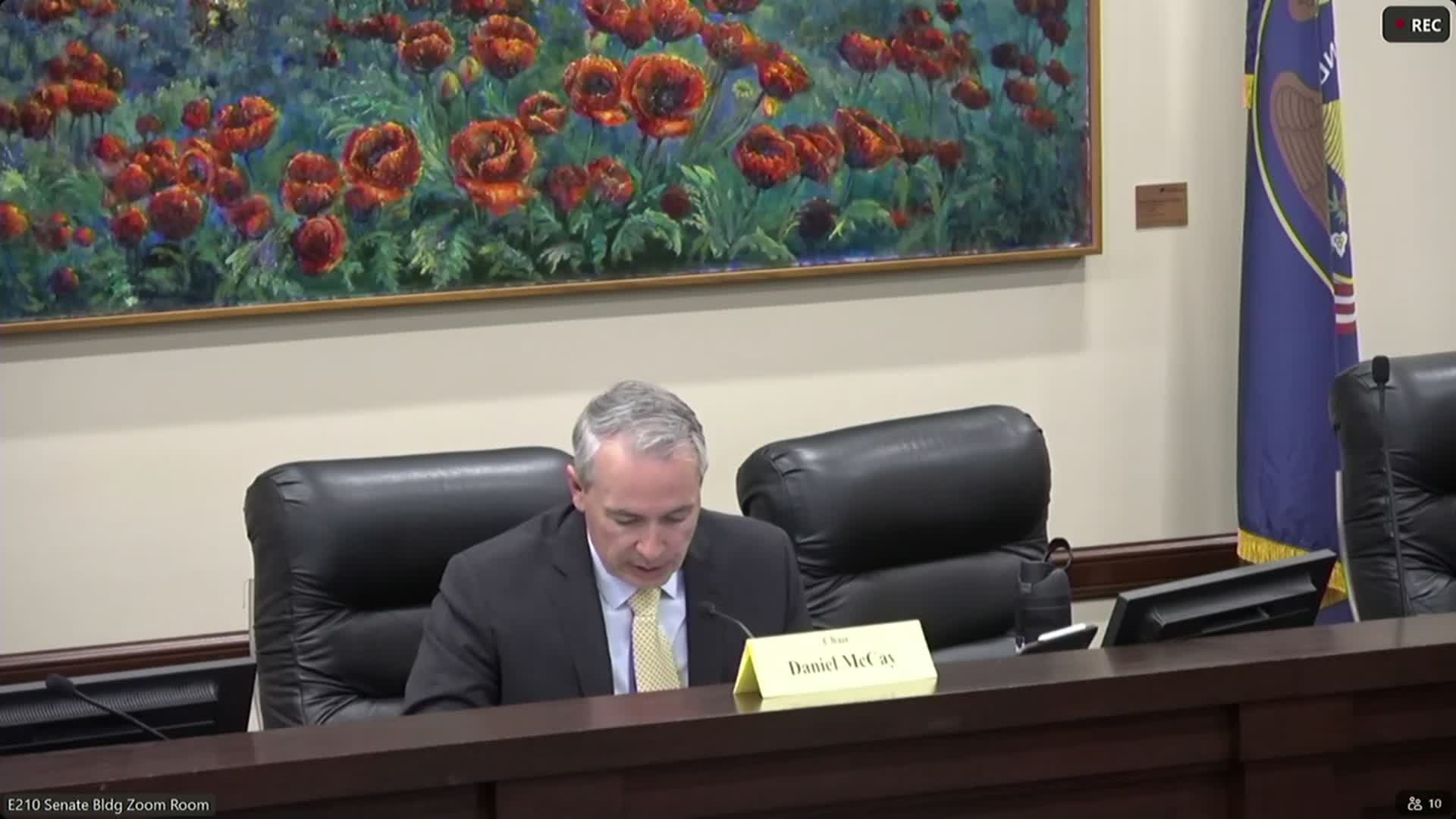
Senators on the Utah Senate Revenue and Taxation Committee on Feb. 17 voted 4–2 to give Senate Bill 287 a favorable recommendation, advancing a proposal that would levy an excise on targeted-advertising revenue to support child-focused programs.
Sponsor testimony framed the bill as a response to changes in youth mental health and attention linked to online targeted advertising. The sponsor told the committee the bill centers on accountability and would direct revenue to child literacy programs, youth sports and recreation, youth volunteerism, mental-health services, parks and other public spaces. "Our children in Utah are not commodities," the sponsor said, urging lawmakers to redirect a portion of platform profits to communities where impressions are delivered.
The measure would apply a 4.7% rate and the sponsor described eligibility limits intended to exclude small businesses; the sponsor and technical adviser said the rate is tied to the state sales-tax rate for administrative clarity. Jason Gardner, who the sponsor identified as the technical resource on tax administration, said the Tax Commission typically administers bills as written and noted the commission was available to discuss implementation.
Opponents warned of economic and legal risks. Deb Peters, testifying for Americans for Digital Opportunity, said, "This bill would impose a tax on targeted advertising" and argued it could fall on Utah small businesses while raising legal concerns under the Internet Tax Freedom Act and the commerce clause. Billy Hesterman of the Utah Taxpayers Association said the cost would likely be passed to local advertisers and ultimately consumers.
Several committee members expressed reservations about preemption risk, whether the tax would be passed through to small Utah advertisers and how to define and administer targeted advertising. The sponsor told the panel he would continue working to address those points if the bill advanced.
The committee’s favorable recommendation sends SB 287 to the full Senate. The bill now faces additional drafting and legal review and, if scheduled, floor consideration.
The committee heard multiple public commenters both for and against the measure and received technical input from Tax Commission staff; the commission said it had not taken a public position but had been working with the sponsor on administrability.
Sponsor testimony framed the bill as a response to changes in youth mental health and attention linked to online targeted advertising. The sponsor told the committee the bill centers on accountability and would direct revenue to child literacy programs, youth sports and recreation, youth volunteerism, mental-health services, parks and other public spaces. "Our children in Utah are not commodities," the sponsor said, urging lawmakers to redirect a portion of platform profits to communities where impressions are delivered.
The measure would apply a 4.7% rate and the sponsor described eligibility limits intended to exclude small businesses; the sponsor and technical adviser said the rate is tied to the state sales-tax rate for administrative clarity. Jason Gardner, who the sponsor identified as the technical resource on tax administration, said the Tax Commission typically administers bills as written and noted the commission was available to discuss implementation.
Opponents warned of economic and legal risks. Deb Peters, testifying for Americans for Digital Opportunity, said, "This bill would impose a tax on targeted advertising" and argued it could fall on Utah small businesses while raising legal concerns under the Internet Tax Freedom Act and the commerce clause. Billy Hesterman of the Utah Taxpayers Association said the cost would likely be passed to local advertisers and ultimately consumers.
Several committee members expressed reservations about preemption risk, whether the tax would be passed through to small Utah advertisers and how to define and administer targeted advertising. The sponsor told the panel he would continue working to address those points if the bill advanced.
The committee’s favorable recommendation sends SB 287 to the full Senate. The bill now faces additional drafting and legal review and, if scheduled, floor consideration.
The committee heard multiple public commenters both for and against the measure and received technical input from Tax Commission staff; the commission said it had not taken a public position but had been working with the sponsor on administrability.
View the Full Meeting & All Its Details
This article offers just a summary. Unlock complete video, transcripts, and insights as a Founder Member.
✓
Watch full, unedited meeting videos
✓
Search every word spoken in unlimited transcripts
✓
AI summaries & real-time alerts (all government levels)
✓
Permanent access to expanding government content
30-day money-back guarantee
