Appropriations panel forwards K–12 finance overhaul that adds roughly $228M over two years, includes mandates and new appropriations
February 16, 2026 | Appropriations Committee, Senate, Committees, Legislative, Wyoming
This article was created by AI summarizing key points discussed. AI makes mistakes, so for full details and context, please refer to the video of the full meeting. Please report any errors so we can fix them. Report an error »
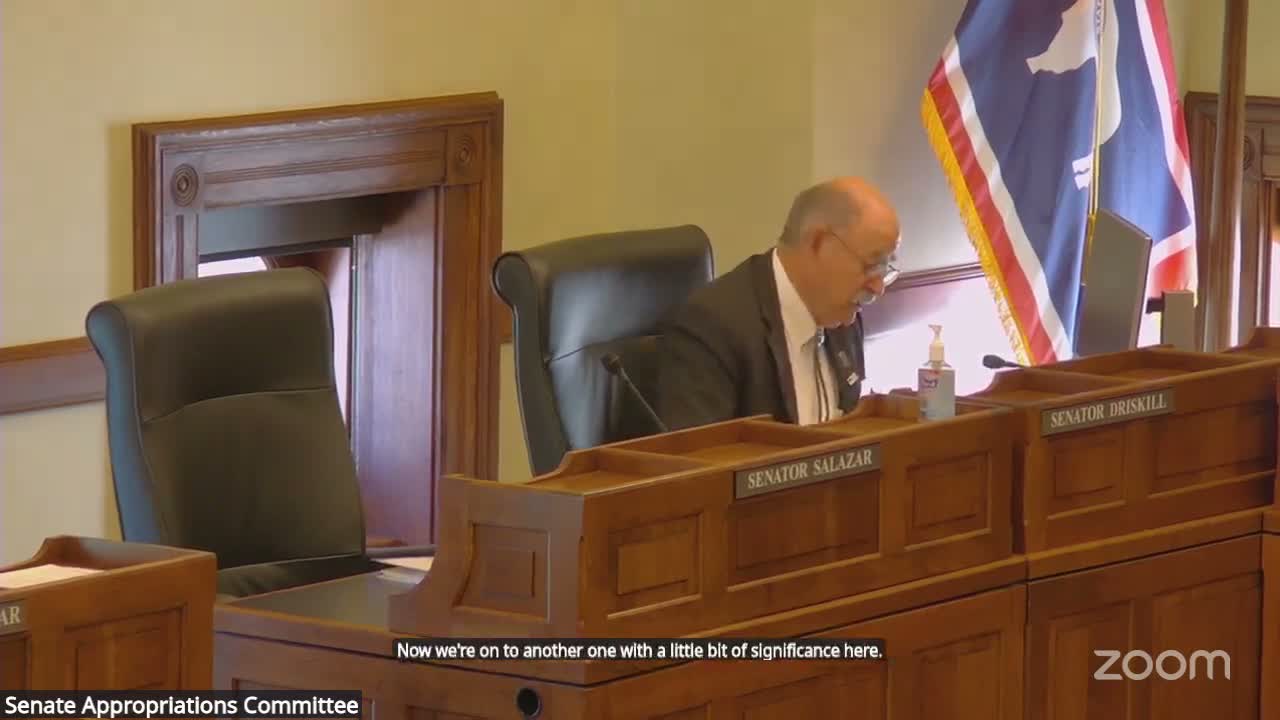
The Senate Appropriations Committee advanced Senate File 81, a 105-page bill that, as amended, increases K–12 public education funding by roughly $228.1 million over two years and includes multiple appropriations, administrative staffing, and a mandate on district participation in the state employee group insurance plan.
Matthew Wilmar, introduced to the committee as a senior school finance analyst, summarized the bill's funding effects. "The bill as introduced provided an increase in funding to K–12 public education over the next 2 years of approximately $157,100,000," Wilmar said. He said the standing committee amendment added about $70,000,000 to that total and called out major line items that affect districts statewide.
Among the appropriations and changes Wilmar identified: a $150,000 appropriation from the Public School Foundation program account for an EGI study on the feasibility of mandating school districts onto the state insurance plan; a $500,000 appropriation to continue the select committee for another interim; a $20,500,000 appropriation to pay off prior school bus purchases with reimbursement timing changed to pay districts in the year purchases occur; and a $20,000,000 recurring appropriation for dual-enrollment programs with Wyoming Community Colleges and the University of Wyoming, to be prorated if annual demand exceeds $10,000,000. Wilmar also said the standing committee amendment makes available up to $88,700,000 from the school foundation program reserve account to cash flow expenditures if districts transition onto the state plan instead of borrowing from the LSRA.
Wilmar said a $5,000,000 mental-health grant that appeared in the introduced version was deleted because the amendment accelerates funding for school nurses and elementary counselors earlier than originally scheduled. He added that EGI would require about 11 full-time positions and roughly $3,000,000 in appropriations to administer expanded coverage if districts are mandated onto the state plan.
Committee members asked whether paraeducators and teacher aides were protected under the funding model; Wilmar replied that the model does not explicitly allocate funds for those positions but that districts can use the bill's definition of "instructional resources" to hire paraeducators and that money within that silo is protected and not transferable for other uses.
Senators praised staff work, the bill was moved and seconded, and a roll-call recorded at least four ayes (Senators French, Grama, Larson and Driscoll). The presiding officer noted Chairman Salazar did not cast a vote at that time and the final tally would be left open. The committee advanced the bill to the Senate.
Matthew Wilmar, introduced to the committee as a senior school finance analyst, summarized the bill's funding effects. "The bill as introduced provided an increase in funding to K–12 public education over the next 2 years of approximately $157,100,000," Wilmar said. He said the standing committee amendment added about $70,000,000 to that total and called out major line items that affect districts statewide.
Among the appropriations and changes Wilmar identified: a $150,000 appropriation from the Public School Foundation program account for an EGI study on the feasibility of mandating school districts onto the state insurance plan; a $500,000 appropriation to continue the select committee for another interim; a $20,500,000 appropriation to pay off prior school bus purchases with reimbursement timing changed to pay districts in the year purchases occur; and a $20,000,000 recurring appropriation for dual-enrollment programs with Wyoming Community Colleges and the University of Wyoming, to be prorated if annual demand exceeds $10,000,000. Wilmar also said the standing committee amendment makes available up to $88,700,000 from the school foundation program reserve account to cash flow expenditures if districts transition onto the state plan instead of borrowing from the LSRA.
Wilmar said a $5,000,000 mental-health grant that appeared in the introduced version was deleted because the amendment accelerates funding for school nurses and elementary counselors earlier than originally scheduled. He added that EGI would require about 11 full-time positions and roughly $3,000,000 in appropriations to administer expanded coverage if districts are mandated onto the state plan.
Committee members asked whether paraeducators and teacher aides were protected under the funding model; Wilmar replied that the model does not explicitly allocate funds for those positions but that districts can use the bill's definition of "instructional resources" to hire paraeducators and that money within that silo is protected and not transferable for other uses.
Senators praised staff work, the bill was moved and seconded, and a roll-call recorded at least four ayes (Senators French, Grama, Larson and Driscoll). The presiding officer noted Chairman Salazar did not cast a vote at that time and the final tally would be left open. The committee advanced the bill to the Senate.
View the Full Meeting & All Its Details
This article offers just a summary. Unlock complete video, transcripts, and insights as a Founder Member.
✓
Watch full, unedited meeting videos
✓
Search every word spoken in unlimited transcripts
✓
AI summaries & real-time alerts (all government levels)
✓
Permanent access to expanding government content
30-day money-back guarantee
