Spokane ombuds commission recommends treating intentional vehicle strikes as deadly force
February 18, 2026 | Spokane, Spokane County, Washington
This article was created by AI summarizing key points discussed. AI makes mistakes, so for full details and context, please refer to the video of the full meeting. Please report any errors so we can fix them. Report an error »
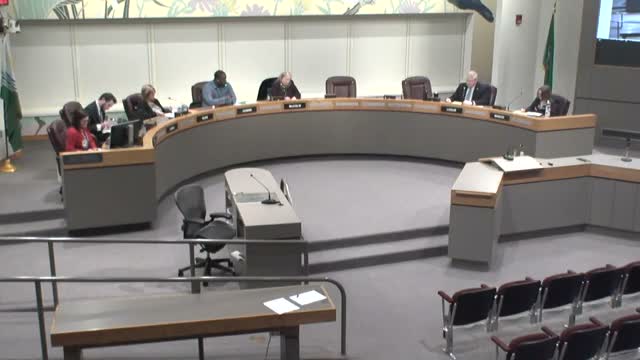
The Spokane Police Ombuds Commission voted Feb. 17 to recommend that Spokane Police Department policy treat intentional vehicle-to-person contact — including attempted contact to pin or block a pedestrian — as deadly force.
The recommendation grew out of a closing report on a July 20, 2025 domestic-violence and pursuit incident in which officers used vehicles to try to pin a suspect, deployed tasers twice and pointed firearms. Bart Logue of the Office of Police Ombudsman summarized the case and the office's conclusions, saying the incident exposed a policy classification gap.
"So as such, this report recommends, defining intentional vehicle to person contact, including, an attempted contact as deadly force of the use of force policy," Logue said, recommending that the definition be operationalized in the department's pursuit policy and that deadly-force routing, reporting and review be initiated regardless of whether injury occurred.
Logue described the incident sequence and equipment performance: officers pursued a suspect reported to have stabbed a family member, engaged in a foot pursuit, and used a patrol vehicle in low-speed attempts to pin the person against a fence. Officers made multiple taser attempts; one successful application produced neuromuscular incapacitation but a probe detached, and Logue said a procedural/handling issue produced a 12-second gap between attempted activations that SPD counted as a second application during review.
Logue told commissioners that the Attorney General's Office in Washington has a model use-of-force policy that treats intentional vehicle strikes of pedestrians as deadly force; he characterized that document as guidance rather than law and urged aligning department policy with that model to ensure appropriate administrative routing and to protect both public safety and officer due process.
One commissioner called the recommendations "a no-brainer," and another said reviewing body-worn-camera footage from the June 11 protests will be labor intensive but that the recommendations would likely protect officers and clarify expectations. The commission moved to recommend the closing-report recommendations numbered 2601–2604 and voted unanimously to approve the recommendation.
The commission did not itself change SPD policy; the action was a recommendation from the ombuds office. The report includes a list of multiple policy sections to be updated (Logue pointed commissioners to page 18 of the closing report for the full list). Commissioners said the department would need to operationalize those recommendations in pursuit and collision-review procedures.
Next steps noted by the commission included signing and finalizing the memorandum of decision before public posting; staff said they would circulate the document for signatures. No specific implementation timeline by SPD was specified at the meeting.
The recommendation grew out of a closing report on a July 20, 2025 domestic-violence and pursuit incident in which officers used vehicles to try to pin a suspect, deployed tasers twice and pointed firearms. Bart Logue of the Office of Police Ombudsman summarized the case and the office's conclusions, saying the incident exposed a policy classification gap.
"So as such, this report recommends, defining intentional vehicle to person contact, including, an attempted contact as deadly force of the use of force policy," Logue said, recommending that the definition be operationalized in the department's pursuit policy and that deadly-force routing, reporting and review be initiated regardless of whether injury occurred.
Logue described the incident sequence and equipment performance: officers pursued a suspect reported to have stabbed a family member, engaged in a foot pursuit, and used a patrol vehicle in low-speed attempts to pin the person against a fence. Officers made multiple taser attempts; one successful application produced neuromuscular incapacitation but a probe detached, and Logue said a procedural/handling issue produced a 12-second gap between attempted activations that SPD counted as a second application during review.
Logue told commissioners that the Attorney General's Office in Washington has a model use-of-force policy that treats intentional vehicle strikes of pedestrians as deadly force; he characterized that document as guidance rather than law and urged aligning department policy with that model to ensure appropriate administrative routing and to protect both public safety and officer due process.
One commissioner called the recommendations "a no-brainer," and another said reviewing body-worn-camera footage from the June 11 protests will be labor intensive but that the recommendations would likely protect officers and clarify expectations. The commission moved to recommend the closing-report recommendations numbered 2601–2604 and voted unanimously to approve the recommendation.
The commission did not itself change SPD policy; the action was a recommendation from the ombuds office. The report includes a list of multiple policy sections to be updated (Logue pointed commissioners to page 18 of the closing report for the full list). Commissioners said the department would need to operationalize those recommendations in pursuit and collision-review procedures.
Next steps noted by the commission included signing and finalizing the memorandum of decision before public posting; staff said they would circulate the document for signatures. No specific implementation timeline by SPD was specified at the meeting.
View the Full Meeting & All Its Details
This article offers just a summary. Unlock complete video, transcripts, and insights as a Founder Member.
✓
Watch full, unedited meeting videos
✓
Search every word spoken in unlimited transcripts
✓
AI summaries & real-time alerts (all government levels)
✓
Permanent access to expanding government content
30-day money-back guarantee
