House clarifies offender-transfer registration, raises fee for interstate transfers
February 17, 2026 | 2026 Utah Legislature, Utah Legislature, Utah Legislative Branch, Utah
This article was created by AI summarizing key points discussed. AI makes mistakes, so for full details and context, please refer to the video of the full meeting. Please report any errors so we can fix them. Report an error »
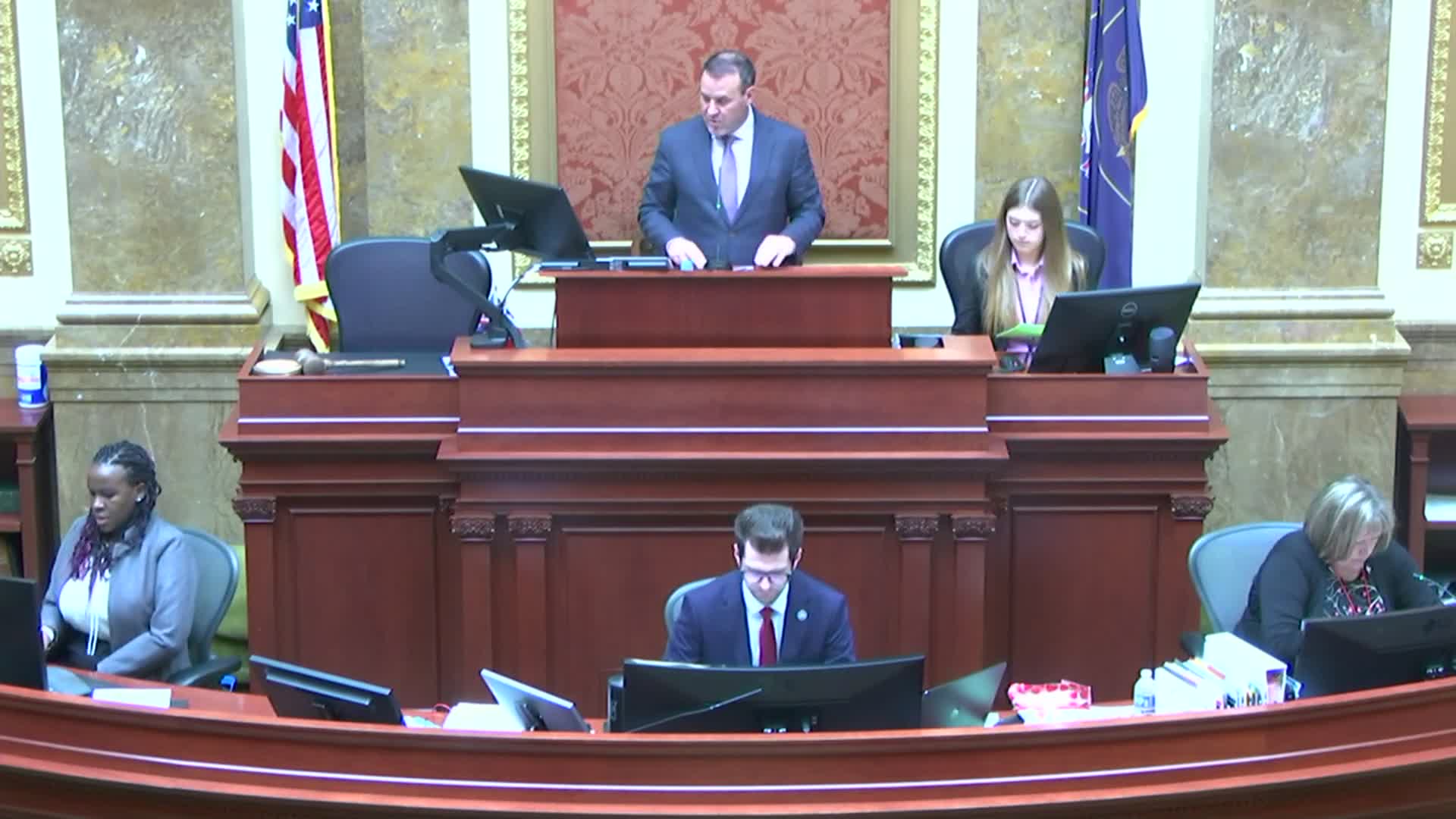
SALT LAKE CITY — The Utah House on Feb. 17 approved legislation clarifying when people who transfer to Utah under interstate agreements must be on the state's offender registry.
Representative Sam Acton presented first substitute House Bill 123, telling the chamber the measure addresses inconsistent interpretation by some officials of Utah’s current registration statute. Acton said officials in some jurisdictions have concluded that people who transfer into Utah under the Interstate Compact are not required to be placed on Utah’s registry; HB123 clarifies that incoming registrants must be listed. He described the bill as a public-safety measure, told the House the measure has no fiscal note, and reported support from the Commission on Criminal and Juvenile Justice (CCJJ), the Sentencing Commission, the Interstate Compact Commission and others.
The House voted and approved HB123 68–0; the bill will be transmitted to the Senate.
Representative Acton also presented first substitute HB134 (offender transfer amendments), which clarifies transfer procedures, improves warrant coordination with BCI and NCIC and raises the voluntary transfer fee from $50 to $90 to account for inflation and administrative costs. HB134’s presentation concluded on the floor; the transcript provided the sponsor’s explanation but the vote outcome was not recorded in the provided excerpt.
What’s next: HB123 will be sent to the Senate for further consideration; HB134 remains pending further floor action as recorded in the transcript excerpt.
Representative Sam Acton presented first substitute House Bill 123, telling the chamber the measure addresses inconsistent interpretation by some officials of Utah’s current registration statute. Acton said officials in some jurisdictions have concluded that people who transfer into Utah under the Interstate Compact are not required to be placed on Utah’s registry; HB123 clarifies that incoming registrants must be listed. He described the bill as a public-safety measure, told the House the measure has no fiscal note, and reported support from the Commission on Criminal and Juvenile Justice (CCJJ), the Sentencing Commission, the Interstate Compact Commission and others.
The House voted and approved HB123 68–0; the bill will be transmitted to the Senate.
Representative Acton also presented first substitute HB134 (offender transfer amendments), which clarifies transfer procedures, improves warrant coordination with BCI and NCIC and raises the voluntary transfer fee from $50 to $90 to account for inflation and administrative costs. HB134’s presentation concluded on the floor; the transcript provided the sponsor’s explanation but the vote outcome was not recorded in the provided excerpt.
What’s next: HB123 will be sent to the Senate for further consideration; HB134 remains pending further floor action as recorded in the transcript excerpt.
Don't Miss a Word: See the Full Meeting!
Go beyond summaries. Unlock every video, transcript, and key insight with a Founder Membership.
✓
Get instant access to full meeting videos
✓
Search and clip any phrase from complete transcripts
✓
Receive AI-powered summaries & custom alerts
✓
Enjoy lifetime, unrestricted access to government data
30-day money-back guarantee
