Committee votes to strip 'vagrancy' from municipal code, citing Supreme Court limits
February 14, 2026 | Judiciary Committee, HOUSE OF REPRESENTATIVES, Committees, Legislative, Maryland
This article was created by AI summarizing key points discussed. AI makes mistakes, so for full details and context, please refer to the video of the full meeting. Please report any errors so we can fix them. Report an error »
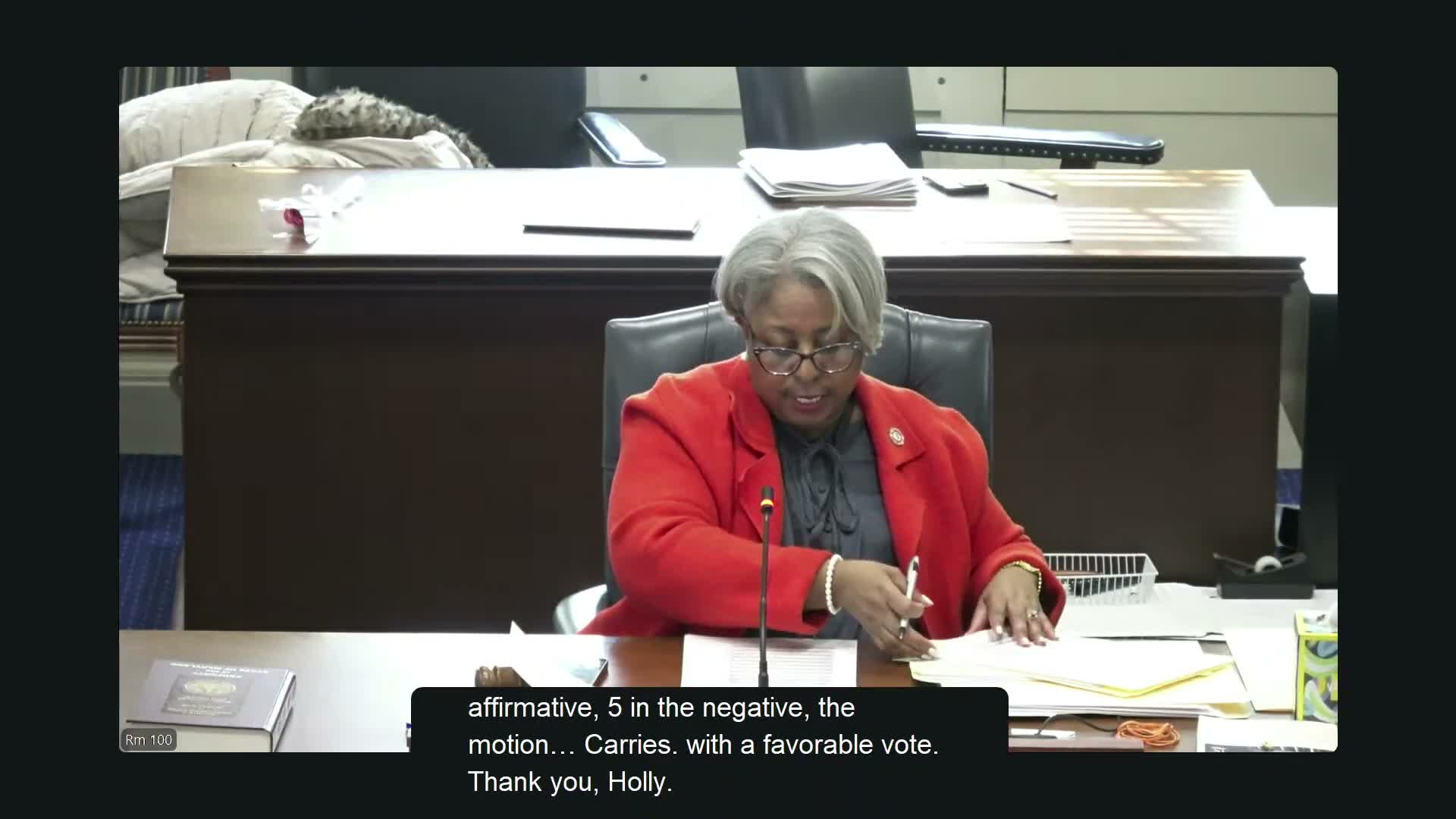
Madam Chair introduced House Bill 432, sponsored by Delegate Mary Q. North, which would remove the statutory term "vagrancy" and thereby prevent municipalities from criminalizing status-based conduct described as vagrancy. Legal counsel told the committee that the bill "puts us in line with Supreme Court jurisprudence" and that statutes criminalizing vagrancy are "void for vagueness" and impermissibly punish a person's status rather than specific conduct. Counsel referenced a 2024 Supreme Court decision involving Grants Pass and a related line of cases that distinguished prohibitions on status from targeted prohibitions on conduct such as camping or sleeping in public under defined circumstances.
Committee members probed the local consequences of removing the term. Delegate Carden asked whether municipalities would still be able to enforce disorderly-conduct or nuisance ordinances; counsel answered they could, noting those statutes target specific conduct and would not be invalidated merely because "vagrancy" is removed. Several members raised concerns about whether municipalities have defined "vagrancy" in code and whether local governments had adequate notice; Democrat Delegate McComas placed a procedural hold and said she would contact municipal associations and local jurisdictions for input.
Other members argued the bill is housekeeping that clarifies existing constitutional limits. "Basically, my summation of this bill is we are going to align our statute with the case law because the existing statute cannot be enforced," Delegate Boucher said. After additional brief remarks and explanation of votes, the committee voted by roll call; the chair announced a final tally of 14 votes in favor and 5 opposed, and the motion to move the bill favorably carried.
Committee members probed the local consequences of removing the term. Delegate Carden asked whether municipalities would still be able to enforce disorderly-conduct or nuisance ordinances; counsel answered they could, noting those statutes target specific conduct and would not be invalidated merely because "vagrancy" is removed. Several members raised concerns about whether municipalities have defined "vagrancy" in code and whether local governments had adequate notice; Democrat Delegate McComas placed a procedural hold and said she would contact municipal associations and local jurisdictions for input.
Other members argued the bill is housekeeping that clarifies existing constitutional limits. "Basically, my summation of this bill is we are going to align our statute with the case law because the existing statute cannot be enforced," Delegate Boucher said. After additional brief remarks and explanation of votes, the committee voted by roll call; the chair announced a final tally of 14 votes in favor and 5 opposed, and the motion to move the bill favorably carried.
Don't Miss a Word: See the Full Meeting!
Go beyond summaries. Unlock every video, transcript, and key insight with a Founder Membership.
✓
Get instant access to full meeting videos
✓
Search and clip any phrase from complete transcripts
✓
Receive AI-powered summaries & custom alerts
✓
Enjoy lifetime, unrestricted access to government data
30-day money-back guarantee
