Subcommittee discusses HB48 to limit automatic denial of reunification after prior involuntary termination of parental rights
February 14, 2026 | Judiciary Committee, HOUSE OF REPRESENTATIVES, Committees, Legislative, Maryland
This article was created by AI summarizing key points discussed. AI makes mistakes, so for full details and context, please refer to the video of the full meeting. Please report any errors so we can fix them. Report an error »
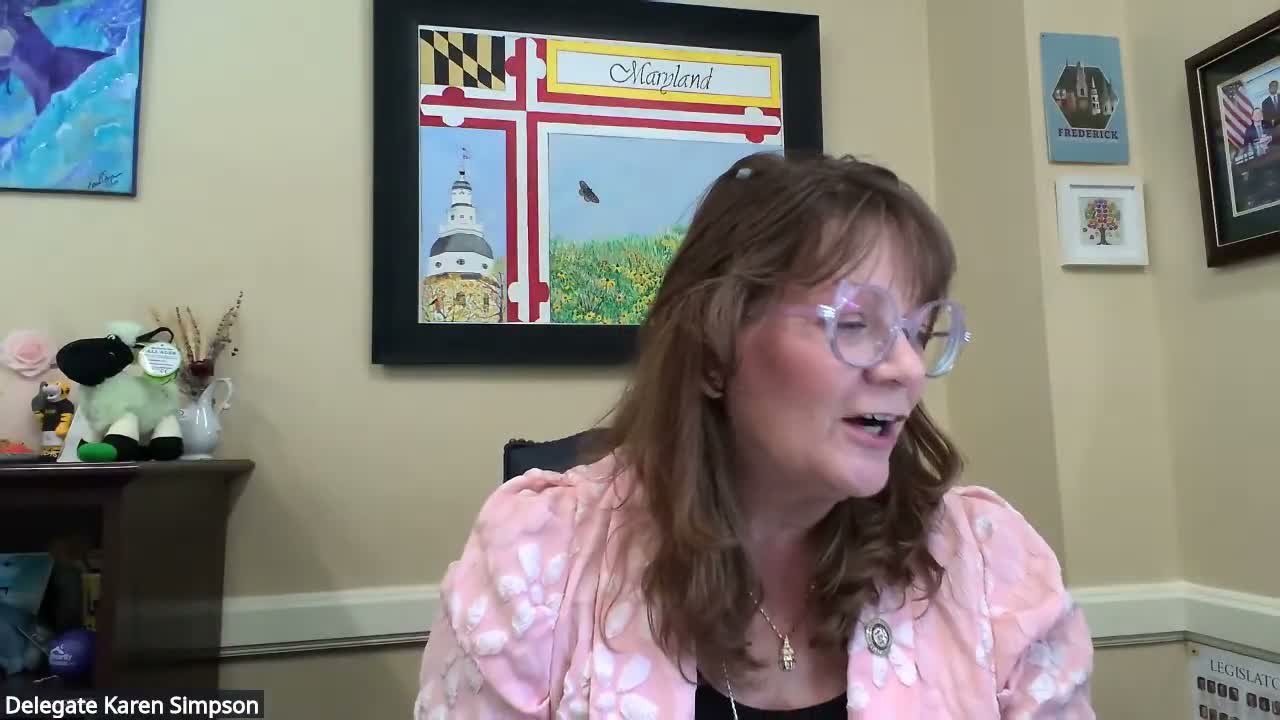
The Family Law Subcommittee discussed House Bill 48, a CINA (child in need of assistance) and terminating parental rights bill sponsored by Delegate Tolls that would change how courts treat parents who previously had parental rights terminated. The sponsor said the bill would allow parents who previously had children removed to avoid automatic removal of subsequent children solely because of a prior involuntary termination.
Heather Zanotti, assistant secretary for policy and data at the Maryland Department of Human Services, told the subcommittee DHS supports HB48 and urged caution before terminating parental rights, calling termination “frequently referred to as the civil death penalty.” Zanotti said courts should retain discretion to assess parental capacity and prioritize reunification unless there are extraordinary circumstances.
Miss Phillips of the Coalition to Protect Maryland’s Children (which includes Maryland Legal Aid) said coalition testimony supported the bill with a recommended amendment. Coalition witnesses voiced concern about the involuntary loss provision and recommended allowing judges discretion — changing statutory language that currently directs judges ("shall") to grant waivers in some aggravated circumstances so judges instead "may" grant a waiver when appropriate.
A representative from the Office of the Public Defender (identified in the transcript as Natasha Calfani) clarified that the current statutory language can penalize parents who contest a termination and lose: a parent who contests and loses may be treated more harshly for subsequent children than a parent who consented, because the law allows the department to seek a waiver of reunification efforts after a contested TPR. The public defender’s office urged removing that involuntary-loss automatic waiver so courts retain discretion and to avoid using the statute as leverage to obtain consent.
Committee members and advocates noted a drafting problem: the bill text does not amend the specific subsection attorneys identified in statute (referred to in testimony as section 8-12), which could make the intended change ineffective without a technical correction. The subcommittee took the discussion under advisement; no final vote was taken and members said they expected to revisit HB48 with possible amendments in the future.
Heather Zanotti, assistant secretary for policy and data at the Maryland Department of Human Services, told the subcommittee DHS supports HB48 and urged caution before terminating parental rights, calling termination “frequently referred to as the civil death penalty.” Zanotti said courts should retain discretion to assess parental capacity and prioritize reunification unless there are extraordinary circumstances.
Miss Phillips of the Coalition to Protect Maryland’s Children (which includes Maryland Legal Aid) said coalition testimony supported the bill with a recommended amendment. Coalition witnesses voiced concern about the involuntary loss provision and recommended allowing judges discretion — changing statutory language that currently directs judges ("shall") to grant waivers in some aggravated circumstances so judges instead "may" grant a waiver when appropriate.
A representative from the Office of the Public Defender (identified in the transcript as Natasha Calfani) clarified that the current statutory language can penalize parents who contest a termination and lose: a parent who contests and loses may be treated more harshly for subsequent children than a parent who consented, because the law allows the department to seek a waiver of reunification efforts after a contested TPR. The public defender’s office urged removing that involuntary-loss automatic waiver so courts retain discretion and to avoid using the statute as leverage to obtain consent.
Committee members and advocates noted a drafting problem: the bill text does not amend the specific subsection attorneys identified in statute (referred to in testimony as section 8-12), which could make the intended change ineffective without a technical correction. The subcommittee took the discussion under advisement; no final vote was taken and members said they expected to revisit HB48 with possible amendments in the future.
Don't Miss a Word: See the Full Meeting!
Go beyond summaries. Unlock every video, transcript, and key insight with a Founder Membership.
✓
Get instant access to full meeting videos
✓
Search and clip any phrase from complete transcripts
✓
Receive AI-powered summaries & custom alerts
✓
Enjoy lifetime, unrestricted access to government data
30-day money-back guarantee
