Bellevue Council waives readings, approves up to $5M highway allocation pledge bonds
February 17, 2026 | Bellevue, Sarpy County, Nebraska
This article was created by AI summarizing key points discussed. AI makes mistakes, so for full details and context, please refer to the video of the full meeting. Please report any errors so we can fix them. Report an error »
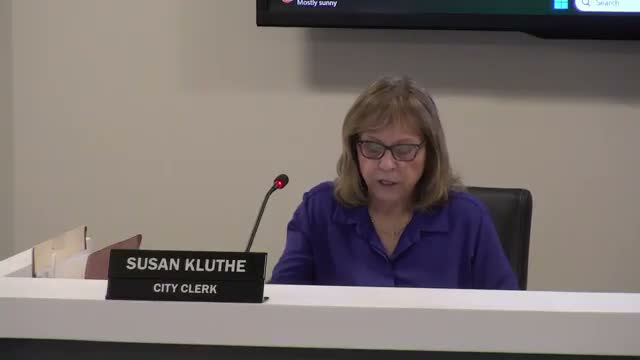
The Bellevue City Council on Feb. 17 voted to waive the three‑reading rule and adopt Ordinance No. 4,204, authorizing highway allocation fund pledge bonds, series 2026, in a principal amount not to exceed $5,000,000 to pay for certain street improvements.
Bond counsel Mike Rogers of Gilmore & Bell told the council that the primary rationale for suspending the three‑reading rule was timing: "the rationale for waiving the 3 readings is to allow the city and... the city's underwriter and me as bond counsel to move forward with, pricing the bonds at an advantageous time for the city," he said. Rogers added the bonds would reimburse the city for street improvement expenditures already made, returning those dollars to the city for other uses.
Underwriter Cody Wickham of D.A. Davidson outlined the marketing and structuring plan and presented cost comparisons for different maturities. Wickham said the city planned a relatively aggressive repayment schedule and recommended a six‑year structure to reduce total interest expense. "So approximately $520,000 of interest cost savings by shortening the life of these bonds," Wickham said when comparing a 6‑year versus a 10‑year option. He also told the council the bonds would be marketed in coordination with other scheduled municipal bond pricing to attract a broader pool of investors.
Council members asked about investor access and couponing; Wickham explained these bonds would be non‑bank qualified and available in $5,000 blocks to interested purchasers and that market timing could affect execution. He noted the city's strong credit profile and a recent S&P analyst comment that the city is "on right on the cusp of achieving a AAA rating." The council voted unanimously to suspend the rule, hold the public hearing and approve the ordinance after the hearing.
The ordinance authorizes officers to approve final terms and pledges State of Nebraska Highway Allocation funds to the bonds if necessary for payment. The immediate next steps are final pricing and closing in the coming weeks, subject to market conditions and official bond documents.
The council approved the ordinance by voice vote; proponents said the structure would replenish city funds spent on completed street work and take advantage of favorable market conditions. The city will publish the ordinance in pamphlet form as required.
Bond counsel Mike Rogers of Gilmore & Bell told the council that the primary rationale for suspending the three‑reading rule was timing: "the rationale for waiving the 3 readings is to allow the city and... the city's underwriter and me as bond counsel to move forward with, pricing the bonds at an advantageous time for the city," he said. Rogers added the bonds would reimburse the city for street improvement expenditures already made, returning those dollars to the city for other uses.
Underwriter Cody Wickham of D.A. Davidson outlined the marketing and structuring plan and presented cost comparisons for different maturities. Wickham said the city planned a relatively aggressive repayment schedule and recommended a six‑year structure to reduce total interest expense. "So approximately $520,000 of interest cost savings by shortening the life of these bonds," Wickham said when comparing a 6‑year versus a 10‑year option. He also told the council the bonds would be marketed in coordination with other scheduled municipal bond pricing to attract a broader pool of investors.
Council members asked about investor access and couponing; Wickham explained these bonds would be non‑bank qualified and available in $5,000 blocks to interested purchasers and that market timing could affect execution. He noted the city's strong credit profile and a recent S&P analyst comment that the city is "on right on the cusp of achieving a AAA rating." The council voted unanimously to suspend the rule, hold the public hearing and approve the ordinance after the hearing.
The ordinance authorizes officers to approve final terms and pledges State of Nebraska Highway Allocation funds to the bonds if necessary for payment. The immediate next steps are final pricing and closing in the coming weeks, subject to market conditions and official bond documents.
The council approved the ordinance by voice vote; proponents said the structure would replenish city funds spent on completed street work and take advantage of favorable market conditions. The city will publish the ordinance in pamphlet form as required.
Don't Miss a Word: See the Full Meeting!
Go beyond summaries. Unlock every video, transcript, and key insight with a Founder Membership.
✓
Get instant access to full meeting videos
✓
Search and clip any phrase from complete transcripts
✓
Receive AI-powered summaries & custom alerts
✓
Enjoy lifetime, unrestricted access to government data
30-day money-back guarantee
