Virginia House passes wide-ranging crossover package, advancing dozens of bills
February 17, 2026 | 2026 Legislature VA, Virginia
This article was created by AI summarizing key points discussed. AI makes mistakes, so for full details and context, please refer to the video of the full meeting. Please report any errors so we can fix them. Report an error »
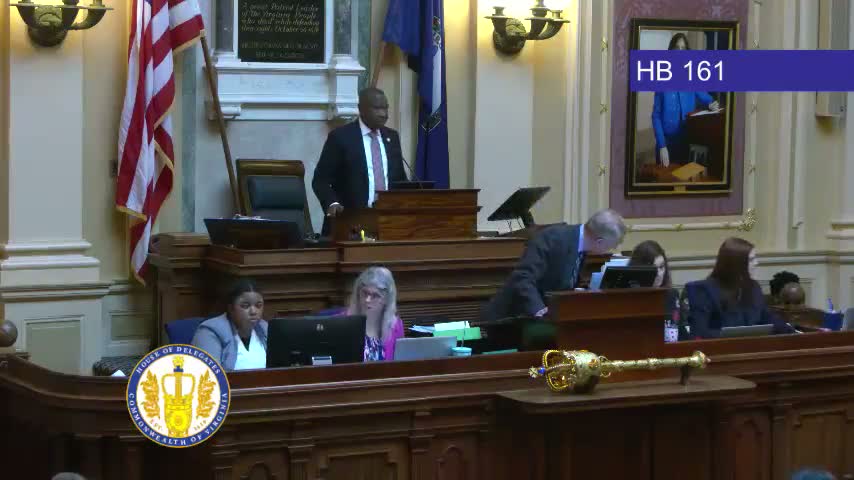
The Virginia House of Delegates completed a heavy crossover-day calendar on Feb. 17, 2026, taking final action on scores of bills across policy areas and approving a number of measures with significant budgetary or regulatory implications.
The bulk of the day was procedural: the House took a large block of uncontested third‑reading bills as a single vote and then worked through the printed regular calendar, calling each measure for final passage and recording yea‑nay tallies. Clerk roll calls and vote tallies were read aloud for each bill and recorded by the electronic voting board.
Why it matters: The package includes measures that affect state policy and local government operations — from school accountability and special education reporting to workforce protections, environmental permitting and consumer protections — and sets which bills will crossover to the Senate or be enrolled for enactment. Several items drew extended debate and close roll calls, signaling continuing interest and likely scrutiny in the other chamber.
Votes at a glance (selected items and outcomes)
- HB 642 (Cannabis retail regulation): Passed, Ayes 65 — Noes 32. Supporters said the measure replaces an unregulated market with testing, labeling and local zoning controls; opponents raised concerns about implementation (transcript statements by Delegate Krezyk, SEG 1051–1076).
- HB 161 (Virginia Lottery, casinos, internet gaming): Initially failed (Ayes 46 — Noes 49) after a heated floor speech (SEG 1890–2076); taken up later and recorded as passed when returned to the calendar (later consideration and passage noted at SEG 3180–3187).
- HB 672 (Appliance efficiency and water conservation standards): Passed (Ayes 62 — Noes 35). Opponents argued it could create a patchwork of standards and raise consumer costs (Delegate Runyon, SEG 1090–1103).
- HB 1207 (Paid family and medical leave insurance program — notice requirements and civil action): Passed (recorded votes and debate appear at SEG 2626–2687). Floor opponents warned of a new payroll tax and implementation ambiguity; proponents framed it as support for families (SEG 2626–2679, 33 spoke in favor SEG 2692–2716).
- HB 1263 (Collective bargaining for certain public employees, House bill 12 63 in transcript): Passed (Ayes 61 — Noes 35) after floor debate about local funding and mandates (SEG 2746–2831).
Other notable measures that passed include bills affecting school discipline and seclusion reporting, parole board authority and juvenile considerations, consumer protections, election administration changes (absentee ballot receipt deadlines), public safety statutes and a range of health‑related bills including maternal mental health screenings and sickle cell initiatives. Tally details for many bills are recorded in the House transcript.
What to watch next: Several closely contested measures and those that passed with narrow margins are likely to receive attention in the Senate and from stakeholders during conference or reconciliation. Bills that alter implementation responsibilities for state agencies (for example, Department of Environmental Quality studies or Department of Education guidance) may require follow‑up on funding, timelines and agency rulemaking.
Votes and motions referenced here are taken from the official House floor transcript for Feb. 17, 2026.
The bulk of the day was procedural: the House took a large block of uncontested third‑reading bills as a single vote and then worked through the printed regular calendar, calling each measure for final passage and recording yea‑nay tallies. Clerk roll calls and vote tallies were read aloud for each bill and recorded by the electronic voting board.
Why it matters: The package includes measures that affect state policy and local government operations — from school accountability and special education reporting to workforce protections, environmental permitting and consumer protections — and sets which bills will crossover to the Senate or be enrolled for enactment. Several items drew extended debate and close roll calls, signaling continuing interest and likely scrutiny in the other chamber.
Votes at a glance (selected items and outcomes)
- HB 642 (Cannabis retail regulation): Passed, Ayes 65 — Noes 32. Supporters said the measure replaces an unregulated market with testing, labeling and local zoning controls; opponents raised concerns about implementation (transcript statements by Delegate Krezyk, SEG 1051–1076).
- HB 161 (Virginia Lottery, casinos, internet gaming): Initially failed (Ayes 46 — Noes 49) after a heated floor speech (SEG 1890–2076); taken up later and recorded as passed when returned to the calendar (later consideration and passage noted at SEG 3180–3187).
- HB 672 (Appliance efficiency and water conservation standards): Passed (Ayes 62 — Noes 35). Opponents argued it could create a patchwork of standards and raise consumer costs (Delegate Runyon, SEG 1090–1103).
- HB 1207 (Paid family and medical leave insurance program — notice requirements and civil action): Passed (recorded votes and debate appear at SEG 2626–2687). Floor opponents warned of a new payroll tax and implementation ambiguity; proponents framed it as support for families (SEG 2626–2679, 33 spoke in favor SEG 2692–2716).
- HB 1263 (Collective bargaining for certain public employees, House bill 12 63 in transcript): Passed (Ayes 61 — Noes 35) after floor debate about local funding and mandates (SEG 2746–2831).
Other notable measures that passed include bills affecting school discipline and seclusion reporting, parole board authority and juvenile considerations, consumer protections, election administration changes (absentee ballot receipt deadlines), public safety statutes and a range of health‑related bills including maternal mental health screenings and sickle cell initiatives. Tally details for many bills are recorded in the House transcript.
What to watch next: Several closely contested measures and those that passed with narrow margins are likely to receive attention in the Senate and from stakeholders during conference or reconciliation. Bills that alter implementation responsibilities for state agencies (for example, Department of Environmental Quality studies or Department of Education guidance) may require follow‑up on funding, timelines and agency rulemaking.
Votes and motions referenced here are taken from the official House floor transcript for Feb. 17, 2026.
View the Full Meeting & All Its Details
This article offers just a summary. Unlock complete video, transcripts, and insights as a Founder Member.
✓
Watch full, unedited meeting videos
✓
Search every word spoken in unlimited transcripts
✓
AI summaries & real-time alerts (all government levels)
✓
Permanent access to expanding government content
30-day money-back guarantee
