Senate committee advances bill to raise penalty for assaulting first responders after testimony from firefighter-EMT
February 17, 2026 | 2026 Legislature TN, Tennessee
This article was created by AI summarizing key points discussed. AI makes mistakes, so for full details and context, please refer to the video of the full meeting. Please report any errors so we can fix them. Report an error »
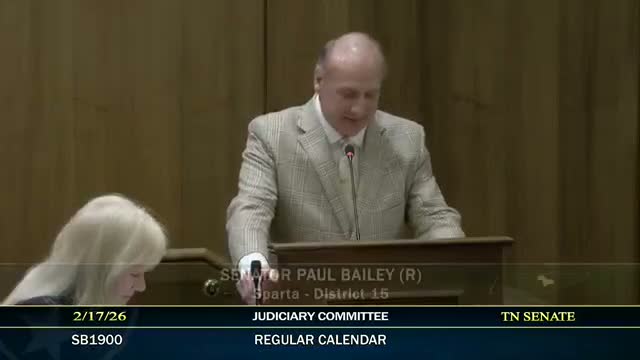
Senate Judiciary Committee members voted to advance SB 1,900, legislation that would enhance sentencing for assaults on firefighters, paramedics and other first responders, after emotional testimony from a firefighter-EMT who said she was struck while rendering aid.
"He struck me in the face with a closed fist with enough force to knock me to the floor," firefighter and advanced EMT Jade Callister told the committee, describing an on‑duty incident in February 2025. Callister urged lawmakers to treat first responders the same as law enforcement when they are assaulted, noting she continues to live with physical and emotional injury.
Sponsor Sen. Sharon Bailey said the bill would make certain assaults on first responders a Class E felony and warned that the current misdemeanor penalty — she cited a 30‑day minimum and $5,000 fine for non‑law-enforcement assaults — is insufficient. Bailey said the measure was brought originally in response to a high‑profile case and aims to deter attacks and improve retention in emergency services.
Steven Crump, executive director of the Tennessee District Attorney General Conference, told the committee prosecutors support holding offenders accountable but cautioned against statutory changes that remove prosecutorial discretion. "I don't know that there's a single answer to preventing plea agreements," Crump said, explaining that DAs evaluate evidence and negotiate charges case by case and that statutory bars on reductions could raise constitutional or separation‑of‑powers issues.
Members debated the bill's deterrence effect and the presence of a fiscal note. Sen. Roberts questioned whether harsher penalties stop impulsive assaults; sponsor Bailey and other supporters said enhanced penalties would make offenders "think twice," while opponents warned of more people jailed for longer periods.
After discussion, the committee recorded a roll‑call vote (6 yeas, 3 nays) and sent the measure to the finance committee for further review.
What happens next: SB 1,900 will be considered by the Senate finance committee, where the fiscal note and plea‑processing implications will be weighed before any floor action.
"He struck me in the face with a closed fist with enough force to knock me to the floor," firefighter and advanced EMT Jade Callister told the committee, describing an on‑duty incident in February 2025. Callister urged lawmakers to treat first responders the same as law enforcement when they are assaulted, noting she continues to live with physical and emotional injury.
Sponsor Sen. Sharon Bailey said the bill would make certain assaults on first responders a Class E felony and warned that the current misdemeanor penalty — she cited a 30‑day minimum and $5,000 fine for non‑law-enforcement assaults — is insufficient. Bailey said the measure was brought originally in response to a high‑profile case and aims to deter attacks and improve retention in emergency services.
Steven Crump, executive director of the Tennessee District Attorney General Conference, told the committee prosecutors support holding offenders accountable but cautioned against statutory changes that remove prosecutorial discretion. "I don't know that there's a single answer to preventing plea agreements," Crump said, explaining that DAs evaluate evidence and negotiate charges case by case and that statutory bars on reductions could raise constitutional or separation‑of‑powers issues.
Members debated the bill's deterrence effect and the presence of a fiscal note. Sen. Roberts questioned whether harsher penalties stop impulsive assaults; sponsor Bailey and other supporters said enhanced penalties would make offenders "think twice," while opponents warned of more people jailed for longer periods.
After discussion, the committee recorded a roll‑call vote (6 yeas, 3 nays) and sent the measure to the finance committee for further review.
What happens next: SB 1,900 will be considered by the Senate finance committee, where the fiscal note and plea‑processing implications will be weighed before any floor action.
View the Full Meeting & All Its Details
This article offers just a summary. Unlock complete video, transcripts, and insights as a Founder Member.
✓
Watch full, unedited meeting videos
✓
Search every word spoken in unlimited transcripts
✓
AI summaries & real-time alerts (all government levels)
✓
Permanent access to expanding government content
30-day money-back guarantee
