TBI director pitches rapid-DNA program and wastewater testing improvements in budget hearing
February 17, 2026 | 2026 Legislature TN, Tennessee
This article was created by AI summarizing key points discussed. AI makes mistakes, so for full details and context, please refer to the video of the full meeting. Please report any errors so we can fix them. Report an error »
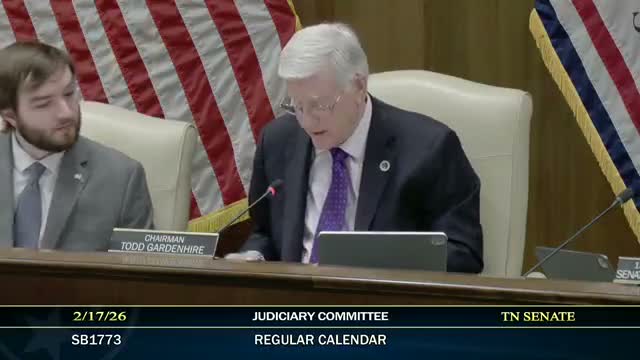
Tennessee Bureau of Investigation Director David Rausch presented the agency's budget request and outlined operational priorities including evidence‑turnaround improvements, a statewide rapid‑DNA program and pilot wastewater testing of drug compounds.
Rausch said the bureau's goal was an 8–12 week turnaround for evidence testing; for sexual‑assault kits the statewide average is now about 10.1 weeks with local lab variation (Nashville 8.9; Knoxville 11.4; Jackson 9.8). "Victims are getting answers," Rausch said, crediting investments made by the administration and the legislature.
On rapid DNA, Rausch described a capability to produce a single‑source DNA profile in roughly 90 minutes that can point investigators to potential suspects more quickly. He said the technology is not suitable for mixed‑DNA evidence (such as many sexual‑assault kits) but is valuable for many other case types and mass‑casualty victim identification: the TBI used rapid systems following the AES plant explosion in Waverly and identified 15 of 16 victims after additional testing.
Rausch also discussed wastewater testing pilots on two campuses and said preliminary results showed "eye‑opening" levels of fentanyl. He framed the program as prevention‑oriented — a way to direct outreach and treatment resources through public‑health partners rather than enforcement alone.
Committee members asked practical questions about vacancies (46 listed, many in hiring pipeline), the seven new administrative positions requested in the budget, the utility of Memphis‑funded scientists embedded in the Jackson crime lab for Memphis cases, and whether the TBI could support county-level investigative lab initiatives. Rausch said the embedded scientist model had worked well and that rapid‑DNA training for local agencies was part of the plan.
The committee approved the bureau's budget request and sent it to the finance committee for further consideration.
What happens next: TBI's capital and operating requests will be reviewed by the Senate finance committee, and any requested positions and program funding (including rapid‑DNA procurements and wastewater testing continuation) will be validated against available appropriations.
Rausch said the bureau's goal was an 8–12 week turnaround for evidence testing; for sexual‑assault kits the statewide average is now about 10.1 weeks with local lab variation (Nashville 8.9; Knoxville 11.4; Jackson 9.8). "Victims are getting answers," Rausch said, crediting investments made by the administration and the legislature.
On rapid DNA, Rausch described a capability to produce a single‑source DNA profile in roughly 90 minutes that can point investigators to potential suspects more quickly. He said the technology is not suitable for mixed‑DNA evidence (such as many sexual‑assault kits) but is valuable for many other case types and mass‑casualty victim identification: the TBI used rapid systems following the AES plant explosion in Waverly and identified 15 of 16 victims after additional testing.
Rausch also discussed wastewater testing pilots on two campuses and said preliminary results showed "eye‑opening" levels of fentanyl. He framed the program as prevention‑oriented — a way to direct outreach and treatment resources through public‑health partners rather than enforcement alone.
Committee members asked practical questions about vacancies (46 listed, many in hiring pipeline), the seven new administrative positions requested in the budget, the utility of Memphis‑funded scientists embedded in the Jackson crime lab for Memphis cases, and whether the TBI could support county-level investigative lab initiatives. Rausch said the embedded scientist model had worked well and that rapid‑DNA training for local agencies was part of the plan.
The committee approved the bureau's budget request and sent it to the finance committee for further consideration.
What happens next: TBI's capital and operating requests will be reviewed by the Senate finance committee, and any requested positions and program funding (including rapid‑DNA procurements and wastewater testing continuation) will be validated against available appropriations.
View the Full Meeting & All Its Details
This article offers just a summary. Unlock complete video, transcripts, and insights as a Founder Member.
✓
Watch full, unedited meeting videos
✓
Search every word spoken in unlimited transcripts
✓
AI summaries & real-time alerts (all government levels)
✓
Permanent access to expanding government content
30-day money-back guarantee
