Sovereign‑immunity reform sparks hours of debate; committee splits and bill fails to advance
February 17, 2026 | 2026 Legislature TN, Tennessee
This article was created by AI summarizing key points discussed. AI makes mistakes, so for full details and context, please refer to the video of the full meeting. Please report any errors so we can fix them. Report an error »
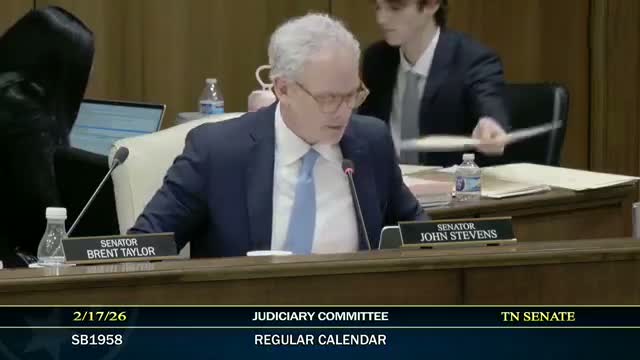
Senate proponents of SB 19‑58 framed the measure as a correction to what they described as permissive litigation practice that has allowed policy-driven suits without a clear injury, and therefore as restoring separation of powers between the legislature and the courts.
"Courts are for people that are injured, not for people who have differences of opinion," sponsor Sen. Jon Stevens told the committee, arguing the bill would require plaintiffs to show an injury before bringing certain suits challenging statewide statutes and would speed appellate review in narrow categories such as injunctions, sovereign‑immunity denials and motions to dismiss.
Representatives from the Attorney General's office (Alan Groves) testified that the office supports expedited interlocutory review in specified circumstances because it reduces needless litigation and clarifies the law earlier in high‑stakes disputes. Groves said the statutory change would not alter the forum for appeals but would produce earlier review in the appellate process when appropriate.
Opponents warned the bill would raise the bar for citizens to hold the state accountable, could insulate state action from review and create unequal access compared with suits against local governments. Senators asked whether the National Guard litigation in Memphis and other recent disputes would have been affected; sponsors answered that the change would make it more likely that unsuitable or policy‑based suits would be dismissed earlier.
After a lengthy exchange, the committee took a procedural roll call. The final tally recorded 4 ayes, 4 noes and 1 present‑not‑voting, and the bill remained in committee. Sponsors said the measure restored traditional standing principles; opponents said it improperly limits access to courts. The item concluded without passage to calendar.
"Courts are for people that are injured, not for people who have differences of opinion," sponsor Sen. Jon Stevens told the committee, arguing the bill would require plaintiffs to show an injury before bringing certain suits challenging statewide statutes and would speed appellate review in narrow categories such as injunctions, sovereign‑immunity denials and motions to dismiss.
Representatives from the Attorney General's office (Alan Groves) testified that the office supports expedited interlocutory review in specified circumstances because it reduces needless litigation and clarifies the law earlier in high‑stakes disputes. Groves said the statutory change would not alter the forum for appeals but would produce earlier review in the appellate process when appropriate.
Opponents warned the bill would raise the bar for citizens to hold the state accountable, could insulate state action from review and create unequal access compared with suits against local governments. Senators asked whether the National Guard litigation in Memphis and other recent disputes would have been affected; sponsors answered that the change would make it more likely that unsuitable or policy‑based suits would be dismissed earlier.
After a lengthy exchange, the committee took a procedural roll call. The final tally recorded 4 ayes, 4 noes and 1 present‑not‑voting, and the bill remained in committee. Sponsors said the measure restored traditional standing principles; opponents said it improperly limits access to courts. The item concluded without passage to calendar.
View the Full Meeting & All Its Details
This article offers just a summary. Unlock complete video, transcripts, and insights as a Founder Member.
✓
Watch full, unedited meeting videos
✓
Search every word spoken in unlimited transcripts
✓
AI summaries & real-time alerts (all government levels)
✓
Permanent access to expanding government content
30-day money-back guarantee
