Committee backs broad foreign-influence bill that would restrict contracts, gifts and cultural agreements
February 17, 2026 | 2026 Legislature FL, Florida
This article was created by AI summarizing key points discussed. AI makes mistakes, so for full details and context, please refer to the video of the full meeting. Please report any errors so we can fix them. Report an error »
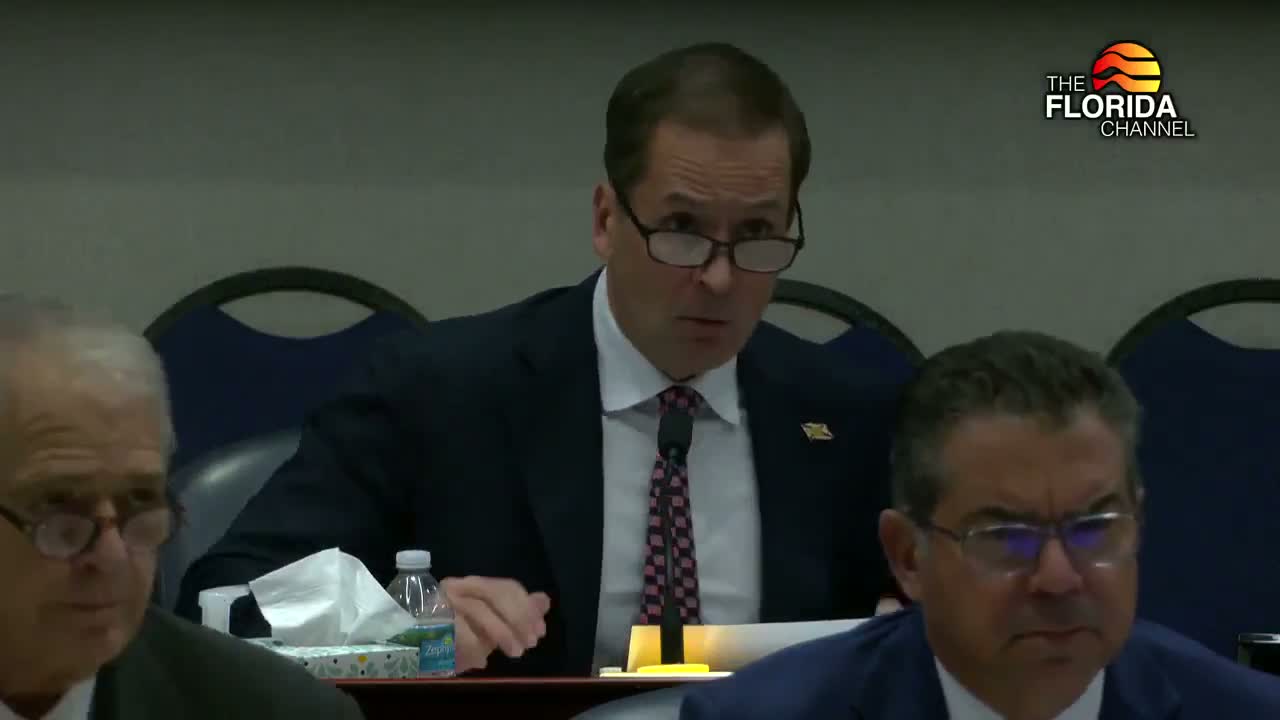
The State Affairs Committee on Feb. 18 voted to report favorably CS for CS HB 905, the Foreign Interference Restriction and Enforcement Act, a package of new transparency and restriction measures the sponsor said would protect state and local government from foreign influence. The bill requires registration of agents and organizations tied to defined foreign countries of concern; bans gifts from such countries and from designated foreign terrorist organizations; requires ethics training to include known influence efforts; and prohibits certain contracts with foreign sources of concern when those contracts would give access or control to critical infrastructure.
Sponsor remarks emphasized national-intelligence reporting on foreign campaigns to build influence at state and local levels and cited concerns about transnational repression and attempts to coerce dissidents. The strike call adopted during the hearing clarified definitions and removed provisions that had briefly included Qatar in one section.
Members questioned scope and practical impact: whether the bill's definition of "foreign source of concern" would hinder ordinary procurement (vendors headquartered abroad), what effects the linkage-institute changes would have on current students receiving in-state tuition, and whether the law might interfere with existing federal contract or foreign-policy regimes. The sponsor said linkage institutes may continue if they do not involve sources of concern and that the bill would not prohibit lawful business activity unless an entity met the statutory definition.
After debate and a strike call amendment, the committee voted to report the bill favorably (24-1). Committee members and witnesses emphasized the need for precise definitions and implementation guidance should the legislation advance.
What happens next: The bill proceeds through legislative scheduling. Supporters call it a transparency and security measure for state government; critics cautioned about overbreadth and potential impacts on international academic and cultural exchanges.
Sponsor remarks emphasized national-intelligence reporting on foreign campaigns to build influence at state and local levels and cited concerns about transnational repression and attempts to coerce dissidents. The strike call adopted during the hearing clarified definitions and removed provisions that had briefly included Qatar in one section.
Members questioned scope and practical impact: whether the bill's definition of "foreign source of concern" would hinder ordinary procurement (vendors headquartered abroad), what effects the linkage-institute changes would have on current students receiving in-state tuition, and whether the law might interfere with existing federal contract or foreign-policy regimes. The sponsor said linkage institutes may continue if they do not involve sources of concern and that the bill would not prohibit lawful business activity unless an entity met the statutory definition.
After debate and a strike call amendment, the committee voted to report the bill favorably (24-1). Committee members and witnesses emphasized the need for precise definitions and implementation guidance should the legislation advance.
What happens next: The bill proceeds through legislative scheduling. Supporters call it a transparency and security measure for state government; critics cautioned about overbreadth and potential impacts on international academic and cultural exchanges.
Don't Miss a Word: See the Full Meeting!
Go beyond summaries. Unlock every video, transcript, and key insight with a Founder Membership.
✓
Get instant access to full meeting videos
✓
Search and clip any phrase from complete transcripts
✓
Receive AI-powered summaries & custom alerts
✓
Enjoy lifetime, unrestricted access to government data
30-day money-back guarantee
