Committee advances workplace conscience bill limiting pronoun and training requirements for public employers
February 17, 2026 | 2026 Legislature FL, Florida
This article was created by AI summarizing key points discussed. AI makes mistakes, so for full details and context, please refer to the video of the full meeting. Please report any errors so we can fix them. Report an error »
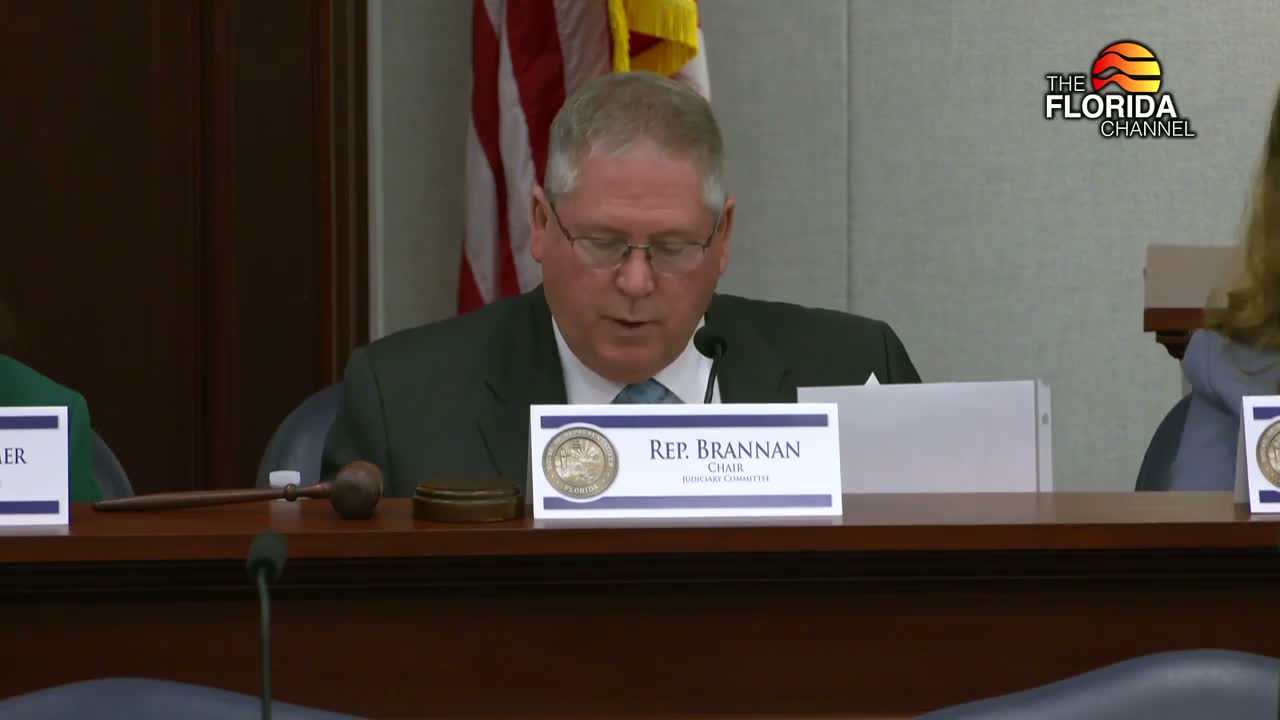
The Judiciary Committee reported HB 641, the Freedom of Conscience in the Workplace Act, after extended testimony from religious groups, public‑sector workers and civil‑rights organizations.
Sponsor Rep. Plakken described the bill as protecting public employees from compelled speech, saying it "prohibits public employers and their employees or contractors from requiring the use of preferred pronouns that do not correspond to a person's sex." Supporters framed the measure as preserving conscience rights for public employees. Opponents, including the ACLU and Equality Florida, said the measure would enable discrimination and undermine federal protections; Kara Gross of the ACLU said the bill "would undermine fundamental civil liberties" and could shield harassment.
Committee debate included legal concerns about conflicts with federal anti‑discrimination law (Bostock v. Clayton County was cited) and practical risks for employers who must reconcile state law with federal obligations. The committee recorded a 13-6 favorable report; sponsors said the bill aims to be a "shield, not a sword," while opponents warned of litigation risk and workplace harm.
Sponsor Rep. Plakken described the bill as protecting public employees from compelled speech, saying it "prohibits public employers and their employees or contractors from requiring the use of preferred pronouns that do not correspond to a person's sex." Supporters framed the measure as preserving conscience rights for public employees. Opponents, including the ACLU and Equality Florida, said the measure would enable discrimination and undermine federal protections; Kara Gross of the ACLU said the bill "would undermine fundamental civil liberties" and could shield harassment.
Committee debate included legal concerns about conflicts with federal anti‑discrimination law (Bostock v. Clayton County was cited) and practical risks for employers who must reconcile state law with federal obligations. The committee recorded a 13-6 favorable report; sponsors said the bill aims to be a "shield, not a sword," while opponents warned of litigation risk and workplace harm.
View the Full Meeting & All Its Details
This article offers just a summary. Unlock complete video, transcripts, and insights as a Founder Member.
✓
Watch full, unedited meeting videos
✓
Search every word spoken in unlimited transcripts
✓
AI summaries & real-time alerts (all government levels)
✓
Permanent access to expanding government content
30-day money-back guarantee
