House committee shortens window for environmental challenges; attorney‑fee ban draws concerns
February 14, 2026 | House Committee on Human Services, House of Representatives, Legislative , Hawaii
This article was created by AI summarizing key points discussed. AI makes mistakes, so for full details and context, please refer to the video of the full meeting. Please report any errors so we can fix them. Report an error »
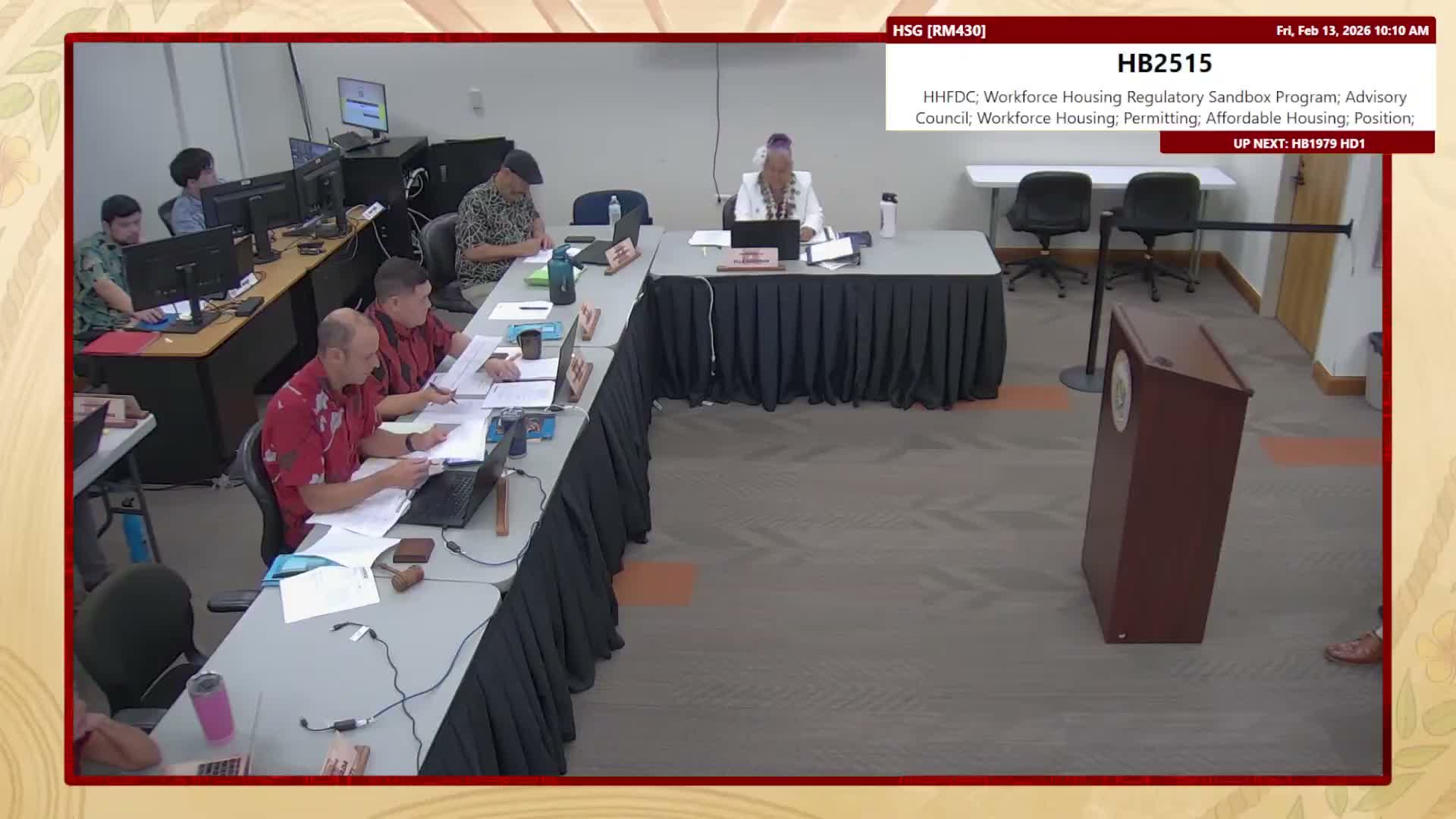
On Feb. 13 the House Housing Committee debated HB1979, a measure to shorten the period in which judicial challenges to environmental assessments (EAs) and environmental impact statements (EISs) can be filed for projects proposing affordable housing or clean energy. Mary Alice Evans of the Office of Planning and Sustainable Development said a 30‑day window would give developers more certainty and reduce delay that can render projects financially infeasible: "The environmental review process is a disclosure process...we limit the window when they can file to 30 days," she told the committee.
Supporters' rationale: Proponents — including developers and some utilities — said protracted litigation timelines frequently add costs or kill projects that rely on narrow funding windows. An Avalon Development representative said drawn‑out challenges can decide outcomes by delay rather than merit and that the bill would encourage challenges to be raised earlier when they can be meaningfully addressed.
Opposition and attorney‑fee provision: Earthjustice and others opposed parts of the bill, particularly a provision that would prohibit courts from awarding attorney's fees in covered cases. An Earthjustice witness warned that fee‑shifting serves as an important remedy for successful plaintiffs and that banning fees could discourage legitimate challenges in cases where agencies violated environmental law.
Committee action: The committee passed HB1979 with amendments and asked staff to add a preamble explaining the policy rationale and to note concerns around attorney‑fee restrictions for referral to the Judiciary Committee. The vote recorded reservations from several members.
Supporters' rationale: Proponents — including developers and some utilities — said protracted litigation timelines frequently add costs or kill projects that rely on narrow funding windows. An Avalon Development representative said drawn‑out challenges can decide outcomes by delay rather than merit and that the bill would encourage challenges to be raised earlier when they can be meaningfully addressed.
Opposition and attorney‑fee provision: Earthjustice and others opposed parts of the bill, particularly a provision that would prohibit courts from awarding attorney's fees in covered cases. An Earthjustice witness warned that fee‑shifting serves as an important remedy for successful plaintiffs and that banning fees could discourage legitimate challenges in cases where agencies violated environmental law.
Committee action: The committee passed HB1979 with amendments and asked staff to add a preamble explaining the policy rationale and to note concerns around attorney‑fee restrictions for referral to the Judiciary Committee. The vote recorded reservations from several members.
View the Full Meeting & All Its Details
This article offers just a summary. Unlock complete video, transcripts, and insights as a Founder Member.
✓
Watch full, unedited meeting videos
✓
Search every word spoken in unlimited transcripts
✓
AI summaries & real-time alerts (all government levels)
✓
Permanent access to expanding government content
30-day money-back guarantee
