Hawaiian Humane Society urges pet‑inclusive policy for state‑funded housing; committee moves bill forward
February 14, 2026 | House Committee on Human Services, House of Representatives, Legislative , Hawaii
This article was created by AI summarizing key points discussed. AI makes mistakes, so for full details and context, please refer to the video of the full meeting. Please report any errors so we can fix them. Report an error »
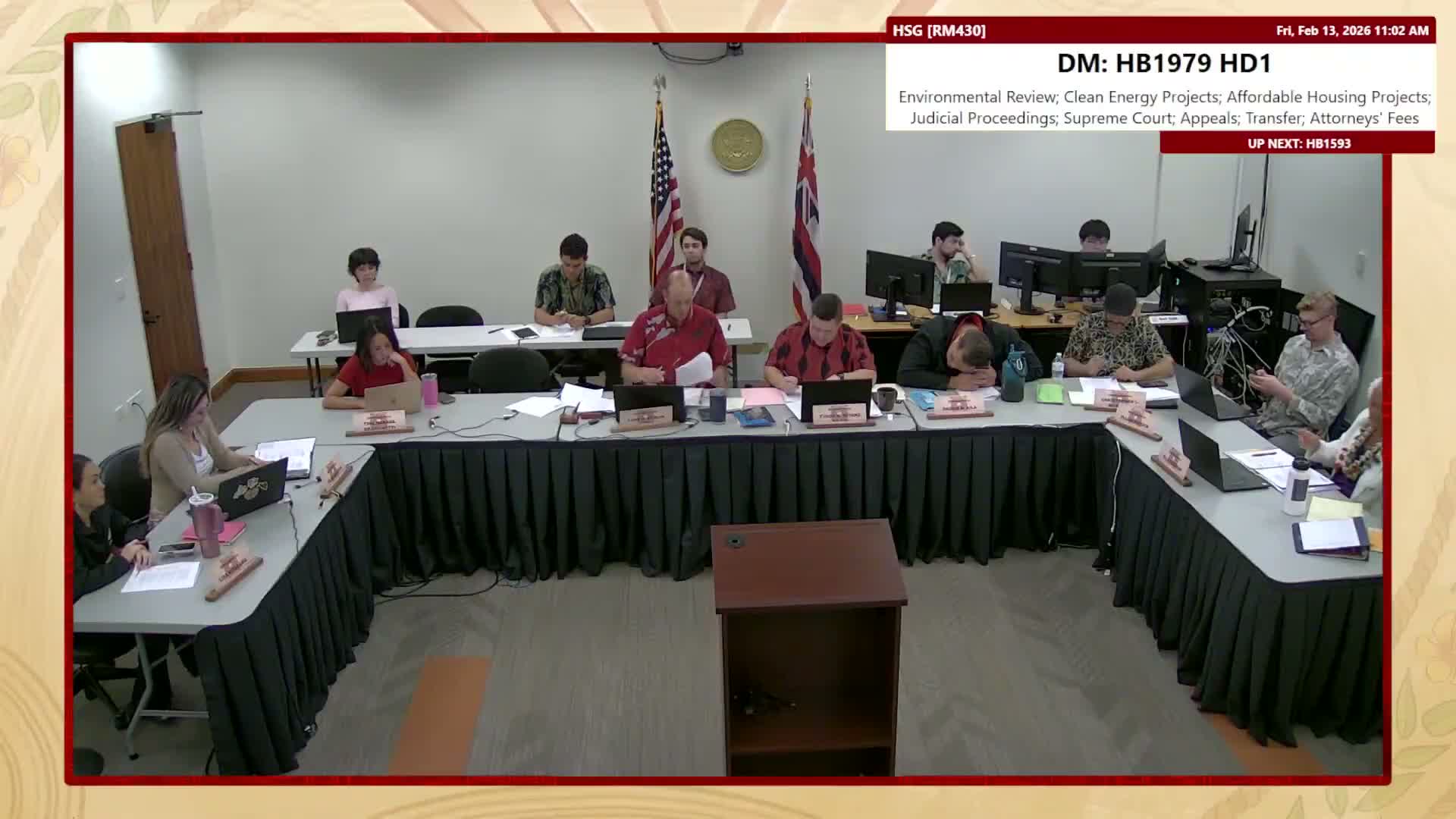
Stephanie Kendrick of the Hawaiian Humane Society told the House Housing Committee that allowing pets in taxpayer‑funded affordable housing would reflect household reality and could reduce shelter surrenders. "59% of Oahu households in a 2024 survey reported owning at least 1 pet," Kendrick said, and she added that pet‑related unit damage is uncommon: national data show only 9% of pets do any damage and average repairs are modest.
Support and evidence: Kendrick said pet‑inclusive housing fills faster and produces longer‑term tenants. Jane Arnold, an individual testifier, said pet policies can be an important tool to help people exit homelessness, noting that roughly 29% of unsheltered people have a pet and often refuse shelter because of separation.
Concerns and implementation: Committee members asked how "reasonable conditions" would be enforced and whether condominium associations and insurers could impose barriers. Witnesses noted that private property owners can still impose conditions, and several representatives suggested incentives or insurance reforms could encourage landlords to accept pets. The committee agreed to move HB1593 forward with a defective effective date to allow more stakeholder engagement on operational details.
Outcome: HB1593 was advanced with amendments; the committee asked departments and advocates to provide additional data on costs, landlord experience and possible insurance constraints.
Support and evidence: Kendrick said pet‑inclusive housing fills faster and produces longer‑term tenants. Jane Arnold, an individual testifier, said pet policies can be an important tool to help people exit homelessness, noting that roughly 29% of unsheltered people have a pet and often refuse shelter because of separation.
Concerns and implementation: Committee members asked how "reasonable conditions" would be enforced and whether condominium associations and insurers could impose barriers. Witnesses noted that private property owners can still impose conditions, and several representatives suggested incentives or insurance reforms could encourage landlords to accept pets. The committee agreed to move HB1593 forward with a defective effective date to allow more stakeholder engagement on operational details.
Outcome: HB1593 was advanced with amendments; the committee asked departments and advocates to provide additional data on costs, landlord experience and possible insurance constraints.
View the Full Meeting & All Its Details
This article offers just a summary. Unlock complete video, transcripts, and insights as a Founder Member.
✓
Watch full, unedited meeting videos
✓
Search every word spoken in unlimited transcripts
✓
AI summaries & real-time alerts (all government levels)
✓
Permanent access to expanding government content
30-day money-back guarantee
