Advocates and DHS back prerelease SNAP bill; committee seeks implementation details
February 14, 2026 | House Committee on Human Services, House of Representatives, Legislative , Hawaii
This article was created by AI summarizing key points discussed. AI makes mistakes, so for full details and context, please refer to the video of the full meeting. Please report any errors so we can fix them. Report an error »
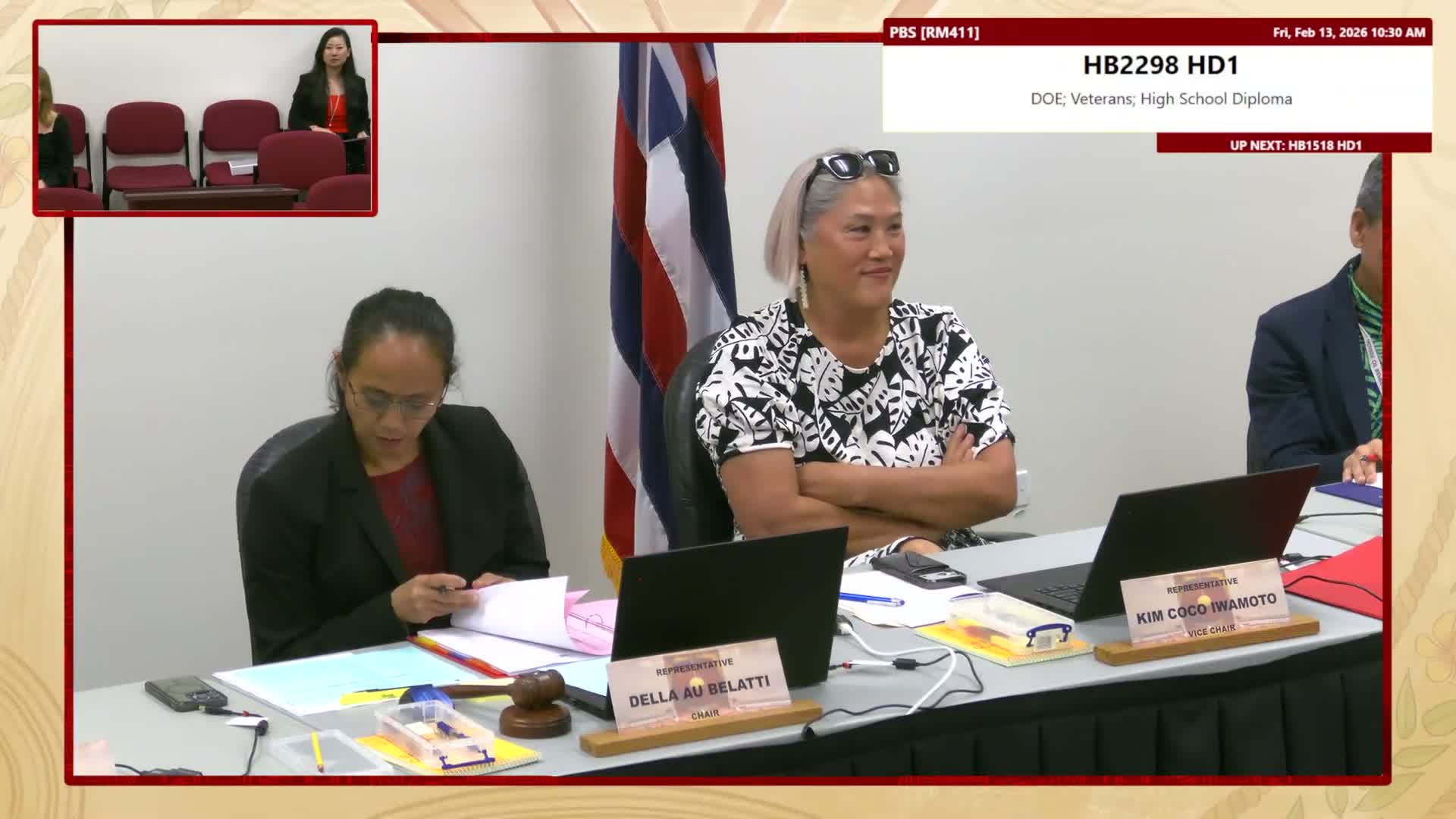
House Bill 1518 would allow the Department of Human Services to establish a prerelease Supplemental Nutrition Assistance Program (SNAP) application process for inmates nearing release upon obtaining a federal waiver, with an implementation target of January 1, 2028. Proponents said the policy reduces immediate post‑release food insecurity and supports reentry outcomes.
Jeanette Hayes, DHS SNAP administrator, said DHS stands on written testimony and is conducting a pilot in partnership with the Department of Public Safety’s reentry division. "We're currently in a pilot," she said, and DHS staff described plans to work with two facilities (Waiālae and the women's facility) to provide case management support about 10 days before release to complete applications and warm handoffs to processing centers.
The ACLU of Hawaii and the Hawaii Public Health Institute supported the measure. Chris Caulfield of the Hawaii Public Health Institute said prerelease SNAP helps prevent hunger and reduces risks associated with reentry, and explained the bill’s 2028 effective date reflects DHS’s timeline for rolling out a new eligibility system. Genevieve Maman of Hawaii Hunger Action Network and industry representatives also backed the bill.
Committee members asked DHS and DCR whether certain groups (for example, individuals with drug‑related felonies) would be eligible. DHS and DCR said eligible groups were as defined in the bill and that the pilot would help clarify operational details; DCR stressed it would not require completion of treatment programming as a condition to apply. DHS and DCR described target processing roughly 10 days before release to facilitate immediate access to benefits after reentry.
No vote was taken. The committee asked DHS and DCR for implementation details, verification of eligibility rules, and clarification on how the pilot interfaces with the new DHS eligibility system prior to decision making.
The committee adjourned with decision making deferred to the next scheduled meeting.
Jeanette Hayes, DHS SNAP administrator, said DHS stands on written testimony and is conducting a pilot in partnership with the Department of Public Safety’s reentry division. "We're currently in a pilot," she said, and DHS staff described plans to work with two facilities (Waiālae and the women's facility) to provide case management support about 10 days before release to complete applications and warm handoffs to processing centers.
The ACLU of Hawaii and the Hawaii Public Health Institute supported the measure. Chris Caulfield of the Hawaii Public Health Institute said prerelease SNAP helps prevent hunger and reduces risks associated with reentry, and explained the bill’s 2028 effective date reflects DHS’s timeline for rolling out a new eligibility system. Genevieve Maman of Hawaii Hunger Action Network and industry representatives also backed the bill.
Committee members asked DHS and DCR whether certain groups (for example, individuals with drug‑related felonies) would be eligible. DHS and DCR said eligible groups were as defined in the bill and that the pilot would help clarify operational details; DCR stressed it would not require completion of treatment programming as a condition to apply. DHS and DCR described target processing roughly 10 days before release to facilitate immediate access to benefits after reentry.
No vote was taken. The committee asked DHS and DCR for implementation details, verification of eligibility rules, and clarification on how the pilot interfaces with the new DHS eligibility system prior to decision making.
The committee adjourned with decision making deferred to the next scheduled meeting.
Don't Miss a Word: See the Full Meeting!
Go beyond summaries. Unlock every video, transcript, and key insight with a Founder Membership.
✓
Get instant access to full meeting videos
✓
Search and clip any phrase from complete transcripts
✓
Receive AI-powered summaries & custom alerts
✓
Enjoy lifetime, unrestricted access to government data
30-day money-back guarantee
