Idaho State Police details research partnerships, data‑sharing and national benchmarking at virtual workshop
February 17, 2026 | Office of Justice Programs, Department of Justice (DOJ), Executive, Federal
This article was created by AI summarizing key points discussed. AI makes mistakes, so for full details and context, please refer to the video of the full meeting. Please report any errors so we can fix them. Report an error »
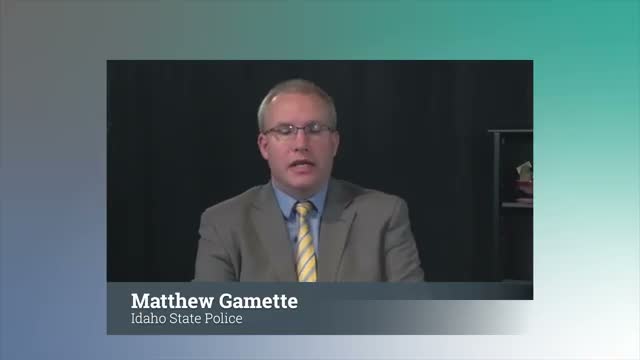
Idaho State Police Forensic Services outlined how partnerships with academic researchers and participation in a national benchmarking project are shaping laboratory policy and practice during day two of a virtual peer‑to‑peer workshop.
Matthew, a representative of Idaho State Police Forensic Services, said the agency uses memoranda of understanding and controlled data‑sharing arrangements to allow researchers to analyze laboratory data and return findings that inform policy. "We have many research partners that we've set up informal and formal relationships with," he said, adding that those partnerships have produced peer‑reviewed publications and helped drive data‑driven decisions.
The laboratory manager described several operational changes driven by research. Matthew said the lab is now testing all swabs in sexual assault kits and is revising how it handles medical records after finding a disconnect between kit retention statutes and medical‑records retention. He told attendees that the state statute provides "a 10 year or a 55 year retention on the kits," while noting there was no corresponding retention requirement for medical records; based on survey and research findings, he said the lab is changing that practice.
Security, compliance and technical capacity shape how researchers access data, Matthew said. He outlined requirements such as background checks, CJIS training and decisions about whether data will be exported manually or shared through automated feeds. Enabling researcher access also, he said, requires coordination with IT, finance, human resources and LIMS administrators and may require adding data fields and training lab staff to support queries.
Matthew introduced Project Foresight, a voluntary National Institute of Justice and West Virginia University benchmarking project that collects standardized data from participating crime laboratories. He said the effort allows participating labs to compare workloads, costs and productivity and to use tools such as a workforce calculator to estimate staffing needs.
Citing an example from researchers who used Project Foresight data, Matthew said Stanford researchers Wing and Ween calculated what he described as a societal benefit of "$133,671 per kit or an 8,000% return on investment," and said testing a kit cost about "$16.41." He framed these figures as part of broader policy conversations about funding laboratory work and emphasized that numbers are only one measure: "Again, I want I don't want the focus to be just on, the numbers because that's 1 measure. We want the focus today to be about victims and about survivors of these crimes."
Matthew closed by previewing presentations to follow, including work by Julie Valentine on dating‑app research and other researchers who will present findings from lab data. The workshop will continue with those presentations and practical discussion of how to operationalize research findings in forensic laboratories.
Matthew, a representative of Idaho State Police Forensic Services, said the agency uses memoranda of understanding and controlled data‑sharing arrangements to allow researchers to analyze laboratory data and return findings that inform policy. "We have many research partners that we've set up informal and formal relationships with," he said, adding that those partnerships have produced peer‑reviewed publications and helped drive data‑driven decisions.
The laboratory manager described several operational changes driven by research. Matthew said the lab is now testing all swabs in sexual assault kits and is revising how it handles medical records after finding a disconnect between kit retention statutes and medical‑records retention. He told attendees that the state statute provides "a 10 year or a 55 year retention on the kits," while noting there was no corresponding retention requirement for medical records; based on survey and research findings, he said the lab is changing that practice.
Security, compliance and technical capacity shape how researchers access data, Matthew said. He outlined requirements such as background checks, CJIS training and decisions about whether data will be exported manually or shared through automated feeds. Enabling researcher access also, he said, requires coordination with IT, finance, human resources and LIMS administrators and may require adding data fields and training lab staff to support queries.
Matthew introduced Project Foresight, a voluntary National Institute of Justice and West Virginia University benchmarking project that collects standardized data from participating crime laboratories. He said the effort allows participating labs to compare workloads, costs and productivity and to use tools such as a workforce calculator to estimate staffing needs.
Citing an example from researchers who used Project Foresight data, Matthew said Stanford researchers Wing and Ween calculated what he described as a societal benefit of "$133,671 per kit or an 8,000% return on investment," and said testing a kit cost about "$16.41." He framed these figures as part of broader policy conversations about funding laboratory work and emphasized that numbers are only one measure: "Again, I want I don't want the focus to be just on, the numbers because that's 1 measure. We want the focus today to be about victims and about survivors of these crimes."
Matthew closed by previewing presentations to follow, including work by Julie Valentine on dating‑app research and other researchers who will present findings from lab data. The workshop will continue with those presentations and practical discussion of how to operationalize research findings in forensic laboratories.
View the Full Meeting & All Its Details
This article offers just a summary. Unlock complete video, transcripts, and insights as a Founder Member.
✓
Watch full, unedited meeting videos
✓
Search every word spoken in unlimited transcripts
✓
AI summaries & real-time alerts (all government levels)
✓
Permanent access to expanding government content
30-day money-back guarantee
