House GOP frames 2026 agenda around anti-fraud OIG bill, tax conformity and school standards
February 16, 2026 | 2026 Legislature MN, Minnesota
This article was created by AI summarizing key points discussed. AI makes mistakes, so for full details and context, please refer to the video of the full meeting. Please report any errors so we can fix them. Report an error »
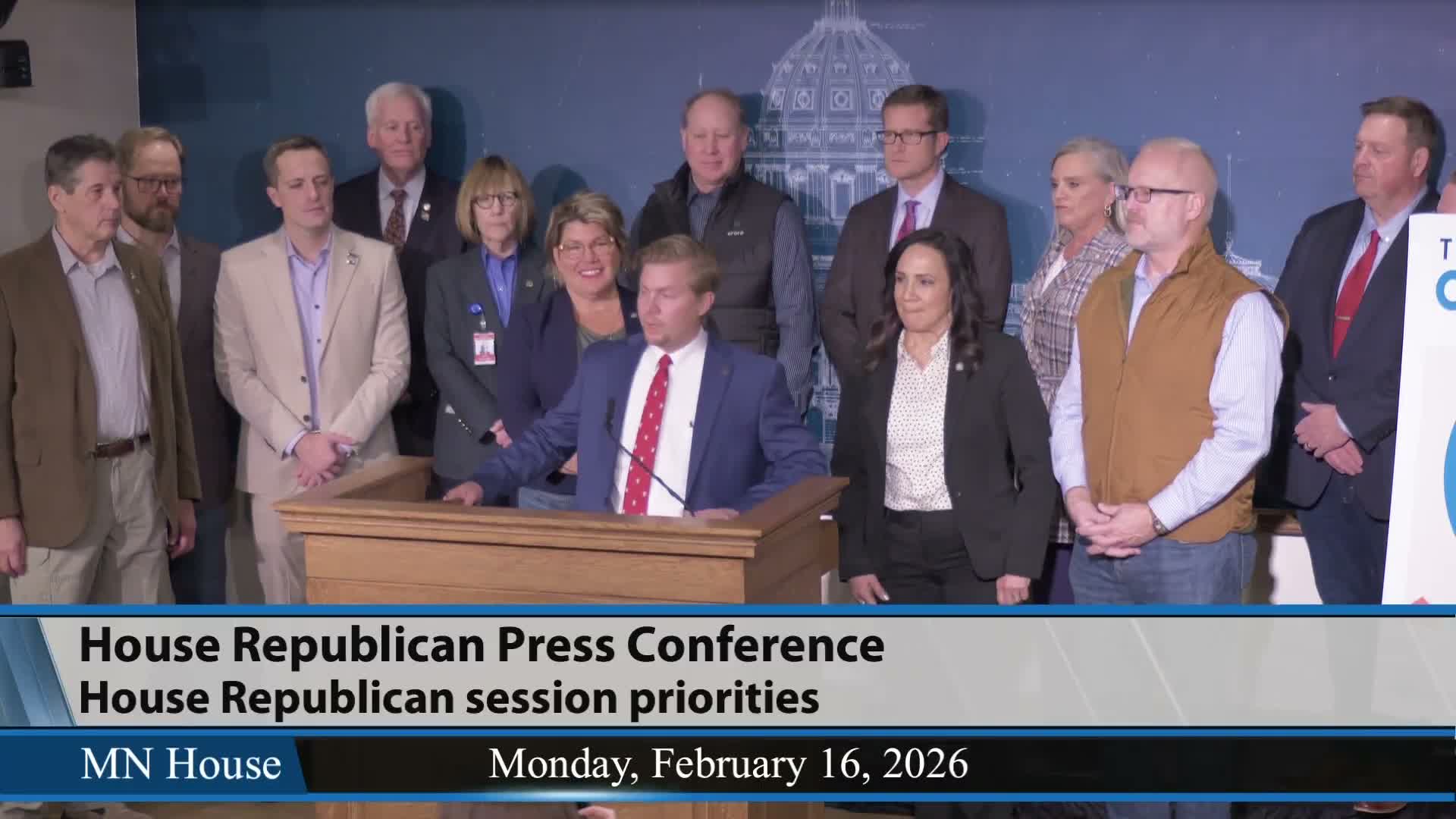
House Republican leaders opened a press conference by framing the tied 2026 Minnesota legislative session around an anti‑fraud push and a suite of priorities intended to make the state more affordable and competitive.
House Republican leader Harry Niska said stopping fraud will be “a top priority,” identified House File 1 as an OIG bill to create an independent inspector general, and said Republicans will introduce a "Fraud Isn't Free Act" that would create “consequences for agencies and commissioners who allow fraud to occur unchecked.” He also described legislation to create statutory guidelines for programs the caucus considers at high risk of fraud and cited an Office of Legislative Auditor (OLA) report documenting what he called employees backdating and making up documentation. "As far as we know, no one has faced consequences for that," Niska said.
On taxes and affordability, Niska said Republicans will pursue tax conformity to allow Minnesotans to benefit from new federal scholarship tax credits and to cut taxes on tips and overtime. He told reporters Republicans will study why property tax increases continue and are considering a permanent reinsurance program to bring down health‑care costs. Niska also repeated the caucus’s fiscal critique: he said Minnesotans faced an $18 billion surplus that was spent and claimed taxes and fees rose by $10 billion, leaving the state headed toward a deficit.
The caucus also flagged public‑safety and education initiatives. Niska proposed bills to require repeat offenders to serve sentences, increase sentences for repeat gun criminals and pursue what he called judicial accountability and transparency, saying some judges have "allowed violent criminals out to reoffend." For schools, the speakers described a school safety bill to expand flexibility for funding safety personnel and provide one‑time facility grants, while the Speaker emphasized raising standards and reducing mandates so students can benefit from federal education choice tax credits and stronger reading, science and math curricula.
On economic competitiveness, the caucus said it will pursue permitting and other reforms to support mining, align the tax code with federal research and development incentives and lift the state nuclear moratorium to reduce energy costs.
The press conference closed with leaders saying committees must produce bipartisan majorities to move bills forward in the tied legislature, but that some committee control (the fraud committee) will remain with Republicans. The speakers said they are ready to bring measures to committee and negotiate changes where appropriate.
The next step for measures the caucus named — including House File 1 and the statutory changes Niska described — is referral to committee and hearings; no formal motions or votes were taken at the press conference.
House Republican leader Harry Niska said stopping fraud will be “a top priority,” identified House File 1 as an OIG bill to create an independent inspector general, and said Republicans will introduce a "Fraud Isn't Free Act" that would create “consequences for agencies and commissioners who allow fraud to occur unchecked.” He also described legislation to create statutory guidelines for programs the caucus considers at high risk of fraud and cited an Office of Legislative Auditor (OLA) report documenting what he called employees backdating and making up documentation. "As far as we know, no one has faced consequences for that," Niska said.
On taxes and affordability, Niska said Republicans will pursue tax conformity to allow Minnesotans to benefit from new federal scholarship tax credits and to cut taxes on tips and overtime. He told reporters Republicans will study why property tax increases continue and are considering a permanent reinsurance program to bring down health‑care costs. Niska also repeated the caucus’s fiscal critique: he said Minnesotans faced an $18 billion surplus that was spent and claimed taxes and fees rose by $10 billion, leaving the state headed toward a deficit.
The caucus also flagged public‑safety and education initiatives. Niska proposed bills to require repeat offenders to serve sentences, increase sentences for repeat gun criminals and pursue what he called judicial accountability and transparency, saying some judges have "allowed violent criminals out to reoffend." For schools, the speakers described a school safety bill to expand flexibility for funding safety personnel and provide one‑time facility grants, while the Speaker emphasized raising standards and reducing mandates so students can benefit from federal education choice tax credits and stronger reading, science and math curricula.
On economic competitiveness, the caucus said it will pursue permitting and other reforms to support mining, align the tax code with federal research and development incentives and lift the state nuclear moratorium to reduce energy costs.
The press conference closed with leaders saying committees must produce bipartisan majorities to move bills forward in the tied legislature, but that some committee control (the fraud committee) will remain with Republicans. The speakers said they are ready to bring measures to committee and negotiate changes where appropriate.
The next step for measures the caucus named — including House File 1 and the statutory changes Niska described — is referral to committee and hearings; no formal motions or votes were taken at the press conference.
View the Full Meeting & All Its Details
This article offers just a summary. Unlock complete video, transcripts, and insights as a Founder Member.
✓
Watch full, unedited meeting videos
✓
Search every word spoken in unlimited transcripts
✓
AI summaries & real-time alerts (all government levels)
✓
Permanent access to expanding government content
30-day money-back guarantee
