Regional officials warn expanded Catawba River water transfers could strain upstream communities
February 16, 2026 | Burke County, North Carolina
This article was created by AI summarizing key points discussed. AI makes mistakes, so for full details and context, please refer to the video of the full meeting. Please report any errors so we can fix them. Report an error »
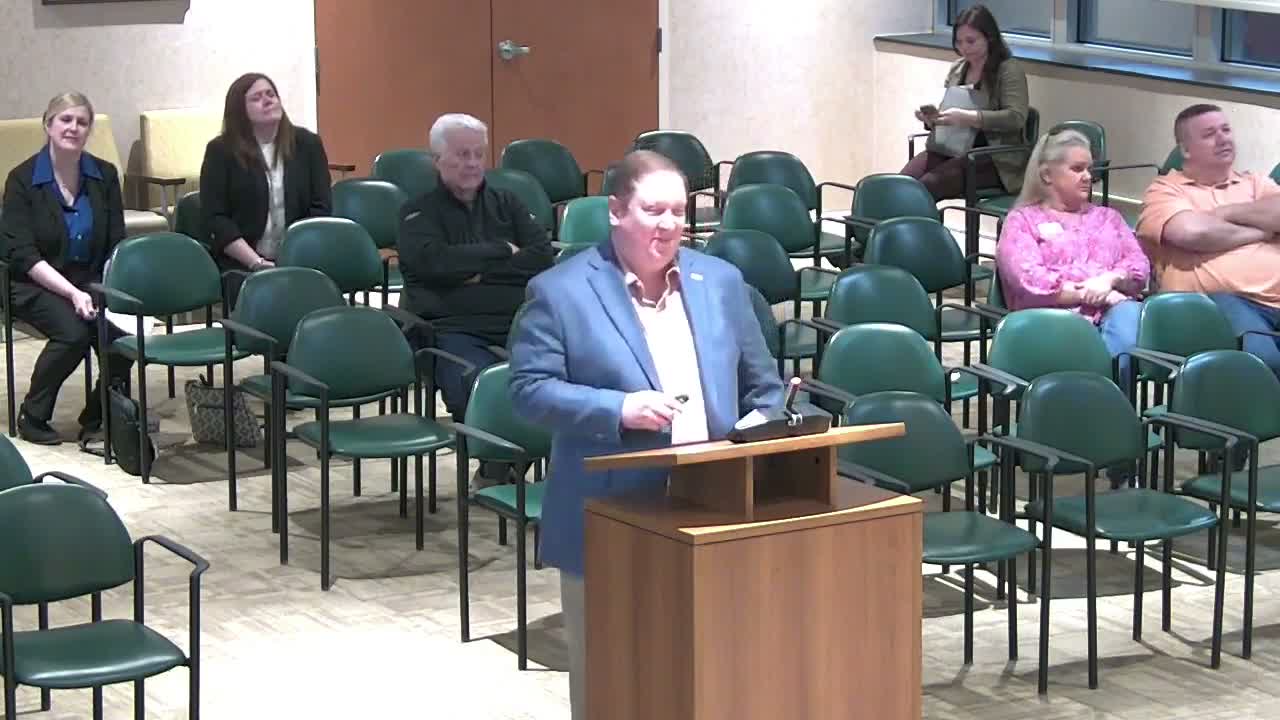
Anthony Starr, executive director of the Western Piedmont Council of Governments, told the Burke County Board of Commissioners that proposed expansions of interbasin transfers (IBTs) from the Catawba River merit close scrutiny because they shift water and related impacts out of the source basin.
"Water that is transferred across that ridgeline and doesn't return is counted as the IBT," Starr said, outlining how Charlotte Water currently holds a 33 million-gallon-per-day certificate and is discussing requests that could take total transfers substantially higher. He warned that a potential 63 million-gallon-per-day transfer "is significant" compared with local conservation goals and regional storage limits.
Starr described economic and environmental consequences upstream: reduced storage, higher pollutant concentration that raises treatment costs, and the possibility that downstream demand could accelerate safe-yield limits. "We're not against Charlotte growing. We just don't want that growth to occur at our expense," he said.
Starr reviewed the regulatory path: the state Environmental Management Commission (EMC) will hold public hearings after Charlotte completes an environmental impact statement, a process the COG expects by about 2027. He also noted a recently enacted moratorium on large IBTs of 15 million gallons per day or more through March 2027 and the UNC Collaboratory's legislatively mandated study due in January 2027.
Commissioners questioned how transfers out of Lake Norman and other points would affect Burke County reservoirs such as Lake James. Commissioner Burns asked whether any current IBTs reach the "Catawba River chain," and Starr replied he was not aware of large transfers into that portion of the chain and said any effects would be primarily felt during droughts. Starr also warned that interstate litigation is possible if the EMC approves an expansion and South Carolina challenges it.
As alternatives to a major IBT, Starr urged Charlotte Water to consider withdrawing from the Yadkin River basin, investing in wastewater return systems that pump treated water back across the ridge, or otherwise building local infrastructure. He recommended two policy responses: time-limited IBT approvals (a "shot clock" of 15 to 20 years) and a drought-mitigation fund to pay for upstream resilience measures such as new intakes or interconnections.
The board voted to accept the Western Piedmont COG report as presented. Starr and county leaders urged local governments to send a unified voice to the Collaboratory and legislators as the study and rulemaking proceed.
What happens next: Charlotte Water is expected to publish more detailed plans and an environmental impact statement ahead of any EMC hearing; the UNC Collaboratory will issue recommendations to the General Assembly in early 2027.
"Water that is transferred across that ridgeline and doesn't return is counted as the IBT," Starr said, outlining how Charlotte Water currently holds a 33 million-gallon-per-day certificate and is discussing requests that could take total transfers substantially higher. He warned that a potential 63 million-gallon-per-day transfer "is significant" compared with local conservation goals and regional storage limits.
Starr described economic and environmental consequences upstream: reduced storage, higher pollutant concentration that raises treatment costs, and the possibility that downstream demand could accelerate safe-yield limits. "We're not against Charlotte growing. We just don't want that growth to occur at our expense," he said.
Starr reviewed the regulatory path: the state Environmental Management Commission (EMC) will hold public hearings after Charlotte completes an environmental impact statement, a process the COG expects by about 2027. He also noted a recently enacted moratorium on large IBTs of 15 million gallons per day or more through March 2027 and the UNC Collaboratory's legislatively mandated study due in January 2027.
Commissioners questioned how transfers out of Lake Norman and other points would affect Burke County reservoirs such as Lake James. Commissioner Burns asked whether any current IBTs reach the "Catawba River chain," and Starr replied he was not aware of large transfers into that portion of the chain and said any effects would be primarily felt during droughts. Starr also warned that interstate litigation is possible if the EMC approves an expansion and South Carolina challenges it.
As alternatives to a major IBT, Starr urged Charlotte Water to consider withdrawing from the Yadkin River basin, investing in wastewater return systems that pump treated water back across the ridge, or otherwise building local infrastructure. He recommended two policy responses: time-limited IBT approvals (a "shot clock" of 15 to 20 years) and a drought-mitigation fund to pay for upstream resilience measures such as new intakes or interconnections.
The board voted to accept the Western Piedmont COG report as presented. Starr and county leaders urged local governments to send a unified voice to the Collaboratory and legislators as the study and rulemaking proceed.
What happens next: Charlotte Water is expected to publish more detailed plans and an environmental impact statement ahead of any EMC hearing; the UNC Collaboratory will issue recommendations to the General Assembly in early 2027.
View the Full Meeting & All Its Details
This article offers just a summary. Unlock complete video, transcripts, and insights as a Founder Member.
✓
Watch full, unedited meeting videos
✓
Search every word spoken in unlimited transcripts
✓
AI summaries & real-time alerts (all government levels)
✓
Permanent access to expanding government content
30-day money-back guarantee
