Kansas committee hears competing views on biometric system for notarizing real-estate documents
February 16, 2026 | Committee on Judiciary, Standing, HOUSE OF REPRESENTATIVES, Committees, Legislative, Kansas
This article was created by AI summarizing key points discussed. AI makes mistakes, so for full details and context, please refer to the video of the full meeting. Please report any errors so we can fix them. Report an error »
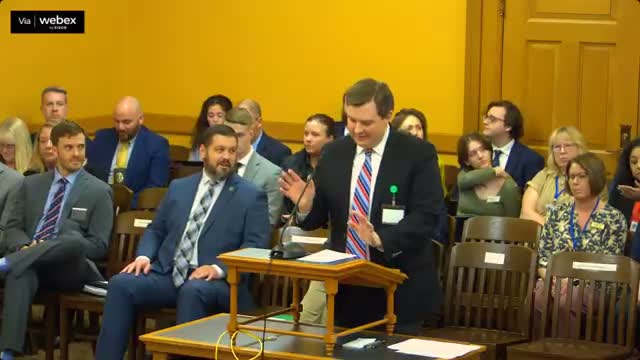
The House Committee on Judiciary on Monday heard extensive testimony on House Bill 26-96, a measure that would require a two‑tier authentication system and a biometric anti‑fraud system for notaries handling real‑estate documents by Dec. 31, 2027.
Jason Thompson of the Revisor’s Office told the committee the bill would require counties to implement protocols and require notaries who notarize real‑estate documents to submit biometric information and use a verified‑notary process. Supporters said the change is a practical way to block a rising form of title fraud.
Terry Lewis Todd, Leavenworth County register of deeds, described a pilot camera system his office uses that checks a notary’s photo and authentication code and rejects filings lacking a valid stamp, calling the technology a way to “stop the fraud before it was ever filed.” Topeka Police Sergeant Kai Shorb and Detective Joseph Kennett described investigations in which forgers used counterfeit stamps and false quitclaim deeds; Kennett said victims often have little recourse and the current process lacks effective pre‑filing screening.
Industry and consumer advocates raised objections. Becky Niosi, vice president of the Kansas Registers of Deeds Association, said a statewide survey of registers found only 19 suspected frauds reported across 104 responding counties over five years and warned mandatory biometric collection raises privacy and Fourth Amendment concerns. The Kansas Land Title Association and Kansas Realtors said the bill would disrupt remote online notarization, slow real‑estate closings and could block out‑of‑state participants. Notaries and title professionals also warned of potentially large equipment and compliance costs for counties and notaries and said the bill appears to favor a single technology approach without a procurement or vendor‑neutral framework.
Clay Barker, general counsel to the Secretary of State, said the office would take on new roles if the bill passed — including system approval, custody of personally identifying information and fee regulation — and estimated implementation costs in the millions. Law‑enforcement groups said deed fraud is a growing concern but urged a stakeholder process; Ed Klump of the sheriffs and chiefs association called the problem serious while acknowledging the proposed solution is one of several options.
Committee members asked detailed questions about privacy protections, whether biometric captures constitute personal data, how the system would interface with existing remote online notarization, and whether the proposal created vendor‑lock risks. Proponents said their systems can perform live‑face 3D captures, issue one‑time authentication codes, and avoid storing identifiable personal data beyond a one‑time match. Opponents said the bill required further technical and procurement detail and suggested pilot programs or working groups instead of a statutory mandate.
After several hours of testimony and questioning, the Chair closed the hearing and said the committee would not work HB26‑96 at this time and encouraged further stakeholder discussion. No action was taken on the bill during the session.
Jason Thompson of the Revisor’s Office told the committee the bill would require counties to implement protocols and require notaries who notarize real‑estate documents to submit biometric information and use a verified‑notary process. Supporters said the change is a practical way to block a rising form of title fraud.
Terry Lewis Todd, Leavenworth County register of deeds, described a pilot camera system his office uses that checks a notary’s photo and authentication code and rejects filings lacking a valid stamp, calling the technology a way to “stop the fraud before it was ever filed.” Topeka Police Sergeant Kai Shorb and Detective Joseph Kennett described investigations in which forgers used counterfeit stamps and false quitclaim deeds; Kennett said victims often have little recourse and the current process lacks effective pre‑filing screening.
Industry and consumer advocates raised objections. Becky Niosi, vice president of the Kansas Registers of Deeds Association, said a statewide survey of registers found only 19 suspected frauds reported across 104 responding counties over five years and warned mandatory biometric collection raises privacy and Fourth Amendment concerns. The Kansas Land Title Association and Kansas Realtors said the bill would disrupt remote online notarization, slow real‑estate closings and could block out‑of‑state participants. Notaries and title professionals also warned of potentially large equipment and compliance costs for counties and notaries and said the bill appears to favor a single technology approach without a procurement or vendor‑neutral framework.
Clay Barker, general counsel to the Secretary of State, said the office would take on new roles if the bill passed — including system approval, custody of personally identifying information and fee regulation — and estimated implementation costs in the millions. Law‑enforcement groups said deed fraud is a growing concern but urged a stakeholder process; Ed Klump of the sheriffs and chiefs association called the problem serious while acknowledging the proposed solution is one of several options.
Committee members asked detailed questions about privacy protections, whether biometric captures constitute personal data, how the system would interface with existing remote online notarization, and whether the proposal created vendor‑lock risks. Proponents said their systems can perform live‑face 3D captures, issue one‑time authentication codes, and avoid storing identifiable personal data beyond a one‑time match. Opponents said the bill required further technical and procurement detail and suggested pilot programs or working groups instead of a statutory mandate.
After several hours of testimony and questioning, the Chair closed the hearing and said the committee would not work HB26‑96 at this time and encouraged further stakeholder discussion. No action was taken on the bill during the session.
Don't Miss a Word: See the Full Meeting!
Go beyond summaries. Unlock every video, transcript, and key insight with a Founder Membership.
✓
Get instant access to full meeting videos
✓
Search and clip any phrase from complete transcripts
✓
Receive AI-powered summaries & custom alerts
✓
Enjoy lifetime, unrestricted access to government data
30-day money-back guarantee
