Senate passes bill forcing state to comply with federal SNAP/HHS data requests after debate over privacy and costs
February 16, 2026 | Senate, Committees, Legislative, Kansas
This article was created by AI summarizing key points discussed. AI makes mistakes, so for full details and context, please refer to the video of the full meeting. Please report any errors so we can fix them. Report an error »
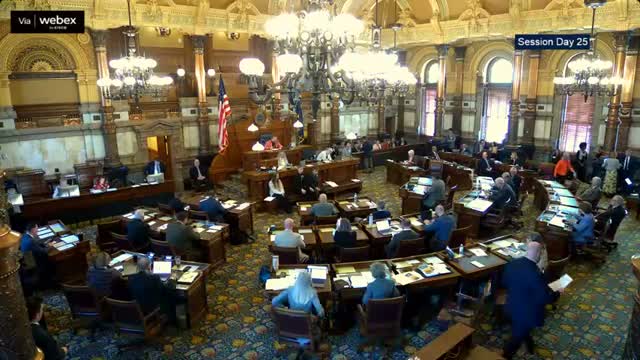
The Kansas Senate passed a Senate substitute for House Bill 2004 on Feb. 16, 2026, requiring the secretary for children and families and the secretary of health and environment to provide specified data to the U.S. Department of Agriculture and the U.S. Department of Health and Human Services upon written request and to formalize that sharing via a memorandum of understanding, data‑use agreement or similar instrument.
Senator Erickson (Senator from Sedgwick), who explained the bill in committee, said the legislation would require ‘‘both secretaries to fully respond to the respective federal agencies in a timely manner by executing a memorandum of understanding, data use agreement, or other form of written data sharing instrument as necessary to provide the information requested’’ and that ‘‘such data would be required to be shared with the respective federal agency within 30 days of the secretary receiving a written request.’’
Supporters argued the bill is a technical compliance measure and a tool to prevent improper benefit payments. Erickson cited U.S. Department of Agriculture figures, saying that among 29 states that complied with similar requests, officials ‘‘have found 186,000 people who have passed away that are currently receiving SNAP benefits’’ and ‘‘an additional 500,000 were collecting benefits in multiple states.’’ Erickson also told senators the state faces a quarterly penalty of about $10,400,000 for not turning over SNAP data, noting that penalties could increase if noncompliance continued.
Opponents said the measure risks eroding state authority and could expose Kansans’ personal information. Senator Sykes (Senator from Johnson) said the bill ‘‘undermines the cooperative federalist model that SNAP and Medicaid operate under’’ and urged colleagues to ‘‘pause and think about what we are putting in place’’ before authorizing unconditional data sharing. Sykes added she could not ‘‘vote for something that I don't know will keep Kansans and their privacy safe’’ and recorded a ‘‘no’’ vote on final passage.
Senator Holscher asked specifically about safeguards, questioning how the bill would prevent data ‘‘from getting into the wrong hands or foreign countries.’’ Erickson responded that protections would be similar to those that apply to federal income tax information and other federal records.
Senator Francisco raised fiscal concerns, noting a supplemental fiscal note that described KDHE’s fiscal effect as indeterminate and that the Department of Children and Families had estimated it might need to hire a contractor to extract data at a potential cost between $50,000 and $300,000. Erickson called the contractor estimate ‘‘an estimate’’ and said ‘‘the actual cost would be determined upon the scope of the data request’’ while arguing that savings from recovered improper benefits could offset initial costs. Francisco countered that evidence of limited fraud and administrative application difficulties suggested added expense may not pay for itself and that upfront spending could precede any savings.
After closing remarks and a motion to report the committee recommendation favorably, the Senate declared an emergency to advance the bill to final action the same day. On the final roll call the clerk announced 28 voting in favor and 9 opposed; the measure received the constitutionally required majority and was declared passed.
Votes at a glance
- Senate substitute for House Bill 2004 (public assistance): Final passage 28–9. Motion to advance under emergency rule also carried. (See debate and vote tallies in the record.)
- Senate Resolution 1726 (commendation of Kansas educators): Adopted by voice vote.
What happens next
Because the Senate passed the substitute version of HB 2004, the bill will move through any remaining enrollment and transmittal steps required under Kansas legislative procedure before going to the governor. The record shows lawmakers debated data‑security safeguards, contractor costs and the risk of federal overreach; opponents asked for pause and additional evaluation, while supporters emphasized penalties for noncompliance and potential recoveries of improper payments.
Sources and attribution
Quotes and attributions are drawn from the Senate floor transcript of Feb. 16, 2026, including statements by Senator Erickson (Senator from Sedgwick), Senator Sykes (Senator from Johnson), Senator Holscher, and Senator Francisco.
Senator Erickson (Senator from Sedgwick), who explained the bill in committee, said the legislation would require ‘‘both secretaries to fully respond to the respective federal agencies in a timely manner by executing a memorandum of understanding, data use agreement, or other form of written data sharing instrument as necessary to provide the information requested’’ and that ‘‘such data would be required to be shared with the respective federal agency within 30 days of the secretary receiving a written request.’’
Supporters argued the bill is a technical compliance measure and a tool to prevent improper benefit payments. Erickson cited U.S. Department of Agriculture figures, saying that among 29 states that complied with similar requests, officials ‘‘have found 186,000 people who have passed away that are currently receiving SNAP benefits’’ and ‘‘an additional 500,000 were collecting benefits in multiple states.’’ Erickson also told senators the state faces a quarterly penalty of about $10,400,000 for not turning over SNAP data, noting that penalties could increase if noncompliance continued.
Opponents said the measure risks eroding state authority and could expose Kansans’ personal information. Senator Sykes (Senator from Johnson) said the bill ‘‘undermines the cooperative federalist model that SNAP and Medicaid operate under’’ and urged colleagues to ‘‘pause and think about what we are putting in place’’ before authorizing unconditional data sharing. Sykes added she could not ‘‘vote for something that I don't know will keep Kansans and their privacy safe’’ and recorded a ‘‘no’’ vote on final passage.
Senator Holscher asked specifically about safeguards, questioning how the bill would prevent data ‘‘from getting into the wrong hands or foreign countries.’’ Erickson responded that protections would be similar to those that apply to federal income tax information and other federal records.
Senator Francisco raised fiscal concerns, noting a supplemental fiscal note that described KDHE’s fiscal effect as indeterminate and that the Department of Children and Families had estimated it might need to hire a contractor to extract data at a potential cost between $50,000 and $300,000. Erickson called the contractor estimate ‘‘an estimate’’ and said ‘‘the actual cost would be determined upon the scope of the data request’’ while arguing that savings from recovered improper benefits could offset initial costs. Francisco countered that evidence of limited fraud and administrative application difficulties suggested added expense may not pay for itself and that upfront spending could precede any savings.
After closing remarks and a motion to report the committee recommendation favorably, the Senate declared an emergency to advance the bill to final action the same day. On the final roll call the clerk announced 28 voting in favor and 9 opposed; the measure received the constitutionally required majority and was declared passed.
Votes at a glance
- Senate substitute for House Bill 2004 (public assistance): Final passage 28–9. Motion to advance under emergency rule also carried. (See debate and vote tallies in the record.)
- Senate Resolution 1726 (commendation of Kansas educators): Adopted by voice vote.
What happens next
Because the Senate passed the substitute version of HB 2004, the bill will move through any remaining enrollment and transmittal steps required under Kansas legislative procedure before going to the governor. The record shows lawmakers debated data‑security safeguards, contractor costs and the risk of federal overreach; opponents asked for pause and additional evaluation, while supporters emphasized penalties for noncompliance and potential recoveries of improper payments.
Sources and attribution
Quotes and attributions are drawn from the Senate floor transcript of Feb. 16, 2026, including statements by Senator Erickson (Senator from Sedgwick), Senator Sykes (Senator from Johnson), Senator Holscher, and Senator Francisco.
Don't Miss a Word: See the Full Meeting!
Go beyond summaries. Unlock every video, transcript, and key insight with a Founder Membership.
✓
Get instant access to full meeting videos
✓
Search and clip any phrase from complete transcripts
✓
Receive AI-powered summaries & custom alerts
✓
Enjoy lifetime, unrestricted access to government data
30-day money-back guarantee
