Committee hears SB 146 to extend Osawatomie land reversion deadline amid concerns about potential data center
February 16, 2026 | Committee on Local Government, Standing, HOUSE OF REPRESENTATIVES, Committees, Legislative, Kansas
This article was created by AI summarizing key points discussed. AI makes mistakes, so for full details and context, please refer to the video of the full meeting. Please report any errors so we can fix them. Report an error »
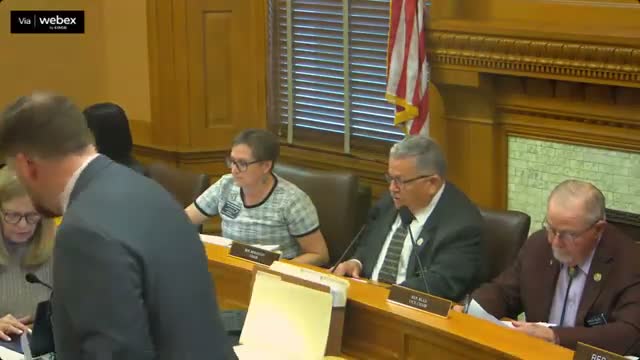
At its meeting before turnaround, the Committee on Local Government held a hearing on Senate Bill 146, which would amend the statute authorizing the conveyance of state land to the City of Osawatomie to extend a reversionary deadline from July 1, 2026, to July 1, 2046.
Brett Glendening, City Manager for the City of Osawatomie, urged the committee to support the bill, saying the city has spent "thousands of man hours" and "millions of dollars" extending infrastructure to the parcels and provided a 20‑year timeline in filed testimony. Glendening said two parcels are under a pre‑development agreement for a data center and that delaying the reversionary deadline would give the city more time to attract commercial development that would broaden the tax base.
"This legislation merely extends the deadline for the city of Osawatomie to utilize this property for economic development purposes," Glendening said in his testimony, and he provided an exhibit documenting the city's efforts.
Local residents testified in opposition. Courtney Crawford, who identified herself as a Miami County resident born and raised in Osawatomie, said residents want an amendment to prohibit data centers, solar farms, wind turbines and annexation on the conveyed land. Crawford said county residents living adjacent to the annexed "Northland" parcels learned about a potential data center from a local newspaper, expressed concern about county roads and the city’s water and wastewater capacity, and asked that the committee require protections or amendments before extending the deadline.
Polly Enscor, another Miami County resident, urged lawmakers to prohibit industrial facilities adjacent to state psychiatric hospitals and called for mandatory mental‑health impact assessments. "State mental hospitals exist to provide stability, safety, and a calm, quiet environment conducive to healing," Enscor said, arguing that noise, vibration, light and diesel emissions from an industrial facility could harm patients and staff.
Committee members and the revisor clarified the bill's scope. The chair said the committee’s decision is limited to whether to extend the reversionary date, not to authorize any specific private development. Drew Beiser, the Revisor, explained that if SB 146 fails and title reverts on July 1, 2026, the land would likely be held by the Department for Aging and Disability Services and that further economic development would require separate statutory authorization.
The committee closed the hearing on SB 146 after taking proponent and opponent testimony; the chair said any final action on the bill would be taken later (the Revisor noted the committee would likely revisit SB 146 in one of the first meetings after turnaround). No committee vote on SB 146 occurred during the hearing.
What happens next: The committee closed the record on SB 146 and indicated the bill will be considered for final action after turnaround; members and residents will have further opportunities to propose amendments or to press for conditions limiting certain uses of the land.
Brett Glendening, City Manager for the City of Osawatomie, urged the committee to support the bill, saying the city has spent "thousands of man hours" and "millions of dollars" extending infrastructure to the parcels and provided a 20‑year timeline in filed testimony. Glendening said two parcels are under a pre‑development agreement for a data center and that delaying the reversionary deadline would give the city more time to attract commercial development that would broaden the tax base.
"This legislation merely extends the deadline for the city of Osawatomie to utilize this property for economic development purposes," Glendening said in his testimony, and he provided an exhibit documenting the city's efforts.
Local residents testified in opposition. Courtney Crawford, who identified herself as a Miami County resident born and raised in Osawatomie, said residents want an amendment to prohibit data centers, solar farms, wind turbines and annexation on the conveyed land. Crawford said county residents living adjacent to the annexed "Northland" parcels learned about a potential data center from a local newspaper, expressed concern about county roads and the city’s water and wastewater capacity, and asked that the committee require protections or amendments before extending the deadline.
Polly Enscor, another Miami County resident, urged lawmakers to prohibit industrial facilities adjacent to state psychiatric hospitals and called for mandatory mental‑health impact assessments. "State mental hospitals exist to provide stability, safety, and a calm, quiet environment conducive to healing," Enscor said, arguing that noise, vibration, light and diesel emissions from an industrial facility could harm patients and staff.
Committee members and the revisor clarified the bill's scope. The chair said the committee’s decision is limited to whether to extend the reversionary date, not to authorize any specific private development. Drew Beiser, the Revisor, explained that if SB 146 fails and title reverts on July 1, 2026, the land would likely be held by the Department for Aging and Disability Services and that further economic development would require separate statutory authorization.
The committee closed the hearing on SB 146 after taking proponent and opponent testimony; the chair said any final action on the bill would be taken later (the Revisor noted the committee would likely revisit SB 146 in one of the first meetings after turnaround). No committee vote on SB 146 occurred during the hearing.
What happens next: The committee closed the record on SB 146 and indicated the bill will be considered for final action after turnaround; members and residents will have further opportunities to propose amendments or to press for conditions limiting certain uses of the land.
Don't Miss a Word: See the Full Meeting!
Go beyond summaries. Unlock every video, transcript, and key insight with a Founder Membership.
✓
Get instant access to full meeting videos
✓
Search and clip any phrase from complete transcripts
✓
Receive AI-powered summaries & custom alerts
✓
Enjoy lifetime, unrestricted access to government data
30-day money-back guarantee
