Kansas bill would let Department of Corrections contract for production of manufactured and modular homes
February 14, 2026 | Committee on Commerce, Labor and Economic Development, Standing, HOUSE OF REPRESENTATIVES, Committees, Legislative, Kansas
This article was created by AI summarizing key points discussed. AI makes mistakes, so for full details and context, please refer to the video of the full meeting. Please report any errors so we can fix them. Report an error »
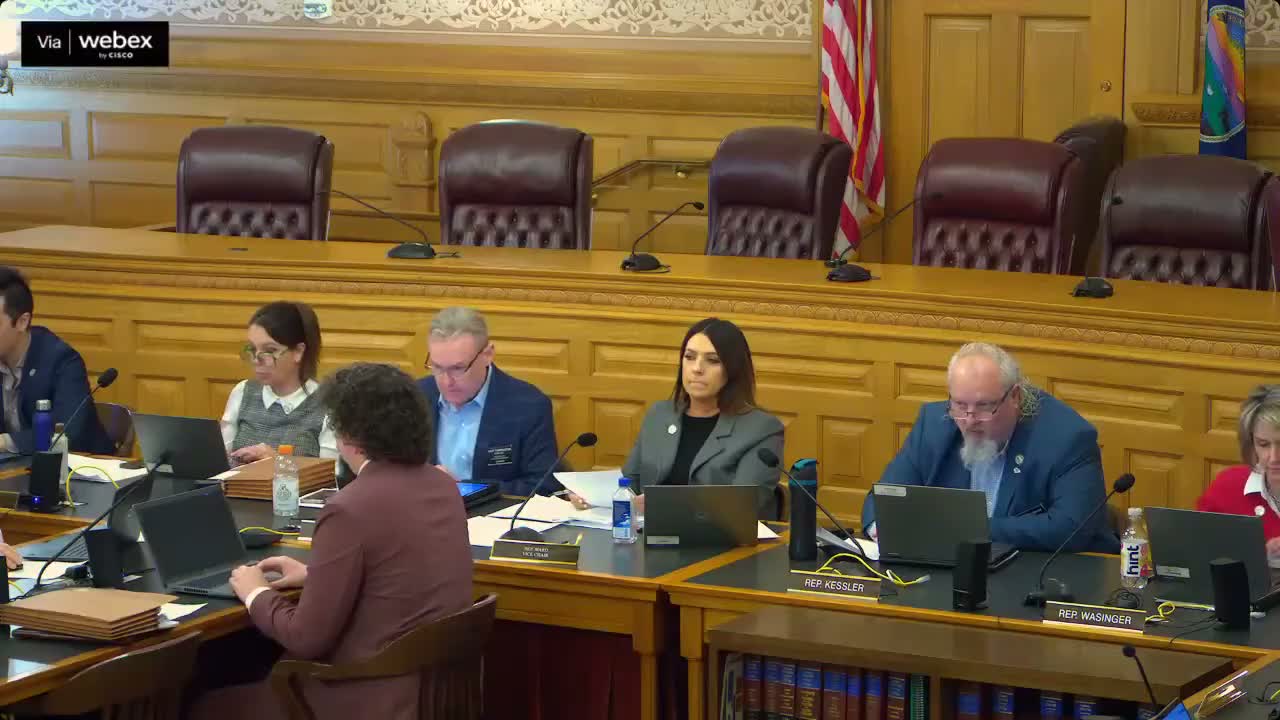
Representative Kyler Sweely told the Committee on Commerce, Labor and Economic Development that House Bill 2596 would "modernize the Prison Made Goods Act to allow the secretary of corrections to enter contracts for the production of manufactured and modular homes," and that the change is intended to help communities facing shrinking housing inventories.
Sweely and other proponents said the bill would not mandate production but would remove an existing statutory bar so corrections facilities could partner with private companies to build homes that meet HUD and Kansas building standards. Sweely cited Hutchinson as an example, saying the city "loses an average of 11 houses per year to demolition" and arguing that partnerships could expand in‑state production capacity while offering incarcerated participants paid work, skills training and mandatory savings accounts.
Paul Wagner, a proponent, described two models of prison industry: in one, Kansas Correctional Industries supplies labor and sells mainly to government entities; in the other, private partners contract with corrections facilities and pay market wages under supervision. He told the committee the contract model has allowed inmates to earn money for restitution and savings.
Deborah Tufel, president and CEO of the Hutchinson Reno County Chamber of Commerce, said her organization and local partners view the proposal as a tool to address Reno County's housing shortage. Tufel told members the Hutchinson Community Foundation is raising $2,000,000 in seed funds and cited a local housing needs assessment estimating a need for about 1,000 new units over 10 years.
Clint Nelson, president and CEO of Interfaith Housing and Community Services (remote), said Hutchinson needs units in the roughly $150,000 price range and that constructing such homes without subsidy is difficult; he urged the committee to consider a corrections‑based building program as a way to reduce construction costs and expand infill options.
Martha Smith, executive director of the Kansas Manufactured Housing Association, opposed the bill. Smith said the federal Prison Industry Enhancement Certification Program (PICEP) guidance does not explicitly address home building or residential construction and that she had not found examples of PICEP programs building homes in other states. She warned the program could give contractual partners advantages—lower overhead and the ability to seek training wages below prevailing rates for limited periods—and urged stronger oversight, third‑party inspection and clearer definitions of what private partners must pay for labor and overhead.
Committee members asked proponents whether homes built under the bill would be limited to state‑agency sales; proponents and the Revisor said the change is intended to allow sales and partnerships beyond state agencies. Members also asked about the number of inmates who would work in such programs; proponents cited an Iowa example where roughly 160 inmates participated and 150 houses were built since 2019, but no Kansas headcount was provided.
The committee closed the HB2596 hearing without recording a final committee vote on the measure. The bill was presented to the committee with multiple proponents and written testimony from interested partners and nonprofits.
Sweely and other proponents said the bill would not mandate production but would remove an existing statutory bar so corrections facilities could partner with private companies to build homes that meet HUD and Kansas building standards. Sweely cited Hutchinson as an example, saying the city "loses an average of 11 houses per year to demolition" and arguing that partnerships could expand in‑state production capacity while offering incarcerated participants paid work, skills training and mandatory savings accounts.
Paul Wagner, a proponent, described two models of prison industry: in one, Kansas Correctional Industries supplies labor and sells mainly to government entities; in the other, private partners contract with corrections facilities and pay market wages under supervision. He told the committee the contract model has allowed inmates to earn money for restitution and savings.
Deborah Tufel, president and CEO of the Hutchinson Reno County Chamber of Commerce, said her organization and local partners view the proposal as a tool to address Reno County's housing shortage. Tufel told members the Hutchinson Community Foundation is raising $2,000,000 in seed funds and cited a local housing needs assessment estimating a need for about 1,000 new units over 10 years.
Clint Nelson, president and CEO of Interfaith Housing and Community Services (remote), said Hutchinson needs units in the roughly $150,000 price range and that constructing such homes without subsidy is difficult; he urged the committee to consider a corrections‑based building program as a way to reduce construction costs and expand infill options.
Martha Smith, executive director of the Kansas Manufactured Housing Association, opposed the bill. Smith said the federal Prison Industry Enhancement Certification Program (PICEP) guidance does not explicitly address home building or residential construction and that she had not found examples of PICEP programs building homes in other states. She warned the program could give contractual partners advantages—lower overhead and the ability to seek training wages below prevailing rates for limited periods—and urged stronger oversight, third‑party inspection and clearer definitions of what private partners must pay for labor and overhead.
Committee members asked proponents whether homes built under the bill would be limited to state‑agency sales; proponents and the Revisor said the change is intended to allow sales and partnerships beyond state agencies. Members also asked about the number of inmates who would work in such programs; proponents cited an Iowa example where roughly 160 inmates participated and 150 houses were built since 2019, but no Kansas headcount was provided.
The committee closed the HB2596 hearing without recording a final committee vote on the measure. The bill was presented to the committee with multiple proponents and written testimony from interested partners and nonprofits.
View the Full Meeting & All Its Details
This article offers just a summary. Unlock complete video, transcripts, and insights as a Founder Member.
✓
Watch full, unedited meeting videos
✓
Search every word spoken in unlimited transcripts
✓
AI summaries & real-time alerts (all government levels)
✓
Permanent access to expanding government content
30-day money-back guarantee
