Wichita council defers resolution tying sales-tax funds to private fundraising for downtown arts center
December 24, 2025 | Wichita City, Sedgwick County, Kansas
This article was created by AI summarizing key points discussed. AI makes mistakes, so for full details and context, please refer to the video of the full meeting. Please report any errors so we can fix them. Report an error »
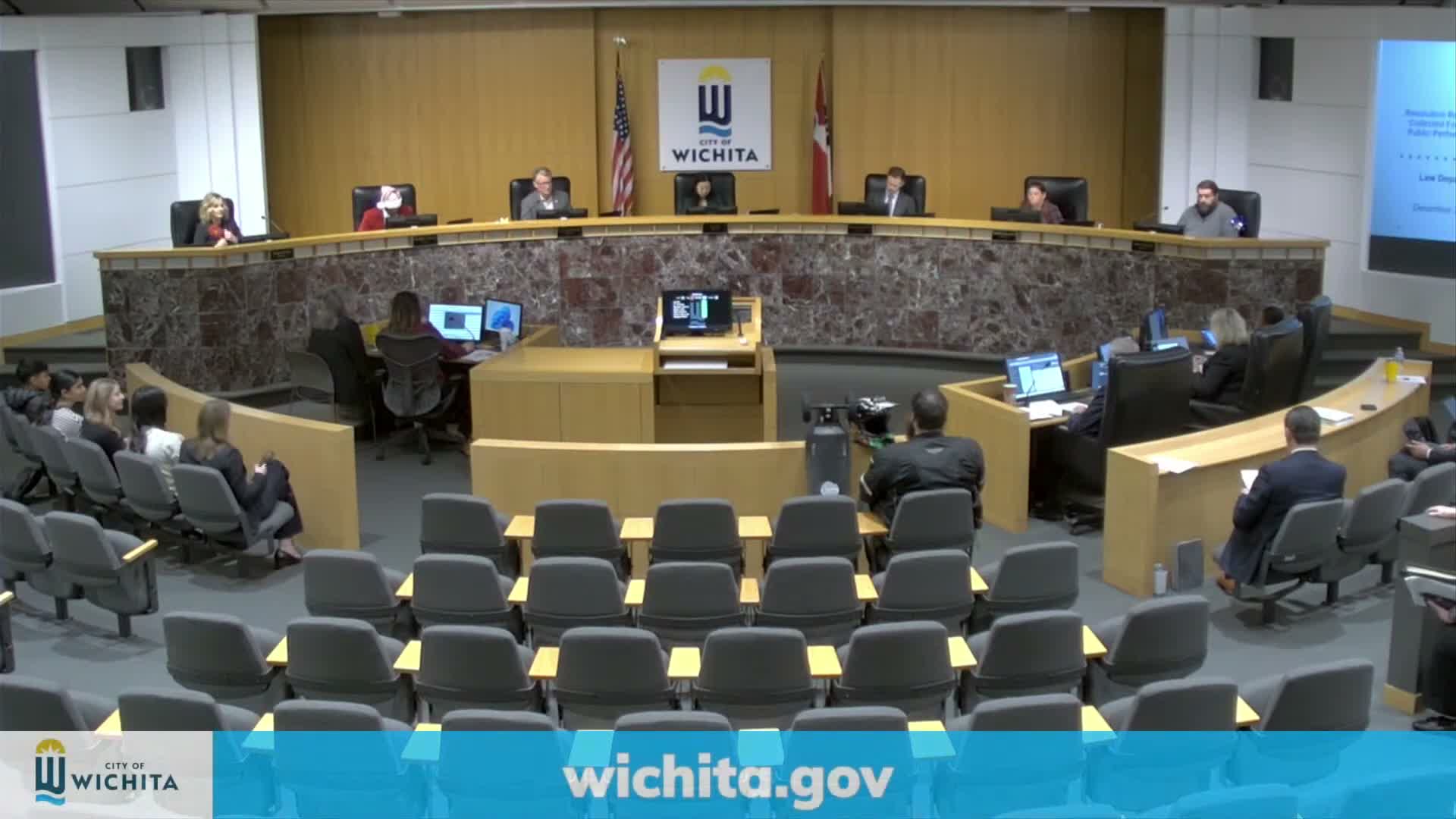
City of Wichita leaders on Dec. 23 reviewed a staff-drafted resolution intended to govern how proceeds from a proposed 1% sales tax would be collected and spent for five projects, including a proposed downtown public performing arts center with a city contribution capped at $75,000,000.
Mayor Wu and several council members pressed staff on taxpayer protections in the draft. "I think that it currently is worded where there's not enough protection for taxpayers," the mayor said, asking what would happen if private fundraisers raised substantially less than the $75 million target. Council members asked whether private "pledges" would be sufficient to trigger public spending or whether cash on hand must be in place first.
City Law staff said the resolution can be revised to require that private funds collected be used for design costs prior to any sales-tax revenue expenditure. Staff also noted the council could draft an ordinance or include a sunset or trigger tied to fundraising milestones. The City Manager (staff) explained that, under the way the ballot language is written, property-tax relief is a priority and that large capital projects such as a performing arts center are likely to occur toward the back end of the multi-year program.
Council debate touched on several specifics: whether the city should require a dollar-for-dollar match, how to treat donor pledges versus cash, and whether philanthropic dollars should be earmarked for initial operations. Vice Mayor Johnston warned that setting the matching threshold too high could misalign incentives for designing an appropriately sized facility.
After extended discussion about matching rules, design-phase funding, prioritization of homelessness and property tax relief projects, and how to write stronger guardrails into the instrument, the council voted to defer the resolution for further refinement and to address the full suite of sales-tax projects at a January workshop; council directed staff to bring back tighter language for consideration at a regular meeting on Jan. 27.
The action was procedural: council did not adopt the resolution and deferred further action to allow staff to incorporate council directions and to include external stakeholders in the January review.
Mayor Wu and several council members pressed staff on taxpayer protections in the draft. "I think that it currently is worded where there's not enough protection for taxpayers," the mayor said, asking what would happen if private fundraisers raised substantially less than the $75 million target. Council members asked whether private "pledges" would be sufficient to trigger public spending or whether cash on hand must be in place first.
City Law staff said the resolution can be revised to require that private funds collected be used for design costs prior to any sales-tax revenue expenditure. Staff also noted the council could draft an ordinance or include a sunset or trigger tied to fundraising milestones. The City Manager (staff) explained that, under the way the ballot language is written, property-tax relief is a priority and that large capital projects such as a performing arts center are likely to occur toward the back end of the multi-year program.
Council debate touched on several specifics: whether the city should require a dollar-for-dollar match, how to treat donor pledges versus cash, and whether philanthropic dollars should be earmarked for initial operations. Vice Mayor Johnston warned that setting the matching threshold too high could misalign incentives for designing an appropriately sized facility.
After extended discussion about matching rules, design-phase funding, prioritization of homelessness and property tax relief projects, and how to write stronger guardrails into the instrument, the council voted to defer the resolution for further refinement and to address the full suite of sales-tax projects at a January workshop; council directed staff to bring back tighter language for consideration at a regular meeting on Jan. 27.
The action was procedural: council did not adopt the resolution and deferred further action to allow staff to incorporate council directions and to include external stakeholders in the January review.
View the Full Meeting & All Its Details
This article offers just a summary. Unlock complete video, transcripts, and insights as a Founder Member.
✓
Watch full, unedited meeting videos
✓
Search every word spoken in unlimited transcripts
✓
AI summaries & real-time alerts (all government levels)
✓
Permanent access to expanding government content
30-day money-back guarantee
