Senate Finance Committee advances fertility‑care, breast‑screening, farm tax protections; consumer‑loan overhaul tied
February 16, 2026 | 2026 Legislature Arizona, Arizona
This article was created by AI summarizing key points discussed. AI makes mistakes, so for full details and context, please refer to the video of the full meeting. Please report any errors so we can fix them. Report an error »
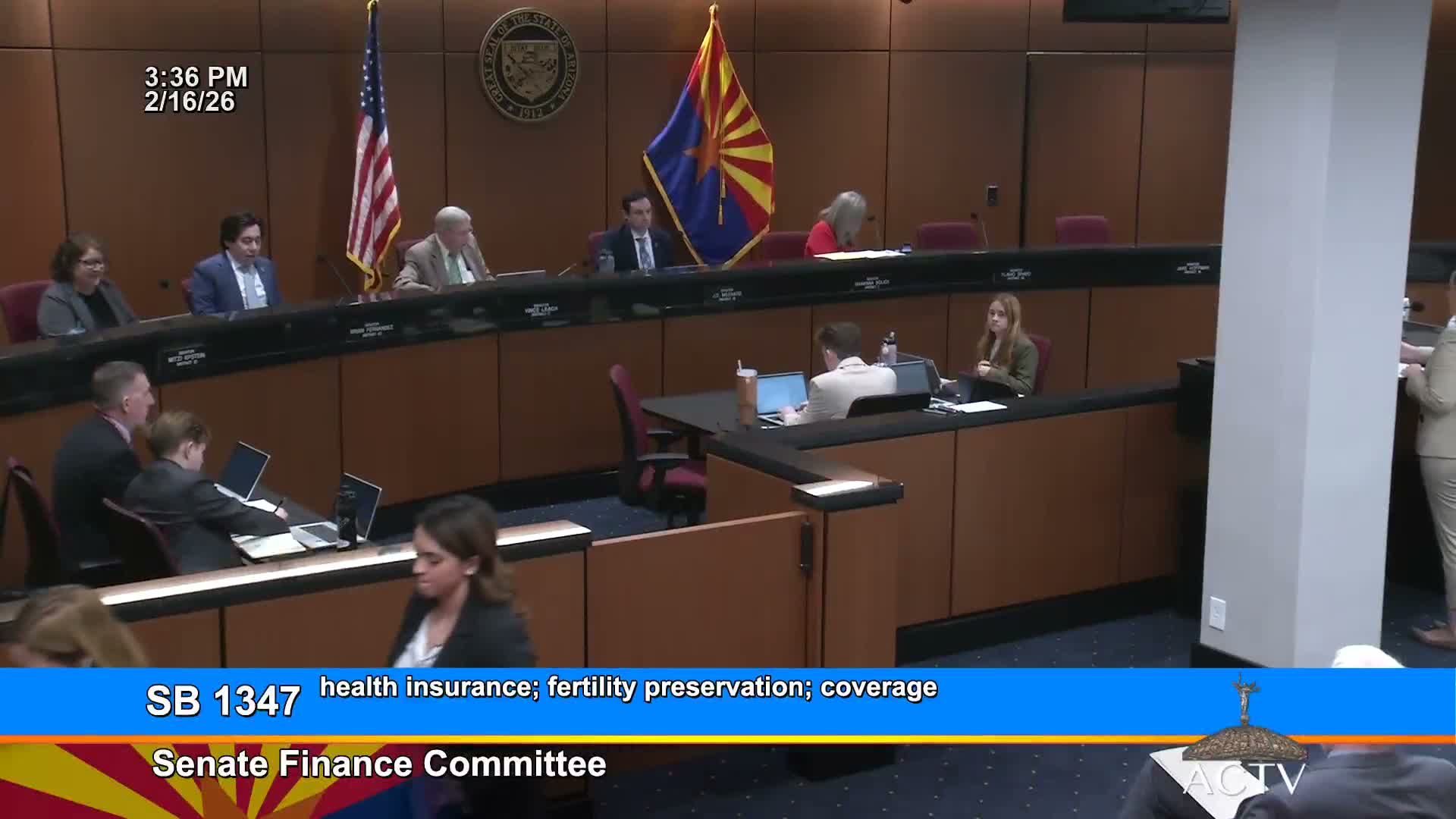
The Arizona Senate Finance Committee met Feb. 13 and considered a broad package of bills affecting consumer finance, health insurance, property taxation and aviation policy.
Committee members split on a major consumer‑finance modernization proposal and otherwise advanced several health and tax measures. "We are here today to advocate for modernizing Arizona's consumer finance statute so that more households can meet their credit needs with loans guided by Arizona statute," said Sonia Galati of Landmark Financial Services during testimony on SB 16‑89. The bill, which would raise statutory loan thresholds and adopt a tiered interest structure, failed on a tied committee vote 3–3.
Why it matters: Advocates for SB 16‑89 argued updating thresholds set decades ago would bring many larger loans under state consumer protections and align Arizona with other states. Opponents warned the tiered rates and higher fee caps could increase costs for lower‑balance borrowers. Sponsor Senator Kavanaugh said higher caps on large loans come with lower capped rates for larger balances, calling the changes a "win‑win" for industry and consumers.
Health insurance bills advance: The committee returned SB 13‑47 with a do‑pass recommendation after adopting a six‑page amendment that narrows coverage to fertility‑preservation services when cancer treatment is likely to cause infertility and clarifies storage terms. "Cancer treatment saves lives, but unfortunately, that treatment can bring with it life‑altering consequences," Christina Corriere testified, urging coverage so patients retain the option of biological parenthood. Committee roll call recorded a 4–2 vote in favor; Senator Epstein noted concerns about the bill's employer‑definition language and recorded a no vote while praising testifiers.
The panel also passed SB 11‑65 to prohibit cost‑sharing for medically necessary diagnostic breast exams and follow‑up testing. Stuart Goodman of Susan G. Komen said the legislation extends coverage standards already used by Medicaid and the state employee health program to commercial payers. The committee approved the bill as amended on a 5–1 vote.
Other measures moved: SB 12‑91 was advanced with an amendment that limits assessor reinspection when an owner prevails on an agricultural classification appeal; farm groups supported the measure while county assessors warned it could constrain statutory duties. SB 12‑06, which tightens rules on contractor and adjuster solicitations after loss‑producing events, and SB 16‑49, establishing a digital‑asset strategic reserve fund under the state treasurer, also advanced after committee votes. An aviation tax exemption (SB 15‑16, strike‑everything amendment) passed following industry testimony and debate about economic development and private‑jet owners.
Votes at a glance (committee action):
- SB 16‑89 (consumer‑loan thresholds, 18‑page amendment): Motion to return with do‑pass — FAILED, committee vote 3–3.
- SB 13‑47 (fertility preservation for cancer patients, 6‑page amendment): PASSED as amended, committee vote 4–2.
- SB 11‑65 (no cost‑sharing for medically necessary diagnostic breast exams, 5‑page amendment): PASSED as amended, committee vote 5–1.
- SB 12‑06 (contractor/adjuster solicitation limits, 6‑page amendment): PASSED as amended, committee vote 5–1.
- SB 16‑49 (digital asset strategic reserve fund): PASSED, committee vote 4–2.
- SB 12‑12 (prohibiting differential reimbursement by vaccination status): PASSED, committee vote 4–2.
- SB 12‑91 (agricultural property reinspection limitations, 2‑page amendment): PASSED as amended, committee vote 5–1.
- SB 15‑16 (aviation repair exemption, 35‑page strike‑everything amendment): PASSED as amended, committee vote 4–1.
- SB 15‑54 (chiropractic imaging language updates): Initially failed (3–3), later reconsidered and ultimately returned with a do‑pass recommendation after floor amendments were offered and adopted.
What comes next: Bills that received 'do‑pass' recommendations will be scheduled for further floor action in the Senate. Several members asked for technical clarifications and floor amendments, particularly on definitions of religious employers in the fertility bill and on inspection triggers in the agricultural property bill.
Notable testimony and remarks: Patient advocates gave personal testimony on the emotional and financial burden of cancer and fertility loss, including Katie Asher and Emily Gillum Gilliam, who urged coverage of fertility preservation. Industry witnesses provided fiscal and economic arguments for tax and regulatory changes: Michael Rossi (Ascent Aviation) highlighted job creation potential from aviation MRO activity; Blake Lister (Opportunity Arizona) argued against broad tax exemptions that could disproportionately benefit wealthy private‑jet owners.
The committee recessed after final motions and a series of reconsideration votes; the chair announced the meeting adjourned pending any further motions.
Committee members split on a major consumer‑finance modernization proposal and otherwise advanced several health and tax measures. "We are here today to advocate for modernizing Arizona's consumer finance statute so that more households can meet their credit needs with loans guided by Arizona statute," said Sonia Galati of Landmark Financial Services during testimony on SB 16‑89. The bill, which would raise statutory loan thresholds and adopt a tiered interest structure, failed on a tied committee vote 3–3.
Why it matters: Advocates for SB 16‑89 argued updating thresholds set decades ago would bring many larger loans under state consumer protections and align Arizona with other states. Opponents warned the tiered rates and higher fee caps could increase costs for lower‑balance borrowers. Sponsor Senator Kavanaugh said higher caps on large loans come with lower capped rates for larger balances, calling the changes a "win‑win" for industry and consumers.
Health insurance bills advance: The committee returned SB 13‑47 with a do‑pass recommendation after adopting a six‑page amendment that narrows coverage to fertility‑preservation services when cancer treatment is likely to cause infertility and clarifies storage terms. "Cancer treatment saves lives, but unfortunately, that treatment can bring with it life‑altering consequences," Christina Corriere testified, urging coverage so patients retain the option of biological parenthood. Committee roll call recorded a 4–2 vote in favor; Senator Epstein noted concerns about the bill's employer‑definition language and recorded a no vote while praising testifiers.
The panel also passed SB 11‑65 to prohibit cost‑sharing for medically necessary diagnostic breast exams and follow‑up testing. Stuart Goodman of Susan G. Komen said the legislation extends coverage standards already used by Medicaid and the state employee health program to commercial payers. The committee approved the bill as amended on a 5–1 vote.
Other measures moved: SB 12‑91 was advanced with an amendment that limits assessor reinspection when an owner prevails on an agricultural classification appeal; farm groups supported the measure while county assessors warned it could constrain statutory duties. SB 12‑06, which tightens rules on contractor and adjuster solicitations after loss‑producing events, and SB 16‑49, establishing a digital‑asset strategic reserve fund under the state treasurer, also advanced after committee votes. An aviation tax exemption (SB 15‑16, strike‑everything amendment) passed following industry testimony and debate about economic development and private‑jet owners.
Votes at a glance (committee action):
- SB 16‑89 (consumer‑loan thresholds, 18‑page amendment): Motion to return with do‑pass — FAILED, committee vote 3–3.
- SB 13‑47 (fertility preservation for cancer patients, 6‑page amendment): PASSED as amended, committee vote 4–2.
- SB 11‑65 (no cost‑sharing for medically necessary diagnostic breast exams, 5‑page amendment): PASSED as amended, committee vote 5–1.
- SB 12‑06 (contractor/adjuster solicitation limits, 6‑page amendment): PASSED as amended, committee vote 5–1.
- SB 16‑49 (digital asset strategic reserve fund): PASSED, committee vote 4–2.
- SB 12‑12 (prohibiting differential reimbursement by vaccination status): PASSED, committee vote 4–2.
- SB 12‑91 (agricultural property reinspection limitations, 2‑page amendment): PASSED as amended, committee vote 5–1.
- SB 15‑16 (aviation repair exemption, 35‑page strike‑everything amendment): PASSED as amended, committee vote 4–1.
- SB 15‑54 (chiropractic imaging language updates): Initially failed (3–3), later reconsidered and ultimately returned with a do‑pass recommendation after floor amendments were offered and adopted.
What comes next: Bills that received 'do‑pass' recommendations will be scheduled for further floor action in the Senate. Several members asked for technical clarifications and floor amendments, particularly on definitions of religious employers in the fertility bill and on inspection triggers in the agricultural property bill.
Notable testimony and remarks: Patient advocates gave personal testimony on the emotional and financial burden of cancer and fertility loss, including Katie Asher and Emily Gillum Gilliam, who urged coverage of fertility preservation. Industry witnesses provided fiscal and economic arguments for tax and regulatory changes: Michael Rossi (Ascent Aviation) highlighted job creation potential from aviation MRO activity; Blake Lister (Opportunity Arizona) argued against broad tax exemptions that could disproportionately benefit wealthy private‑jet owners.
The committee recessed after final motions and a series of reconsideration votes; the chair announced the meeting adjourned pending any further motions.
Don't Miss a Word: See the Full Meeting!
Go beyond summaries. Unlock every video, transcript, and key insight with a Founder Membership.
✓
Get instant access to full meeting videos
✓
Search and clip any phrase from complete transcripts
✓
Receive AI-powered summaries & custom alerts
✓
Enjoy lifetime, unrestricted access to government data
30-day money-back guarantee
