Committee advances Medigap “birthday rule” to let New Mexico seniors switch plans annually
February 16, 2026 | House of Representatives, Committees, Legislative, New Mexico
This article was created by AI summarizing key points discussed. AI makes mistakes, so for full details and context, please refer to the video of the full meeting. Please report any errors so we can fix them. Report an error »
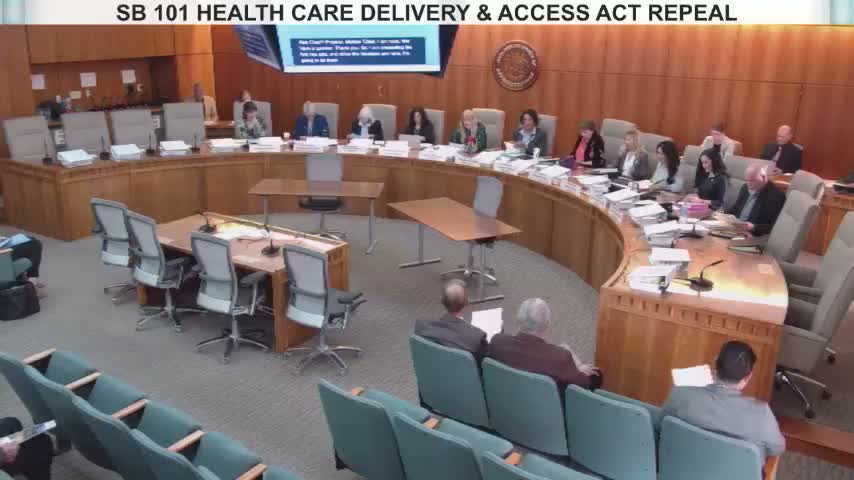
Senate Bill 21, introduced by Sen. Rex Wilson, would amend New Mexico’s Medicare Supplement Act to require issuers of Medigap (Medicare supplement) policies to offer a 60‑day annual open-enrollment window beginning the first day of the policyholder’s birthday month. During that window, policyholders age 65 and older could switch to a plan of equal or lesser value without medical underwriting or premium discrimination based on health status.
The bill’s sponsor and agency witnesses framed the measure as expanding consumer choice and protections for seniors locked into high-cost Medigap plans. “This is a bill that is about fairness and basic consumer protection for seniors who currently are unable to move out of their Medigap plan,” Emily Kullenbach, secretary of Aging and Long-Term Services, told the committee. She said her agency gets about 2,000 calls a year from people seeking to change plans, usually because they cannot afford current premiums.
Officials from the Office of the Superintendent of Insurance (OSI) said the change would be limited to people already enrolled in Medigap and would allow switches only to equal- or lower-value plans to avoid market destabilization. Vierra Nakeva, life and health division director at OSI, said OSI’s actuarial review projects a possible “slight increase in premiums, up to 10% for the first two years,” and then stabilization. The office also cited other states’ experience as mixed: some states reported little or no premium effect attributable to a birthday rule, while outcomes varied where broader guaranteed-issue changes were allowed.
Insurer representatives opposed the bill. Brent Moore, a lobbyist for America’s Health Insurance Plans, said carriers build Medigap products on guaranteed renewability and that opening a shopping window would change risk pools and raise prices. He cited an OSI estimate of 10% and industry estimates of 20–25% increases and warned that those on fixed incomes could be harmed by higher premiums.
Consumer and advocacy groups urged passage. Sheree Dodson, a volunteer with AARP New Mexico, said SB21 “gives older New Mexicans the flexibility to switch coverage that better meets their needs without being denied or charged more due to health conditions.” A League of Women Voters lobbyist similarly asked the committee to give the bill a due pass.
Committee members asked detailed questions about market impacts, who would be eligible to switch, and whether healthier members would downgrade and leave sicker pools. OSI and sponsors emphasized that the bill limits moves to equal-or-lower-value plans and that they expect a minority of beneficiaries to switch. Rep. Nicole Chavez repeatedly pressed actuarial evidence, citing examples of large rate changes in other states and seeking guardrails for vulnerable seniors.
The committee moved and seconded a due-pass motion on SB21 (as amended). A roll call recorded six votes in favor and four opposed; the chair announced the bill had a due pass.
What happens next: The committee’s due‑pass recommendation sends SB21 forward in the legislative process; further floor debate or amendments are possible. The bill text preserves provisions for OSI review of notices and premium policy changes.
The bill’s sponsor and agency witnesses framed the measure as expanding consumer choice and protections for seniors locked into high-cost Medigap plans. “This is a bill that is about fairness and basic consumer protection for seniors who currently are unable to move out of their Medigap plan,” Emily Kullenbach, secretary of Aging and Long-Term Services, told the committee. She said her agency gets about 2,000 calls a year from people seeking to change plans, usually because they cannot afford current premiums.
Officials from the Office of the Superintendent of Insurance (OSI) said the change would be limited to people already enrolled in Medigap and would allow switches only to equal- or lower-value plans to avoid market destabilization. Vierra Nakeva, life and health division director at OSI, said OSI’s actuarial review projects a possible “slight increase in premiums, up to 10% for the first two years,” and then stabilization. The office also cited other states’ experience as mixed: some states reported little or no premium effect attributable to a birthday rule, while outcomes varied where broader guaranteed-issue changes were allowed.
Insurer representatives opposed the bill. Brent Moore, a lobbyist for America’s Health Insurance Plans, said carriers build Medigap products on guaranteed renewability and that opening a shopping window would change risk pools and raise prices. He cited an OSI estimate of 10% and industry estimates of 20–25% increases and warned that those on fixed incomes could be harmed by higher premiums.
Consumer and advocacy groups urged passage. Sheree Dodson, a volunteer with AARP New Mexico, said SB21 “gives older New Mexicans the flexibility to switch coverage that better meets their needs without being denied or charged more due to health conditions.” A League of Women Voters lobbyist similarly asked the committee to give the bill a due pass.
Committee members asked detailed questions about market impacts, who would be eligible to switch, and whether healthier members would downgrade and leave sicker pools. OSI and sponsors emphasized that the bill limits moves to equal-or-lower-value plans and that they expect a minority of beneficiaries to switch. Rep. Nicole Chavez repeatedly pressed actuarial evidence, citing examples of large rate changes in other states and seeking guardrails for vulnerable seniors.
The committee moved and seconded a due-pass motion on SB21 (as amended). A roll call recorded six votes in favor and four opposed; the chair announced the bill had a due pass.
What happens next: The committee’s due‑pass recommendation sends SB21 forward in the legislative process; further floor debate or amendments are possible. The bill text preserves provisions for OSI review of notices and premium policy changes.
View the Full Meeting & All Its Details
This article offers just a summary. Unlock complete video, transcripts, and insights as a Founder Member.
✓
Watch full, unedited meeting videos
✓
Search every word spoken in unlimited transcripts
✓
AI summaries & real-time alerts (all government levels)
✓
Permanent access to expanding government content
30-day money-back guarantee
