New Mexico subcommittee weighs bill to bar federal troops and add emergency voting procedures
February 16, 2026 | House of Representatives, Committees, Legislative, New Mexico
This article was created by AI summarizing key points discussed. AI makes mistakes, so for full details and context, please refer to the video of the full meeting. Please report any errors so we can fix them. Report an error »
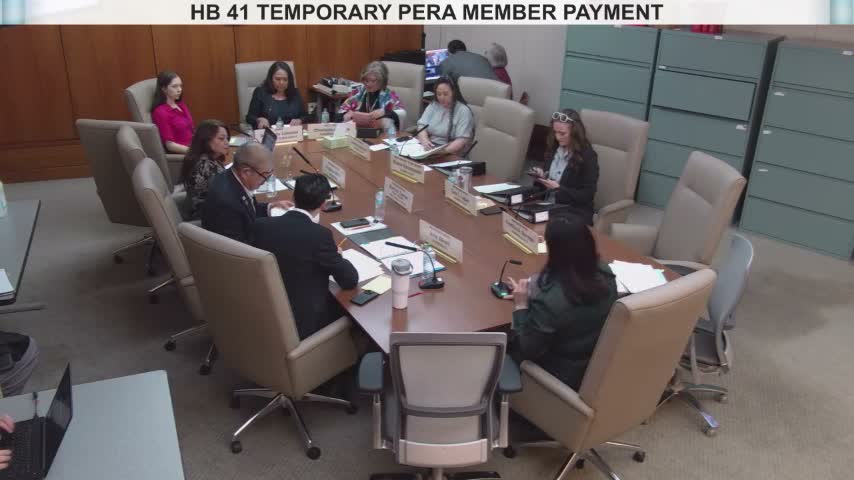
A New Mexico House subcommittee on Tuesday debated legislation that would add state-level penalties and civil remedies for anyone who “orders, brings, or keeps” troops or armed persons at polling places, and would codify emergency voting procedures to keep elections running during wildfires, floods and other disasters.
The bill’s sponsor, identified in the hearing as the senator presenting the measure, said the proposal is modeled on federal prohibitions and is intended to provide state enforcement if federal authorities do not follow federal law. “New Mexico has the best election administration in the nation,” the sponsor said, citing the MIT Election Performance Index. He said recent statements from federal officials about increased federal oversight prompted the measure.
The bill would make violating the interference prohibition a fourth-degree felony and create a civil cause of action that the attorney general, the secretary of state, an impacted county clerk or an intimidated voter could bring. Courts could issue injunctions and impose civil penalties ranging from $5,000 to $50,000, the sponsor said.
Lindsay Bachman, director of legislative and executive affairs for the secretary of state, described section 4 as an emergency-procedures package meant to ensure voting continues after events such as the recent fires and floods that affected Chavez and Mora counties. Bachman said the measure would allow county clerks and the secretary of state to agree to move polling places and use mobile voting units or a secure online portal used by military and overseas voters, without first obtaining a court order in a declared emergency.
Committee members pressed the sponsor and Bachman on several practical points. One representative asked whether active-duty service members who arrive to vote in uniform would be prevented from voting under the prohibition; the sponsor responded that the bill contains a savings clause and would not prevent a qualified elector from voting. The sponsor also noted that federal regulations—not this bill—address when active duty military should vote in uniform.
Members sought clarity on how the statute defines “troop” and whether nearby National Guard offices or groups of service members could create a claim of intimidation. The sponsor acknowledged “troop” is not newly defined in state law and said the courts would examine intent and factual circumstances if a complaint were brought. “Courts would make a factual determination about where you just go into the grocery store, or were you being stationed at the polls?” the sponsor said.
Other questions covered who could be sued under the civil remedy; the sponsor said the law targets the person who orders, brings or keeps troops at a polling place (for example a commanding officer), rather than rank-and-file personnel on the ground. Committee members also raised concerns about potential overlap with state police, and the Department of Public Safety’s analysis suggested the measure could raise issues for state police in some entrance/exit scenarios. The sponsor said the bill’s prohibition is specific to persons in the civil, military or naval service of the United States and would not automatically apply to state police called in by election workers.
On fiscal and implementation issues, Bachman told the committee the fiscal impact is expected to be minimal and that voter-education materials (including pocket guides for law enforcement) can be incorporated into existing outreach. She said the state has at least two mobile voting units, one of which is ADA compliant; members pointed out that limited mobile-unit capacity could affect rural voters during emergencies.
Several members said they had not seen all customary analyses in their binders, including judicial analysis, and requested additional materials before a future hearing. The chair said the subcommittee would reconvene, likely the next day, to take votes on the bill.
The hearing proceeded as a subcommittee session and was adjourned with reconvening and voting planned for a later date.
The bill’s sponsor, identified in the hearing as the senator presenting the measure, said the proposal is modeled on federal prohibitions and is intended to provide state enforcement if federal authorities do not follow federal law. “New Mexico has the best election administration in the nation,” the sponsor said, citing the MIT Election Performance Index. He said recent statements from federal officials about increased federal oversight prompted the measure.
The bill would make violating the interference prohibition a fourth-degree felony and create a civil cause of action that the attorney general, the secretary of state, an impacted county clerk or an intimidated voter could bring. Courts could issue injunctions and impose civil penalties ranging from $5,000 to $50,000, the sponsor said.
Lindsay Bachman, director of legislative and executive affairs for the secretary of state, described section 4 as an emergency-procedures package meant to ensure voting continues after events such as the recent fires and floods that affected Chavez and Mora counties. Bachman said the measure would allow county clerks and the secretary of state to agree to move polling places and use mobile voting units or a secure online portal used by military and overseas voters, without first obtaining a court order in a declared emergency.
Committee members pressed the sponsor and Bachman on several practical points. One representative asked whether active-duty service members who arrive to vote in uniform would be prevented from voting under the prohibition; the sponsor responded that the bill contains a savings clause and would not prevent a qualified elector from voting. The sponsor also noted that federal regulations—not this bill—address when active duty military should vote in uniform.
Members sought clarity on how the statute defines “troop” and whether nearby National Guard offices or groups of service members could create a claim of intimidation. The sponsor acknowledged “troop” is not newly defined in state law and said the courts would examine intent and factual circumstances if a complaint were brought. “Courts would make a factual determination about where you just go into the grocery store, or were you being stationed at the polls?” the sponsor said.
Other questions covered who could be sued under the civil remedy; the sponsor said the law targets the person who orders, brings or keeps troops at a polling place (for example a commanding officer), rather than rank-and-file personnel on the ground. Committee members also raised concerns about potential overlap with state police, and the Department of Public Safety’s analysis suggested the measure could raise issues for state police in some entrance/exit scenarios. The sponsor said the bill’s prohibition is specific to persons in the civil, military or naval service of the United States and would not automatically apply to state police called in by election workers.
On fiscal and implementation issues, Bachman told the committee the fiscal impact is expected to be minimal and that voter-education materials (including pocket guides for law enforcement) can be incorporated into existing outreach. She said the state has at least two mobile voting units, one of which is ADA compliant; members pointed out that limited mobile-unit capacity could affect rural voters during emergencies.
Several members said they had not seen all customary analyses in their binders, including judicial analysis, and requested additional materials before a future hearing. The chair said the subcommittee would reconvene, likely the next day, to take votes on the bill.
The hearing proceeded as a subcommittee session and was adjourned with reconvening and voting planned for a later date.
Don't Miss a Word: See the Full Meeting!
Go beyond summaries. Unlock every video, transcript, and key insight with a Founder Membership.
✓
Get instant access to full meeting videos
✓
Search and clip any phrase from complete transcripts
✓
Receive AI-powered summaries & custom alerts
✓
Enjoy lifetime, unrestricted access to government data
30-day money-back guarantee
