Washington Senate Passes SB 6,346, a New Tax on Incomes Above $1 Million
February 16, 2026 | Legislative Sessions, Washington
This article was created by AI summarizing key points discussed. AI makes mistakes, so for full details and context, please refer to the video of the full meeting. Please report any errors so we can fix them. Report an error »
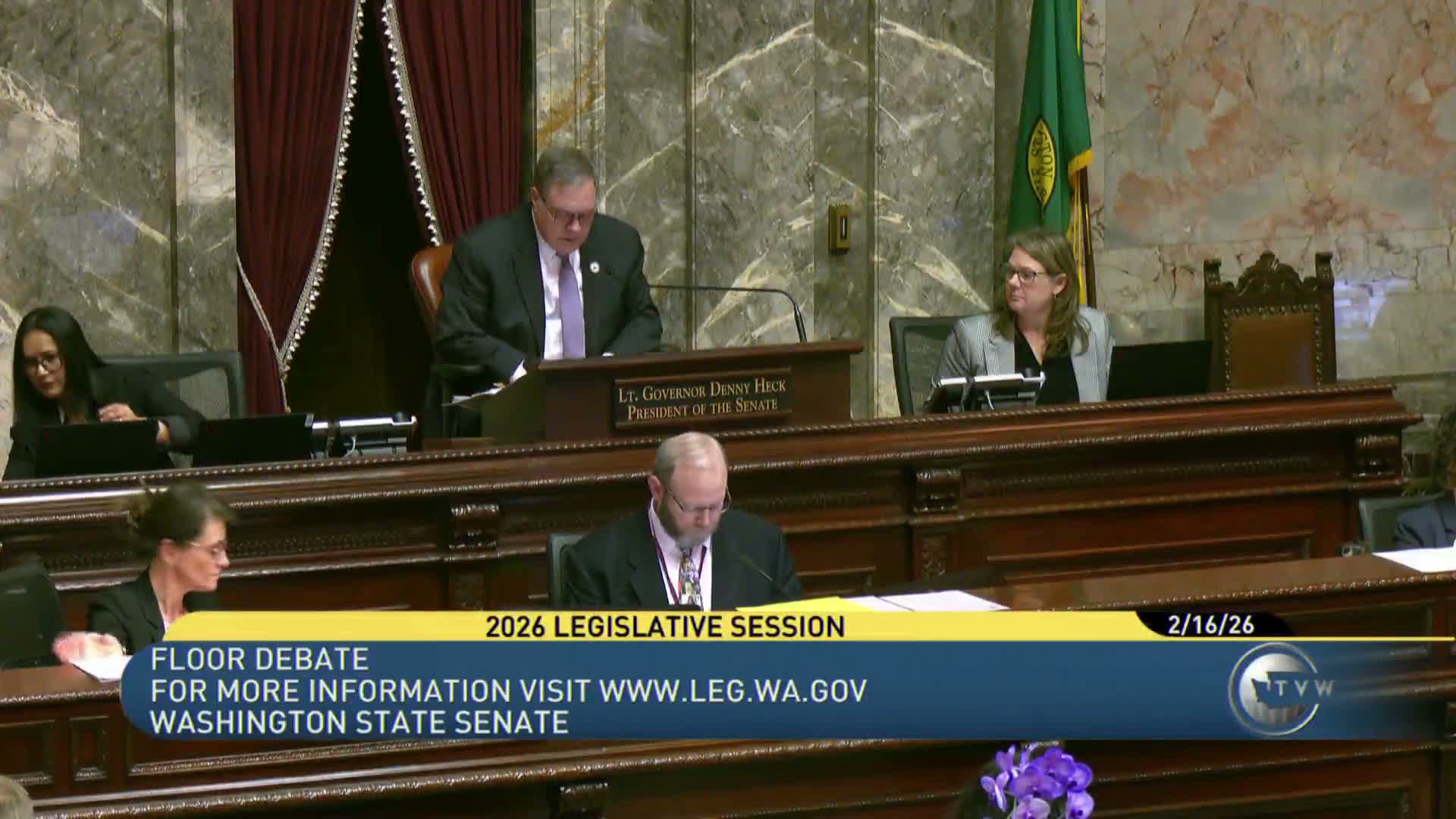
The Washington State Senate voted to pass engrossed Substitute Senate Bill 6,346, a proposal that would impose a graduated tax on personal income above $1,000,000, after extended floor debate and several amendment votes. The roll call showed 27 yeas and 22 nays; the President declared the bill passed.
Sponsor Senator Peterson, speaking in favor of the bill, said the measure would provide a sustained revenue source for K‑12 schools, health care, higher education and other government services. "This tax on 20,000 of our most fortunate neighbors would raise 3 and a half billion dollars a year to make those kinds of investments," Peterson said, arguing the revenue would allow investments such as smaller class sizes and more special‑education funding.
Supporters on the floor framed the bill as an effort to correct what they described as an upside‑down state tax code. Senator Frame, who has led tax‑policy work for years, said the bill pairs a millionaire tax with expansions of the working families tax credit and significant small business relief, and that the measure creates tools to rebalance state revenue sources.
Opponents challenged the bill on constitutional and economic grounds. Senator Gildan argued the state constitution treats income as property and said, "This bill is unconstitutional," while other critics warned that the tax would drive businesses, capital and philanthropic giving out of Washington. Members also raised concerns about pass‑through entities and the effect on small and family businesses that report income on individual returns.
Lawmakers debated several high‑profile amendments during the floor session. An amendment to exempt diapers from sales tax was offered and debated but failed to pass. A striking amendment that reworked sections of the substitute bill was adopted; sponsors said other amendments would implement tax credits and technical fixes intended to mitigate effects on small business.
Floor debate repeatedly returned to two central questions: whether the graduated tax would survive likely legal challenges under the state constitution, and whether the revenue would be spent as promised on schools and human services. Supporters pointed to the capital gains and other tax precedents and to the bill’s built‑in credits for small businesses; opponents said the language and structure risk constitutional challenge and economic dislocation.
The bill’s final recorded vote was 27 in favor, 22 opposed. With the Senate’s passage, the bill moves to the next steps for enactment as provided by law.
Sponsor Senator Peterson, speaking in favor of the bill, said the measure would provide a sustained revenue source for K‑12 schools, health care, higher education and other government services. "This tax on 20,000 of our most fortunate neighbors would raise 3 and a half billion dollars a year to make those kinds of investments," Peterson said, arguing the revenue would allow investments such as smaller class sizes and more special‑education funding.
Supporters on the floor framed the bill as an effort to correct what they described as an upside‑down state tax code. Senator Frame, who has led tax‑policy work for years, said the bill pairs a millionaire tax with expansions of the working families tax credit and significant small business relief, and that the measure creates tools to rebalance state revenue sources.
Opponents challenged the bill on constitutional and economic grounds. Senator Gildan argued the state constitution treats income as property and said, "This bill is unconstitutional," while other critics warned that the tax would drive businesses, capital and philanthropic giving out of Washington. Members also raised concerns about pass‑through entities and the effect on small and family businesses that report income on individual returns.
Lawmakers debated several high‑profile amendments during the floor session. An amendment to exempt diapers from sales tax was offered and debated but failed to pass. A striking amendment that reworked sections of the substitute bill was adopted; sponsors said other amendments would implement tax credits and technical fixes intended to mitigate effects on small business.
Floor debate repeatedly returned to two central questions: whether the graduated tax would survive likely legal challenges under the state constitution, and whether the revenue would be spent as promised on schools and human services. Supporters pointed to the capital gains and other tax precedents and to the bill’s built‑in credits for small businesses; opponents said the language and structure risk constitutional challenge and economic dislocation.
The bill’s final recorded vote was 27 in favor, 22 opposed. With the Senate’s passage, the bill moves to the next steps for enactment as provided by law.
Don't Miss a Word: See the Full Meeting!
Go beyond summaries. Unlock every video, transcript, and key insight with a Founder Membership.
✓
Get instant access to full meeting videos
✓
Search and clip any phrase from complete transcripts
✓
Receive AI-powered summaries & custom alerts
✓
Enjoy lifetime, unrestricted access to government data
30-day money-back guarantee
