UC panel outlines systemwide tactics to improve employee access to care
January 17, 2026 | University of California, Boards and Commissions, Executive, California
This article was created by AI summarizing key points discussed. AI makes mistakes, so for full details and context, please refer to the video of the full meeting. Please report any errors so we can fix them. Report an error »
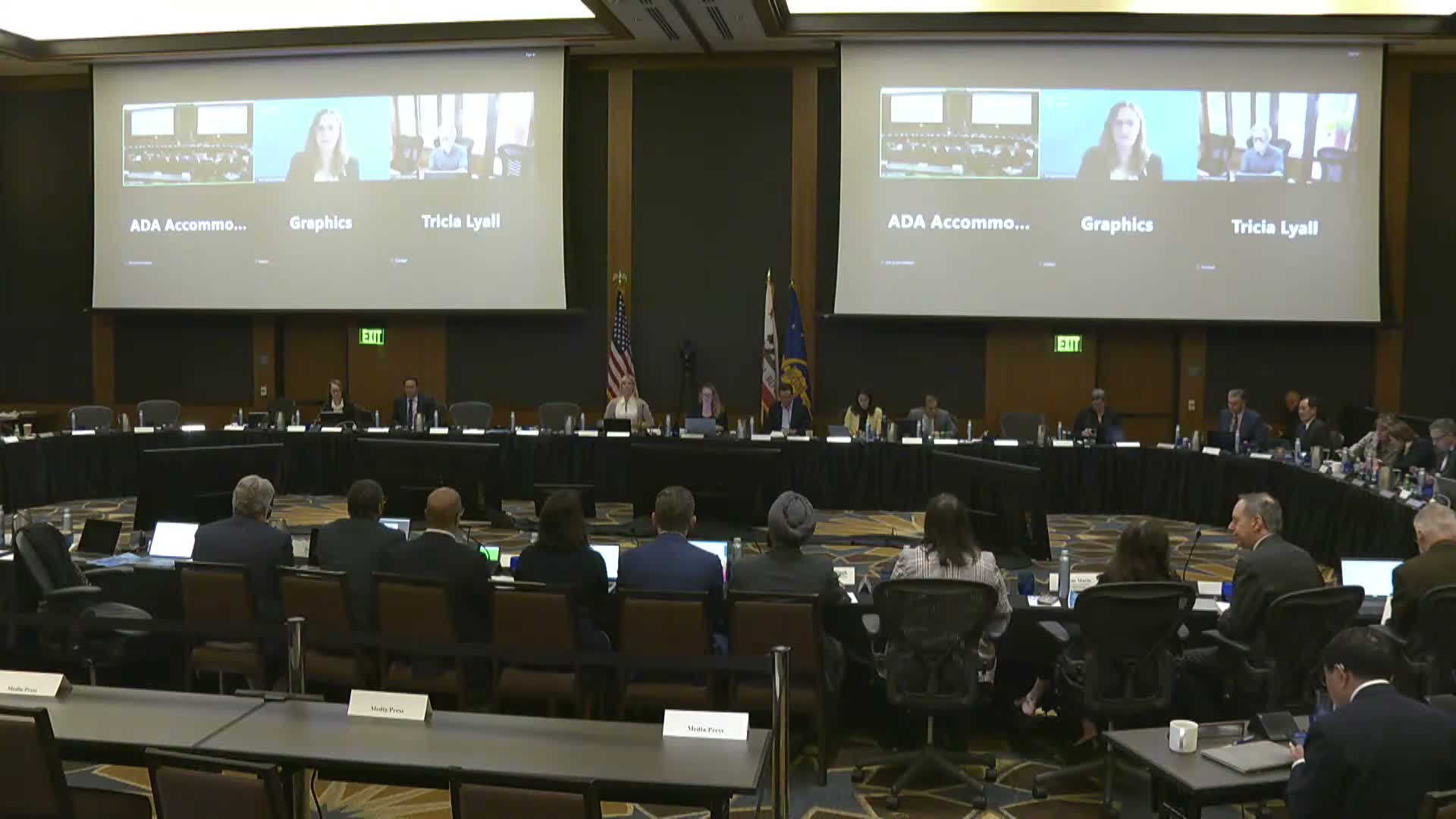
University of California health leaders told the Board’s Health Services Committee on Jan. 7 that coordinated, systemwide actions — from expanded clinic hours to AI-enabled scheduling — are intended to improve employee access to care and strengthen retention and patient experience.
Dr. Rob Cherry, UC’s chief health officer, framed the work as a system learning lab: campuses are testing different approaches while sharing common measures and a scorecard to track performance. "We are really focusing on some of the greatest challenges of our time in terms of affordability and access to care," Cherry said, introducing physician leaders from UCI, UC Davis and UC San Diego.
Speakers described targeted operational steps already in use. Dr. Sunil Verma of UCI said enterprise investments in a data warehouse and specialty benchmarks have driven recruitment and aligned physician capacity to demand. "We manage access with the same discipline as quality," he said, citing annual target‑setting and quarterly enterprise performance reporting.
At UC Davis, Dr. Debbie Azenberg described employee‑first scheduling tactics: FastPass early access to newly available appointments twice daily, dedicated template blocks reserved for employees (released to the broader population if unused), and expanded Saturday and evening clinic hours to reduce staff time away from work. "When employees have exceptional experiences, they in turn create exceptional experiences for customers," she said.
UC San Diego highlighted a "digital front door," online scheduling and a designated UCSD core scheduling group that prioritizes employees, students and clinically integrated primary‑care affiliates. Dr. Karandeep Singh discussed AI pilots — scribes, chart review and automated patient calls — noting modest early improvements in access and positive feedback from test calls and real‑world deployments.
Calvin Yang, the committee student observer from UC Berkeley, urged better integration of Medi‑Cal eligibility and enrollment data so student health tools and AI navigation can identify and serve eligible students rather than relying on self‑reporting. Panelists pointed to UC San Diego’s plan to begin Medi‑Cal billing for covered students on Feb. 2, 2026 as an example of operational progress.
Regents pressed presenters on what drives employees to choose UC care and how campuses measure uptake. UCLA panelists said placing clinics where employees live and offering same‑day and walk‑in options helped shift enrollment, while speakers emphasized the importance of communication during open enrollment and working with campus academic senates.
Panelists and advisors urged an enterprise approach that captures what works locally and scales it across the system through common metrics, shared data infrastructure and continued investment in operations and communications.
The committee did not take formal action; presenters said spend and program details will be reported in follow‑up materials.
Dr. Rob Cherry, UC’s chief health officer, framed the work as a system learning lab: campuses are testing different approaches while sharing common measures and a scorecard to track performance. "We are really focusing on some of the greatest challenges of our time in terms of affordability and access to care," Cherry said, introducing physician leaders from UCI, UC Davis and UC San Diego.
Speakers described targeted operational steps already in use. Dr. Sunil Verma of UCI said enterprise investments in a data warehouse and specialty benchmarks have driven recruitment and aligned physician capacity to demand. "We manage access with the same discipline as quality," he said, citing annual target‑setting and quarterly enterprise performance reporting.
At UC Davis, Dr. Debbie Azenberg described employee‑first scheduling tactics: FastPass early access to newly available appointments twice daily, dedicated template blocks reserved for employees (released to the broader population if unused), and expanded Saturday and evening clinic hours to reduce staff time away from work. "When employees have exceptional experiences, they in turn create exceptional experiences for customers," she said.
UC San Diego highlighted a "digital front door," online scheduling and a designated UCSD core scheduling group that prioritizes employees, students and clinically integrated primary‑care affiliates. Dr. Karandeep Singh discussed AI pilots — scribes, chart review and automated patient calls — noting modest early improvements in access and positive feedback from test calls and real‑world deployments.
Calvin Yang, the committee student observer from UC Berkeley, urged better integration of Medi‑Cal eligibility and enrollment data so student health tools and AI navigation can identify and serve eligible students rather than relying on self‑reporting. Panelists pointed to UC San Diego’s plan to begin Medi‑Cal billing for covered students on Feb. 2, 2026 as an example of operational progress.
Regents pressed presenters on what drives employees to choose UC care and how campuses measure uptake. UCLA panelists said placing clinics where employees live and offering same‑day and walk‑in options helped shift enrollment, while speakers emphasized the importance of communication during open enrollment and working with campus academic senates.
Panelists and advisors urged an enterprise approach that captures what works locally and scales it across the system through common metrics, shared data infrastructure and continued investment in operations and communications.
The committee did not take formal action; presenters said spend and program details will be reported in follow‑up materials.
Don't Miss a Word: See the Full Meeting!
Go beyond summaries. Unlock every video, transcript, and key insight with a Founder Membership.
✓
Get instant access to full meeting videos
✓
Search and clip any phrase from complete transcripts
✓
Receive AI-powered summaries & custom alerts
✓
Enjoy lifetime, unrestricted access to government data
30-day money-back guarantee
