UC accountability report shows enrollment gains, graduation progress and funding risks
January 17, 2026 | University of California, Boards and Commissions, Executive, California
This article was created by AI summarizing key points discussed. AI makes mistakes, so for full details and context, please refer to the video of the full meeting. Please report any errors so we can fix them. Report an error »
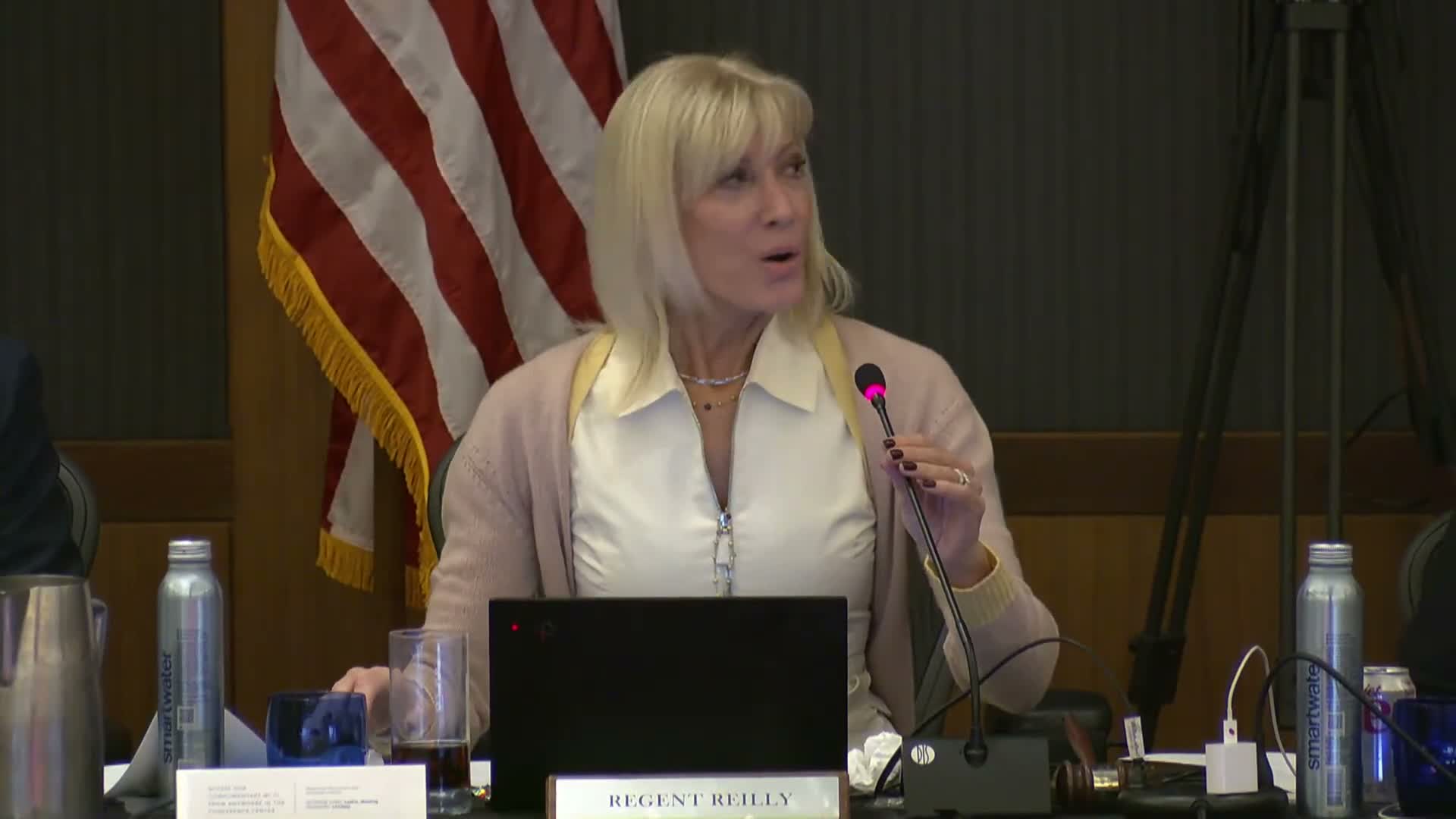
University of California leaders presented the annual accountability report to the Board on Jan. 7, saying recent data show growth in enrollment and degree attainment even as exposure to federal funding fluctuations and staffing constraints create new risks.
Vice President Pamela Brown told regents that UC reached historic fall 2025 enrollment of more than 301,000 students, including more than 200,000 California residents, and that the system is on track to meet UC 2030 capacity and degree targets. Brown cited a rebound in four‑year graduation rates to 74% and improved outcomes for Pell Grant recipients and first‑generation students, while acknowledging persistent gaps in attainment.
The report links to an interactive UC Information Center with 135 indicators. Brown said more than half of California resident undergraduates now pay no tuition, and reported that 68% of graduates leave UC without debt. She also highlighted the system’s research footprint — approaching $9 billion in research awards and more than 5,000 active clinical trials — and estimated UC’s total economic impact at about $82 billion.
At the same time, Brown flagged areas of slippage: the most recent quarter showed roughly a 20% drop in federal research awards and a substantial decline in nonacademic staff hiring tied to a hiring freeze. Leaders warned that further federal funding erosion would risk progress on student supports and research capacity.
Regents asked for deeper disaggregation on student‑body demographics, A‑G course completion (a key pipeline to UC) and campus disparities in graduation rates; presenters said the full report includes extensive data and promised follow‑up items for more focused review, including a March briefing on proof‑of‑concept commercialization efforts.
The presentation stressed that many of the gains rely on continued state and federal support and that the accountability dashboards are designed to be updated and used by regents and external audiences to track progress over time.
Vice President Pamela Brown told regents that UC reached historic fall 2025 enrollment of more than 301,000 students, including more than 200,000 California residents, and that the system is on track to meet UC 2030 capacity and degree targets. Brown cited a rebound in four‑year graduation rates to 74% and improved outcomes for Pell Grant recipients and first‑generation students, while acknowledging persistent gaps in attainment.
The report links to an interactive UC Information Center with 135 indicators. Brown said more than half of California resident undergraduates now pay no tuition, and reported that 68% of graduates leave UC without debt. She also highlighted the system’s research footprint — approaching $9 billion in research awards and more than 5,000 active clinical trials — and estimated UC’s total economic impact at about $82 billion.
At the same time, Brown flagged areas of slippage: the most recent quarter showed roughly a 20% drop in federal research awards and a substantial decline in nonacademic staff hiring tied to a hiring freeze. Leaders warned that further federal funding erosion would risk progress on student supports and research capacity.
Regents asked for deeper disaggregation on student‑body demographics, A‑G course completion (a key pipeline to UC) and campus disparities in graduation rates; presenters said the full report includes extensive data and promised follow‑up items for more focused review, including a March briefing on proof‑of‑concept commercialization efforts.
The presentation stressed that many of the gains rely on continued state and federal support and that the accountability dashboards are designed to be updated and used by regents and external audiences to track progress over time.
View the Full Meeting & All Its Details
This article offers just a summary. Unlock complete video, transcripts, and insights as a Founder Member.
✓
Watch full, unedited meeting videos
✓
Search every word spoken in unlimited transcripts
✓
AI summaries & real-time alerts (all government levels)
✓
Permanent access to expanding government content
30-day money-back guarantee
