Regents committee approves tighter timeframes, reserve P&T pool in faculty discipline policy revisions
January 17, 2026 | University of California, Boards and Commissions, Executive, California
This article was created by AI summarizing key points discussed. AI makes mistakes, so for full details and context, please refer to the video of the full meeting. Please report any errors so we can fix them. Report an error »
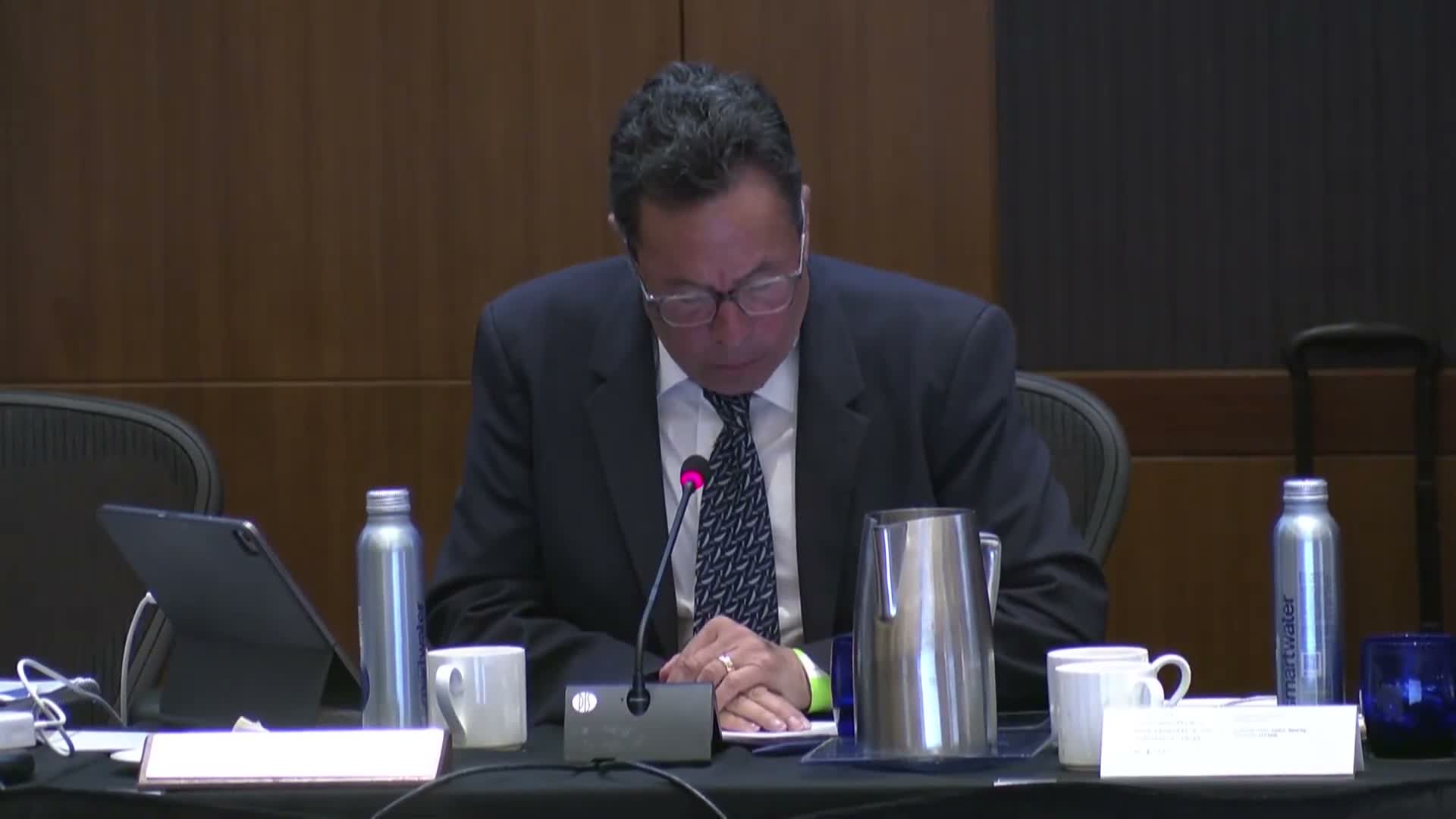
The Academic & Student Affairs committee approved revisions to the Academic Personnel Manual sections APM 15 and APM 16 that impose specific timeframes for components of the faculty discipline process and establish a systemwide mechanism to ensure hearing panels can be convened.
Provost Newman said the amendments respond to a directive to review expressive activity policies and to address concerns the discipline process could be too prolonged or uneven across campuses. Vice Provost Monica Varsanyi summarized the principal amendments: an initial assessment timeline of 30 business days, 120 business days for completion of investigations and investigation reports, and 40 business days to file disciplinary charges once investigation concludes. The revisions also create a systemwide reserve Privilege & Tenure (P&T) pool coordinated by the University Committee on Privilege and Tenure to supplement campus hearing committees where necessary and allow a special committee composed of faculty from other campuses if needed.
Academic Council chair Ahmed Palazzoglu said the Academic Senate will make conforming bylaw changes (Senate Bylaw 336) and will issue revised systemwide guidelines and FAQs that clarify when calibration guidance applies (only after a finding of policy violation) and what constitutes mitigating and aggravating factors.
Regents asked about oversight: Provost Newman said there is no fixed cap on 'good cause' extensions but that the chancellor will report to the board about extensions to allow calibration; the committee discussed a cadence for review and the provost agreed to periodic updates on implementation.
The committee recorded a roll‑call approval of the APM amendments and forwarded the item to the full board. Committee members praised the joint senate‑administration process that produced the revisions and emphasized shared governance.
Provost Newman said the amendments respond to a directive to review expressive activity policies and to address concerns the discipline process could be too prolonged or uneven across campuses. Vice Provost Monica Varsanyi summarized the principal amendments: an initial assessment timeline of 30 business days, 120 business days for completion of investigations and investigation reports, and 40 business days to file disciplinary charges once investigation concludes. The revisions also create a systemwide reserve Privilege & Tenure (P&T) pool coordinated by the University Committee on Privilege and Tenure to supplement campus hearing committees where necessary and allow a special committee composed of faculty from other campuses if needed.
Academic Council chair Ahmed Palazzoglu said the Academic Senate will make conforming bylaw changes (Senate Bylaw 336) and will issue revised systemwide guidelines and FAQs that clarify when calibration guidance applies (only after a finding of policy violation) and what constitutes mitigating and aggravating factors.
Regents asked about oversight: Provost Newman said there is no fixed cap on 'good cause' extensions but that the chancellor will report to the board about extensions to allow calibration; the committee discussed a cadence for review and the provost agreed to periodic updates on implementation.
The committee recorded a roll‑call approval of the APM amendments and forwarded the item to the full board. Committee members praised the joint senate‑administration process that produced the revisions and emphasized shared governance.
Don't Miss a Word: See the Full Meeting!
Go beyond summaries. Unlock every video, transcript, and key insight with a Founder Membership.
✓
Get instant access to full meeting videos
✓
Search and clip any phrase from complete transcripts
✓
Receive AI-powered summaries & custom alerts
✓
Enjoy lifetime, unrestricted access to government data
30-day money-back guarantee
