Broadband applicants press UDOT on BEAD/BEED process; Utah Broadband Center update given
August 16, 2025 | Utah Department of Transportation, Utah Government Divisions, Utah Legislative Branch, Utah
This article was created by AI summarizing key points discussed. AI makes mistakes, so for full details and context, please refer to the video of the full meeting. Please report any errors so we can fix them. Report an error »
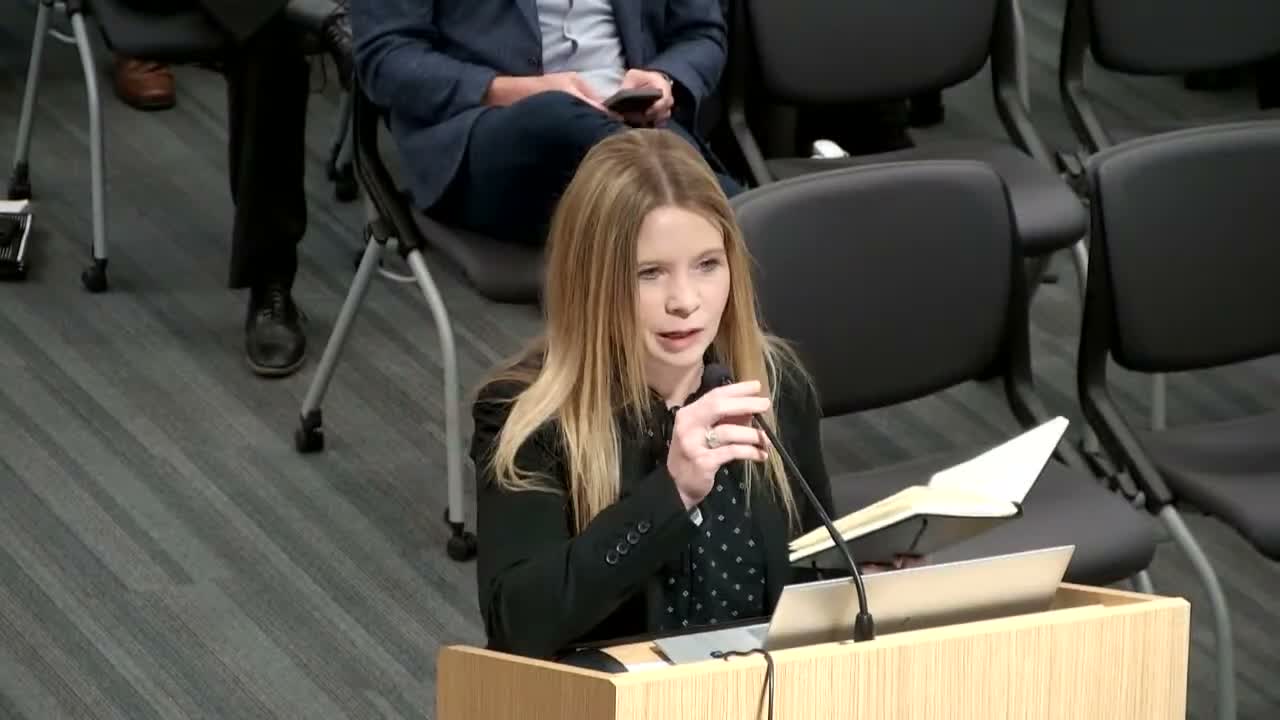
Multiple service providers and applicants used public comment time at the Aug. 12 Transportation Commission meeting to press UDOT staff about the state’s BEAD/BEED process and to question UDOT’s own role in some middle‑mile proposals.
Sylvia Wilkins, representing a BEED applicant, asked who will finalize project priorities to send to NTIA, how project areas were defined using census blocks, and how mixed private/tribal lands and noncontiguous project areas will be treated. "We want to make sure that...there's not mixed locations in each of these project areas because that has a significant component on how you can apply for those areas," she said, requesting clearer criteria and follow‑up from staff.
Tyler Rasmussen of Strata Networks said UDOT staff applied for roughly $30 million for a middle‑mile network connecting the Uinta Basin and called the narrative used to justify the award "false," saying his company already provides extensive fiber in the basin and that state proposals complicate the competitive selection of BEAD applicants.
UDOT briefed the Commission on the Utah Broadband Center (moved to UDOT by House Bill 530) and provided summary figures for the competitive award process: staff reported 1,461 project areas initially, ~1,100 total applications covering ~384 project areas, and that the benefit‑of‑the‑bargain process expanded coverage to roughly 460 project areas. Staff summarized a technology mix in the proposals — fiber‑to‑the‑premises representing about 37% of broadband serviceable locations (67% of the grant amount), wireless ~20%, and satellite ~43% of locations — and said the list of awardees was not ready to publish while UDOT coordinated outstanding questions with NTIA.
UDOT staff said they will follow up on public questions and continue coordination with NTIA before publishing final awards.
Sylvia Wilkins, representing a BEED applicant, asked who will finalize project priorities to send to NTIA, how project areas were defined using census blocks, and how mixed private/tribal lands and noncontiguous project areas will be treated. "We want to make sure that...there's not mixed locations in each of these project areas because that has a significant component on how you can apply for those areas," she said, requesting clearer criteria and follow‑up from staff.
Tyler Rasmussen of Strata Networks said UDOT staff applied for roughly $30 million for a middle‑mile network connecting the Uinta Basin and called the narrative used to justify the award "false," saying his company already provides extensive fiber in the basin and that state proposals complicate the competitive selection of BEAD applicants.
UDOT briefed the Commission on the Utah Broadband Center (moved to UDOT by House Bill 530) and provided summary figures for the competitive award process: staff reported 1,461 project areas initially, ~1,100 total applications covering ~384 project areas, and that the benefit‑of‑the‑bargain process expanded coverage to roughly 460 project areas. Staff summarized a technology mix in the proposals — fiber‑to‑the‑premises representing about 37% of broadband serviceable locations (67% of the grant amount), wireless ~20%, and satellite ~43% of locations — and said the list of awardees was not ready to publish while UDOT coordinated outstanding questions with NTIA.
UDOT staff said they will follow up on public questions and continue coordination with NTIA before publishing final awards.
View the Full Meeting & All Its Details
This article offers just a summary. Unlock complete video, transcripts, and insights as a Founder Member.
✓
Watch full, unedited meeting videos
✓
Search every word spoken in unlimited transcripts
✓
AI summaries & real-time alerts (all government levels)
✓
Permanent access to expanding government content
30-day money-back guarantee
