Justice Budget Subcommittee advances $250 million corrections plan, strengthens domestic-violence monitoring and approves clerk, records and inmate funding
February 16, 2026 | 2026 Legislature FL, Florida
This article was created by AI summarizing key points discussed. AI makes mistakes, so for full details and context, please refer to the video of the full meeting. Please report any errors so we can fix them. Report an error »
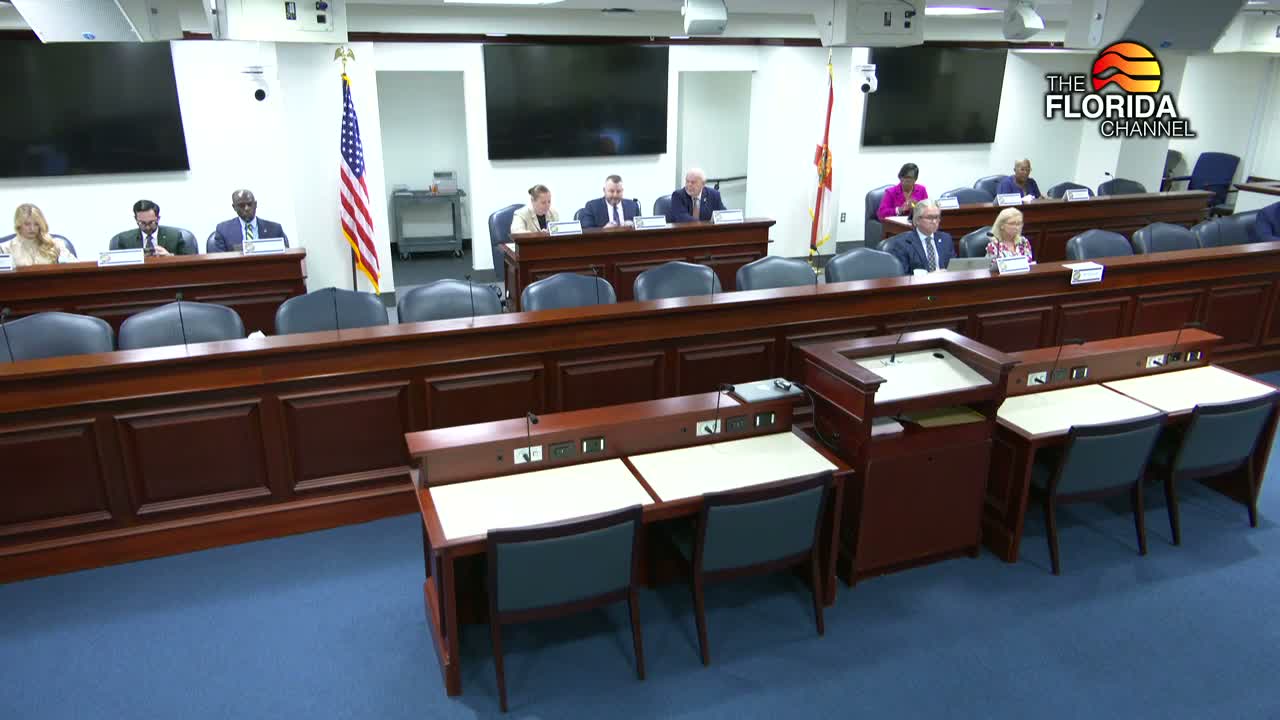
The Justice Budget Subcommittee on Feb. 17 advanced six bills that the panel reported favorably, including a $250 million recurring appropriation for correctional facilities, a domestic-violence measure that would require GPS monitoring when injunctions are violated, and statutory changes affecting clerks of court, public-records responses and inmate services.
The package included proposed committee bills and member bills that a majority of members supported in roll-call votes. Lawmakers and witnesses told the panel the measures address infrastructure and public-safety gaps they say have persisted in the state’s justice system.
A $250 million appropriation for corrections and new planning. Chairman Meaney presented PCB JUB 26-02, which the subcommittee described as providing $250,000,000 in recurring general revenue to the Department of Corrections for fixed capital outlays in fiscal 2026–27. The measure directs the department to plan and design a new correctional institution and an associated hospital unit, and authorizes bonding and creation of a financing oversight committee to recommend financing methods. The committee reported the PCB favorably on a unanimous roll call.
Clerks of court: higher reimbursement for petitions. Sponsor Representative Trubulsi told the committee that clerks of court carry nearly 1,000 statutory duties and have not received reimbursements for unfunded petitions since 2004; the bill raises the statutory reimbursement rate to $195 per petition and adds certain civil indigency applications to reimbursable items. Trubulsi said the fee-distribution changes are intended to create parity between municipalities and unincorporated county areas. The measure was reported favorably (roll call unanimous).
Public-records changes to speed agency responses. CS for HP 437 would require agencies to act in good faith and provide one of three responses within three days: produce the records, provide a good-faith estimate of time and costs, or cite the statutory basis for denial. Bobby Block of the First Amendment Foundation urged support, citing cases of long delays and inconsistent productions. The subcommittee reported the bill favorably on a unanimous vote.
Domestic-violence bill adds monitoring, military-order coordination and increased relocation aid. Representative Kendrick presented CS for HB 277, which would require GPS monitoring when a protective injunction is violated, to be paid for by the respondent; recognize military protective orders as relevant evidence in civilian proceedings; require local law enforcement to notify military authorities when a service member is suspected of violating a military protective order recorded in NCIC; increase victim relocation allowance from $1,500 to $2,500; and include threats to animals in injunctions. Representative Kendrick said, “This bill adds power to that paper by requiring GPS monitoring when an injunction is violated and that would be paid for by the respondent.”
The Department of Defense liaison described nationwide and Florida-specific data on military-family domestic-abuse reports and said the bill would help courts and local law enforcement understand the totality of risk when military protective orders exist. Survivor testimony underscored perceived gaps in safety; Major Josh Lewis, a career law enforcement officer, said, “This bill is an opportunity to prevent that,” describing cases where monitoring or other tools might have averted fatal outcomes. Committee members asked about infrastructure and funding for monitoring; some members asked the sponsor to work through operational details as the bill moves to policy committees. The measure was reported favorably (roll call unanimous).
Inmate services, amendment and hospital opposition. Representative Johnson presented CS for HP 913 to expand authorized uses of the Contractor-Operated Institutions Inmate Welfare Trust Fund for reentry programs, environmental health improvements and repairs, and to adjust compensation rules for inmate emergency and specialty medical services. An amendment was adopted that codified current deposit practices, removed a Medicaid-contingent participation requirement for health-care providers who treat inmates, and set reimbursement that may not exceed 110% of Medicare-allowable rates for certain services while leaving room for negotiated exceptions. Clay Meenan of the Florida Hospital Association, representing about 200 hospitals, testified in opposition, saying hospitals already face rising costs and underreimbursement. Representative Johnson noted the committee’s work to balance access to care and fiscal responsibility and asked for favorable support. The subcommittee reported the bill favorably as amended on a unanimous roll call.
Votes at a glance
PCB JUB 26-01 (terminate mediation/arbitration trust fund): reported favorably (recorded roll-call result: unanimous). PCB JUB 26-02 (corrections capital financing): reported favorably (unanimous). CS for HP 925 (clerks of court): reported favorably (unanimous). CS for HP 437 (public records): reported favorably (unanimous). CS for HB 277 (domestic violence, protective injunctions): reported favorably (unanimous). CS for HP 913 (inmate services) as amended: reported favorably (unanimous).
What’s next. Each bill will proceed to its next committee or to the floor according to the House’s process. Several lawmakers and witnesses asked sponsors to refine implementation details — notably the operational and funding arrangements for expanded electronic monitoring and the details of hospital reimbursement under the inmate-services bill.
Reporting details and attributions in this article rely on the committee transcript and on direct testimony recorded during the hearing, including remarks from Representative Kendrick, Major Josh Lewis, the Department of Defense liaison, hospital association representatives and clerks’ representatives. The committee adjourned without opposition.
The package included proposed committee bills and member bills that a majority of members supported in roll-call votes. Lawmakers and witnesses told the panel the measures address infrastructure and public-safety gaps they say have persisted in the state’s justice system.
A $250 million appropriation for corrections and new planning. Chairman Meaney presented PCB JUB 26-02, which the subcommittee described as providing $250,000,000 in recurring general revenue to the Department of Corrections for fixed capital outlays in fiscal 2026–27. The measure directs the department to plan and design a new correctional institution and an associated hospital unit, and authorizes bonding and creation of a financing oversight committee to recommend financing methods. The committee reported the PCB favorably on a unanimous roll call.
Clerks of court: higher reimbursement for petitions. Sponsor Representative Trubulsi told the committee that clerks of court carry nearly 1,000 statutory duties and have not received reimbursements for unfunded petitions since 2004; the bill raises the statutory reimbursement rate to $195 per petition and adds certain civil indigency applications to reimbursable items. Trubulsi said the fee-distribution changes are intended to create parity between municipalities and unincorporated county areas. The measure was reported favorably (roll call unanimous).
Public-records changes to speed agency responses. CS for HP 437 would require agencies to act in good faith and provide one of three responses within three days: produce the records, provide a good-faith estimate of time and costs, or cite the statutory basis for denial. Bobby Block of the First Amendment Foundation urged support, citing cases of long delays and inconsistent productions. The subcommittee reported the bill favorably on a unanimous vote.
Domestic-violence bill adds monitoring, military-order coordination and increased relocation aid. Representative Kendrick presented CS for HB 277, which would require GPS monitoring when a protective injunction is violated, to be paid for by the respondent; recognize military protective orders as relevant evidence in civilian proceedings; require local law enforcement to notify military authorities when a service member is suspected of violating a military protective order recorded in NCIC; increase victim relocation allowance from $1,500 to $2,500; and include threats to animals in injunctions. Representative Kendrick said, “This bill adds power to that paper by requiring GPS monitoring when an injunction is violated and that would be paid for by the respondent.”
The Department of Defense liaison described nationwide and Florida-specific data on military-family domestic-abuse reports and said the bill would help courts and local law enforcement understand the totality of risk when military protective orders exist. Survivor testimony underscored perceived gaps in safety; Major Josh Lewis, a career law enforcement officer, said, “This bill is an opportunity to prevent that,” describing cases where monitoring or other tools might have averted fatal outcomes. Committee members asked about infrastructure and funding for monitoring; some members asked the sponsor to work through operational details as the bill moves to policy committees. The measure was reported favorably (roll call unanimous).
Inmate services, amendment and hospital opposition. Representative Johnson presented CS for HP 913 to expand authorized uses of the Contractor-Operated Institutions Inmate Welfare Trust Fund for reentry programs, environmental health improvements and repairs, and to adjust compensation rules for inmate emergency and specialty medical services. An amendment was adopted that codified current deposit practices, removed a Medicaid-contingent participation requirement for health-care providers who treat inmates, and set reimbursement that may not exceed 110% of Medicare-allowable rates for certain services while leaving room for negotiated exceptions. Clay Meenan of the Florida Hospital Association, representing about 200 hospitals, testified in opposition, saying hospitals already face rising costs and underreimbursement. Representative Johnson noted the committee’s work to balance access to care and fiscal responsibility and asked for favorable support. The subcommittee reported the bill favorably as amended on a unanimous roll call.
Votes at a glance
PCB JUB 26-01 (terminate mediation/arbitration trust fund): reported favorably (recorded roll-call result: unanimous). PCB JUB 26-02 (corrections capital financing): reported favorably (unanimous). CS for HP 925 (clerks of court): reported favorably (unanimous). CS for HP 437 (public records): reported favorably (unanimous). CS for HB 277 (domestic violence, protective injunctions): reported favorably (unanimous). CS for HP 913 (inmate services) as amended: reported favorably (unanimous).
What’s next. Each bill will proceed to its next committee or to the floor according to the House’s process. Several lawmakers and witnesses asked sponsors to refine implementation details — notably the operational and funding arrangements for expanded electronic monitoring and the details of hospital reimbursement under the inmate-services bill.
Reporting details and attributions in this article rely on the committee transcript and on direct testimony recorded during the hearing, including remarks from Representative Kendrick, Major Josh Lewis, the Department of Defense liaison, hospital association representatives and clerks’ representatives. The committee adjourned without opposition.
View the Full Meeting & All Its Details
This article offers just a summary. Unlock complete video, transcripts, and insights as a Founder Member.
✓
Watch full, unedited meeting videos
✓
Search every word spoken in unlimited transcripts
✓
AI summaries & real-time alerts (all government levels)
✓
Permanent access to expanding government content
30-day money-back guarantee
