Committee advances PCS for House Bill 3852 to shorten precinct worker terms and reduce nominee lists
February 16, 2026 | 2026 Legislature OK, Oklahoma
This article was created by AI summarizing key points discussed. AI makes mistakes, so for full details and context, please refer to the video of the full meeting. Please report any errors so we can fix them. Report an error »
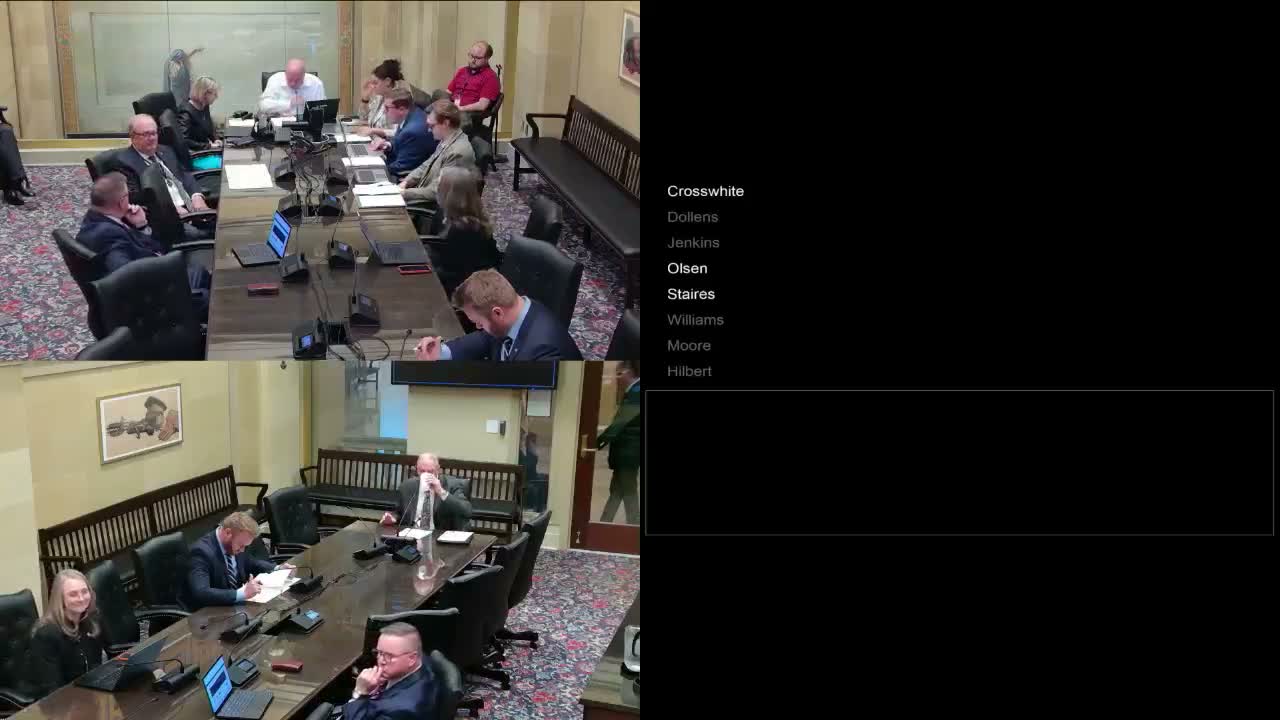
The Ethics and Election Committee voted 5–1 to advance a proposed committee substitute (PCS) for House Bill 3852, approving a "do pass" recommendation that moves the measure out of committee.
Representative Roberts presented the PCS as "basically clarification law, just clarifying some gray areas," saying it returns some precinct-worker appointments from four-year to two-year terms because "most of those poll workers are advanced in age and for reasons a lot of them cannot fulfill a 4 year appointment." Paul Zierix, Secretary of the State Election Board, told the committee the state faces shortages of precinct officials and said the changes should make it easier for county parties to meet statutory requirements for submitting nominees.
Under the PCS, county political parties would be required to nominate two times the number of precincts in their county, down from the current three times. Secretary Zierix said the three-times requirement creates compliance pressure in large counties and that reducing the multiplier to two times "will actually be helpful" in enabling counties to provide usable nomination lists. Representative Roberts used Oklahoma and Tulsa Counties as examples of jurisdictions where producing three times the number of precincts can mean submitting lists with several hundred names; he said two times would still produce a surplus (he estimated roughly 600 names in the example) while reducing the administrative burden in large counties.
Committee members asked questions about the policy’s effect across counties. Representative Dolmens asked why reducing the multiplier would increase the candidate pool; Roberts and Zierix explained the change is intended to reduce the practical obstacle large counties face in meeting a 3x requirement while preserving the ability of any county to submit more names if it chooses. Representative Williams said his home county (Seminole County) has not experienced difficulty producing names, and Roberts replied the PCS should not negatively affect smaller counties.
The committee moved to a vote after a "do pass" motion was made and seconded. The chair opened the vote and recorded 5 ayes and 1 nay, advancing the PCS. The chair said he expects the bill to proceed to the Senate in several weeks.
What the PCS does and why it matters: the measure shortens certain precinct-worker appointment terms from four to two years and reduces the required nominee-list multiplier from three times to two times the number of precincts, changes proponents said are intended to address shortages of precinct officials and make it easier for county parties to comply with nomination rules without eliminating surplus nominees. The committee advanced the PCS by a 5–1 vote; the next procedural step is consideration by the Senate (timeline and hearing not specified in the transcript).
Representative Roberts presented the PCS as "basically clarification law, just clarifying some gray areas," saying it returns some precinct-worker appointments from four-year to two-year terms because "most of those poll workers are advanced in age and for reasons a lot of them cannot fulfill a 4 year appointment." Paul Zierix, Secretary of the State Election Board, told the committee the state faces shortages of precinct officials and said the changes should make it easier for county parties to meet statutory requirements for submitting nominees.
Under the PCS, county political parties would be required to nominate two times the number of precincts in their county, down from the current three times. Secretary Zierix said the three-times requirement creates compliance pressure in large counties and that reducing the multiplier to two times "will actually be helpful" in enabling counties to provide usable nomination lists. Representative Roberts used Oklahoma and Tulsa Counties as examples of jurisdictions where producing three times the number of precincts can mean submitting lists with several hundred names; he said two times would still produce a surplus (he estimated roughly 600 names in the example) while reducing the administrative burden in large counties.
Committee members asked questions about the policy’s effect across counties. Representative Dolmens asked why reducing the multiplier would increase the candidate pool; Roberts and Zierix explained the change is intended to reduce the practical obstacle large counties face in meeting a 3x requirement while preserving the ability of any county to submit more names if it chooses. Representative Williams said his home county (Seminole County) has not experienced difficulty producing names, and Roberts replied the PCS should not negatively affect smaller counties.
The committee moved to a vote after a "do pass" motion was made and seconded. The chair opened the vote and recorded 5 ayes and 1 nay, advancing the PCS. The chair said he expects the bill to proceed to the Senate in several weeks.
What the PCS does and why it matters: the measure shortens certain precinct-worker appointment terms from four to two years and reduces the required nominee-list multiplier from three times to two times the number of precincts, changes proponents said are intended to address shortages of precinct officials and make it easier for county parties to comply with nomination rules without eliminating surplus nominees. The committee advanced the PCS by a 5–1 vote; the next procedural step is consideration by the Senate (timeline and hearing not specified in the transcript).
Don't Miss a Word: See the Full Meeting!
Go beyond summaries. Unlock every video, transcript, and key insight with a Founder Membership.
✓
Get instant access to full meeting videos
✓
Search and clip any phrase from complete transcripts
✓
Receive AI-powered summaries & custom alerts
✓
Enjoy lifetime, unrestricted access to government data
30-day money-back guarantee
