New Mexico House approves constitutional amendment to let voters decide legislator pay tied to median household income
February 13, 2026 | House of Representatives, Committees, Legislative, New Mexico
This article was created by AI summarizing key points discussed. AI makes mistakes, so for full details and context, please refer to the video of the full meeting. Please report any errors so we can fix them. Report an error »
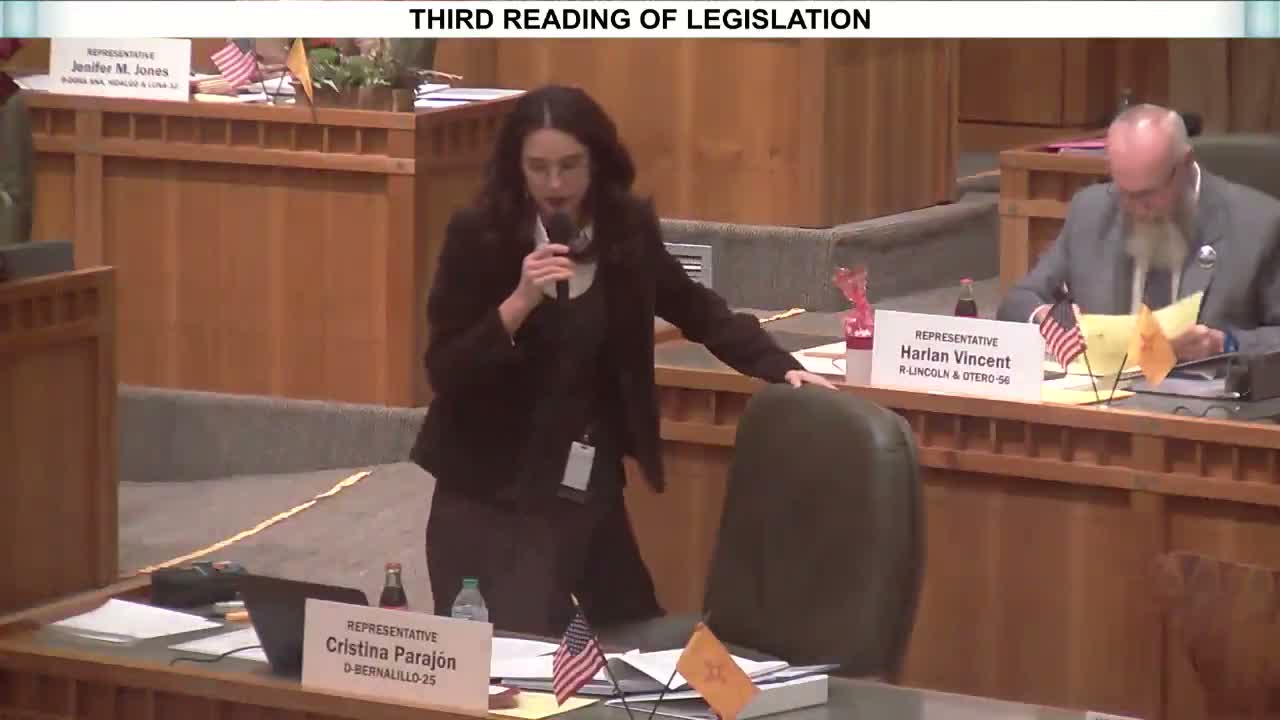
The New Mexico House on Feb. 13 approved House Joint Resolution 5, a proposed constitutional amendment that would allow each legislator to receive compensation equal to the state’s annual median household income, with adjustments tied to changes in that median.
"HJR5 reads that each member of the legislature is entitled to receive compensation amount equal to the annual median household income for New Mexico," the bill sponsor said on the floor, explaining that the amendment would go to voters in 2026 and, if approved, take effect for the legislature seated in 2029.
Supporters called the measure a step to "modernize the legislature," arguing it would make serving accessible to working families and younger candidates who cannot afford unpaid service. Lawmakers said the amendment allows members to decline the pay if receiving other income or retirement benefits that would be affected.
Opponents raised concerns about optics and specifics: whether the benchmark is appropriate for a part‑time legislature, the interaction with existing per diem and mileage reimbursements, the possibility of "double dipping" for members who live near the Capitol, and potential conflicts of interest if members retained outside work while receiving a salary. Members offered and debated several floor amendments that sought to limit per diem claims within 50 miles of a member’s home and to change the constitutional language; those amendments were debated at length and tabled or withdrawn on the floor.
Several members asked how other states handle compensation and whether the plan would include benefits such as health care; the sponsor said enabling legislation would follow and that many specifics — retirement, benefits and implementation — would be set by subsequent statutes if the amendment wins voter approval.
Final action: Representative Hochman Vigil moved final passage of HJR5 as amended; the House adopted the resolution on final passage, 41 in favor and 26 opposed. The resolution now moves to enrollment and, if transmitted to the Secretary of State, would appear on the statewide ballot in 2026 for voters to decide.
What happens next: If voters approve the amendment, the next Legislature would draft enabling legislation to define payment mechanics, benefits, opt‑outs and other implementating rules. Until then, per diem and existing reimbursement statutes remain in force.
"HJR5 reads that each member of the legislature is entitled to receive compensation amount equal to the annual median household income for New Mexico," the bill sponsor said on the floor, explaining that the amendment would go to voters in 2026 and, if approved, take effect for the legislature seated in 2029.
Supporters called the measure a step to "modernize the legislature," arguing it would make serving accessible to working families and younger candidates who cannot afford unpaid service. Lawmakers said the amendment allows members to decline the pay if receiving other income or retirement benefits that would be affected.
Opponents raised concerns about optics and specifics: whether the benchmark is appropriate for a part‑time legislature, the interaction with existing per diem and mileage reimbursements, the possibility of "double dipping" for members who live near the Capitol, and potential conflicts of interest if members retained outside work while receiving a salary. Members offered and debated several floor amendments that sought to limit per diem claims within 50 miles of a member’s home and to change the constitutional language; those amendments were debated at length and tabled or withdrawn on the floor.
Several members asked how other states handle compensation and whether the plan would include benefits such as health care; the sponsor said enabling legislation would follow and that many specifics — retirement, benefits and implementation — would be set by subsequent statutes if the amendment wins voter approval.
Final action: Representative Hochman Vigil moved final passage of HJR5 as amended; the House adopted the resolution on final passage, 41 in favor and 26 opposed. The resolution now moves to enrollment and, if transmitted to the Secretary of State, would appear on the statewide ballot in 2026 for voters to decide.
What happens next: If voters approve the amendment, the next Legislature would draft enabling legislation to define payment mechanics, benefits, opt‑outs and other implementating rules. Until then, per diem and existing reimbursement statutes remain in force.
Don't Miss a Word: See the Full Meeting!
Go beyond summaries. Unlock every video, transcript, and key insight with a Founder Membership.
✓
Get instant access to full meeting videos
✓
Search and clip any phrase from complete transcripts
✓
Receive AI-powered summaries & custom alerts
✓
Enjoy lifetime, unrestricted access to government data
30-day money-back guarantee
